Celtic and Rangers Hit with Behind-Closed-Doors Scottish Cup Sanction
Celtic and Rangers have been hit with one of the most striking disciplinary sanctions Scottish football has seen in years: their next home Scottish Cup ties will be played behind closed doors.
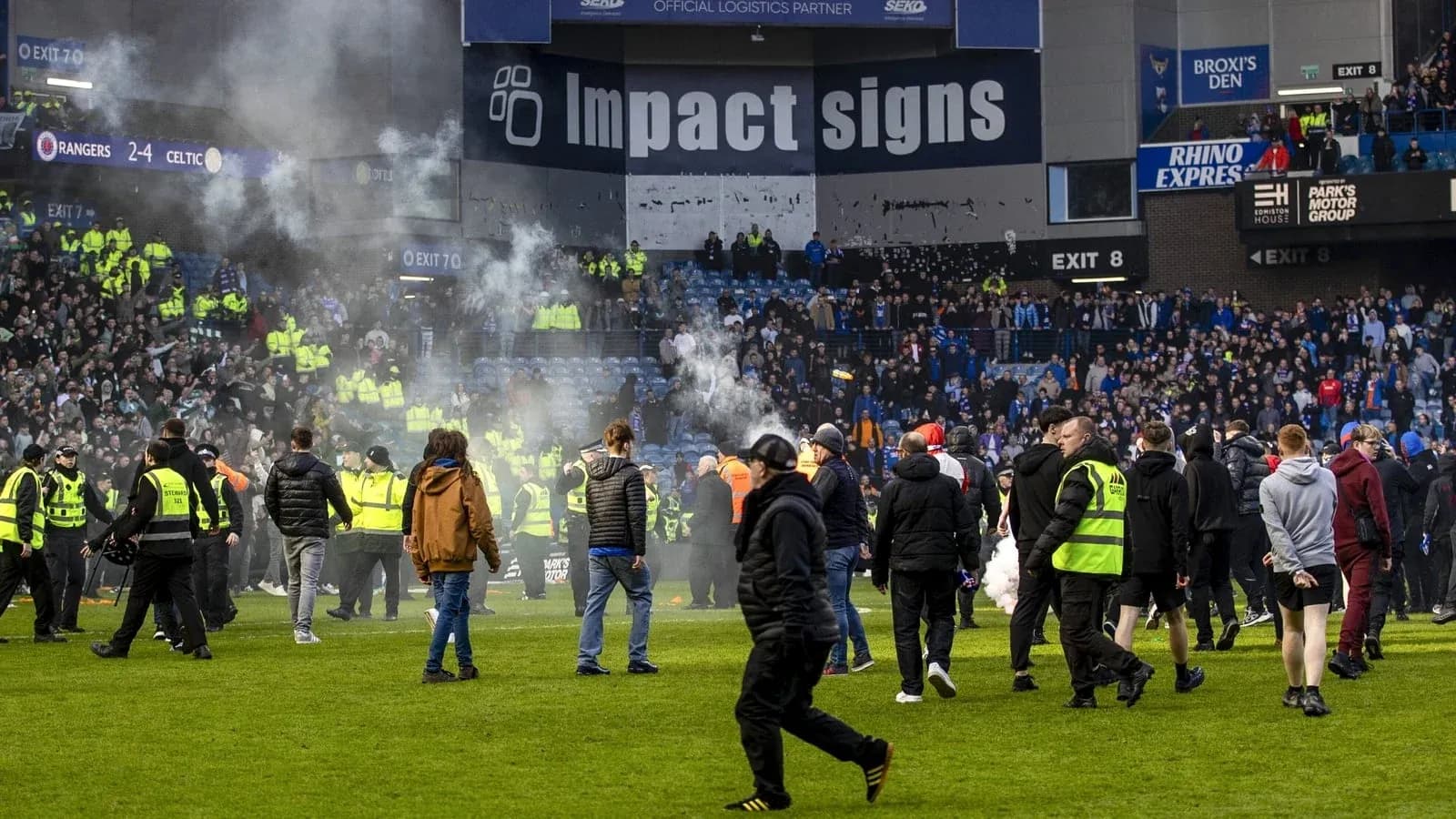
The Scottish Football Association handed down the punishment after a disciplinary hearing into the chaotic scenes that followed Celtic’s quarter-final win at Ibrox in March, a night when the oldest rivalry in the game spilled far beyond the touchline.
Old Firm fallout
The flashpoint came at full-time, after Celtic edged a penalty shoot-out. Some Celtic supporters spilled on to the pitch in celebration. From the opposite end, Rangers fans charged forward, clashing on the playing surface in ugly confrontations that dragged the focus away from the football.
Police made dozens of arrests. An independent review later delivered a chilling verdict, concluding that “crushing” and “life-threatening violence” were narrowly avoided. The language was stark, and it has clearly framed the SFA’s response.
Both clubs admitted charges relating to unacceptable conduct from their supporters. The cost is not only reputational.
Each club must pay their next Scottish Cup opponents £100,000 in compensation for the loss of shared gate receipts caused by the enforced lockout. For the visitors, it will be a lucrative windfall. For Celtic and Rangers, it is a financial hit layered on top of the embarrassment of empty stands in a competition that thrives on noise and theatre.
The SFA has also drawn a clear line for the future. Any repeat of crowd trouble at Scottish Cup ties involving either club in the next two seasons will trigger another behind-closed-doors sanction.
Celtic fury at “disproportionate” ruling
If the SFA expected quiet acceptance, Celtic’s response dispelled that notion quickly.
The club said it was “shocked” by the verdict, describing the punishment as “disproportionate” for what it called a “relatively small incursion” by its supporters at a moment of “emotion and celebration”.
Celtic stressed that it has “never defended supporters entering the field of play” and pointed to previous occasions when it has taken action against individuals who have crossed that line. The club, though, argued that context had been ignored – particularly the distinction in behaviour between celebrating fans and those charging towards them.
Another key point in Celtic’s anger is responsibility for safety. On this occasion, they were the away side. In their statement, they underlined that Rangers, as the home club, held responsibility for stadium safety arrangements on the night in question.
Celtic now intend to study the panel’s written report and reasoning once it is available before deciding on their next steps. Appeal, legal challenge, or reluctant acceptance – all options remain on the table until that document lands.
Rangers, who also admitted charges, have yet to match Celtic’s public fury, but the impact is the same. Both giants now face the prospect of staging one of the most important fixtures of their season in front of empty seats and echoing stands.
In a rivalry built on noise, colour and raw emotion, the image of a silent Scottish Cup tie at Celtic Park or Ibrox will be stark. The question now is whether this is a one-off warning shot, or the start of a far tougher era of discipline for Scottish football’s biggest clubs and their most volatile occasions.