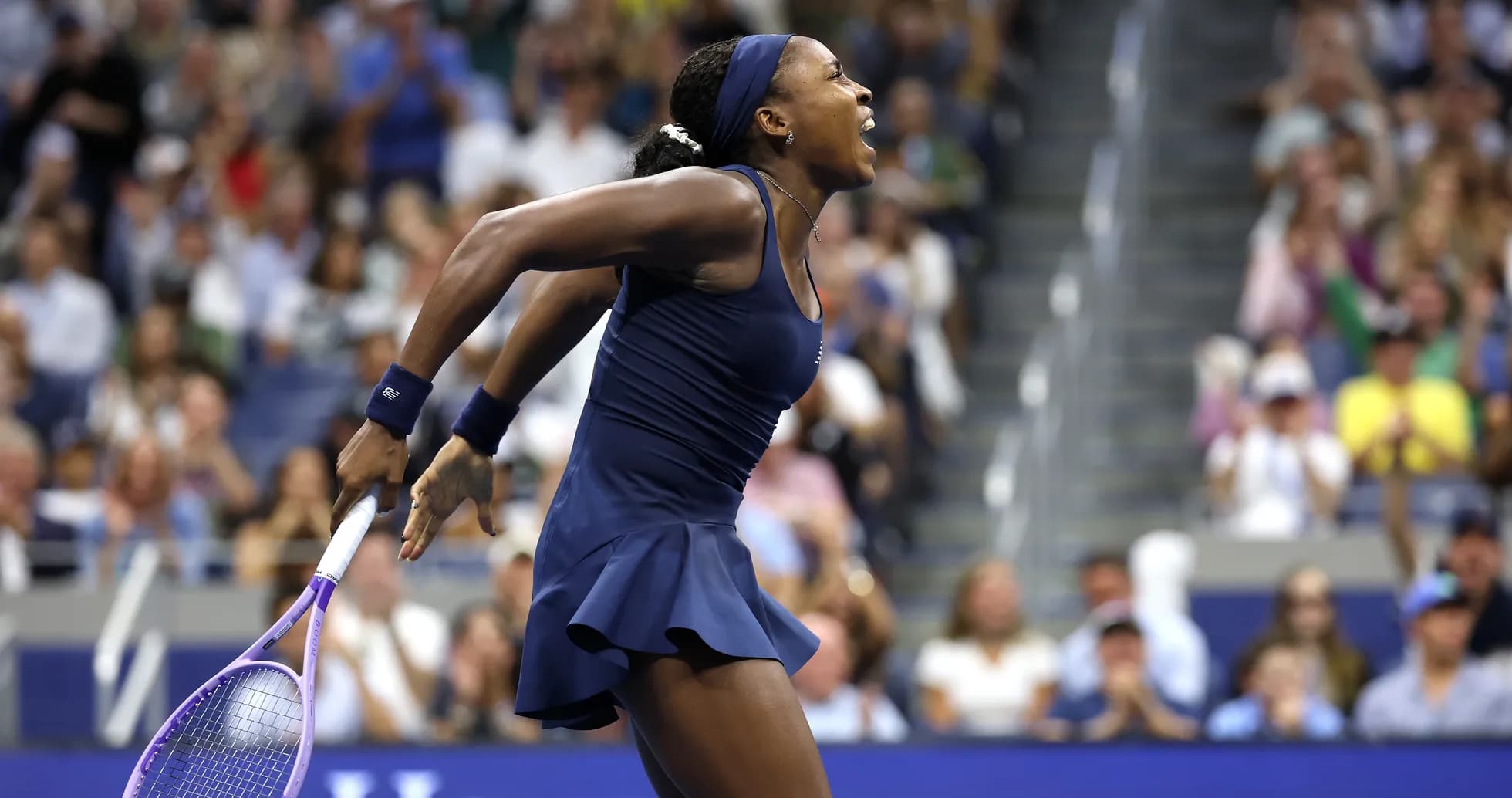
Coco Gauff Advances to US Open Quarterfinals with Dominance
NEW YORK – Coco Gauff walked back into the US Open quarterfinals on Monday night not as a surprise package or a teenage phenomenon, but as something far more ominous for the rest of the field: a player who now expects to be here.
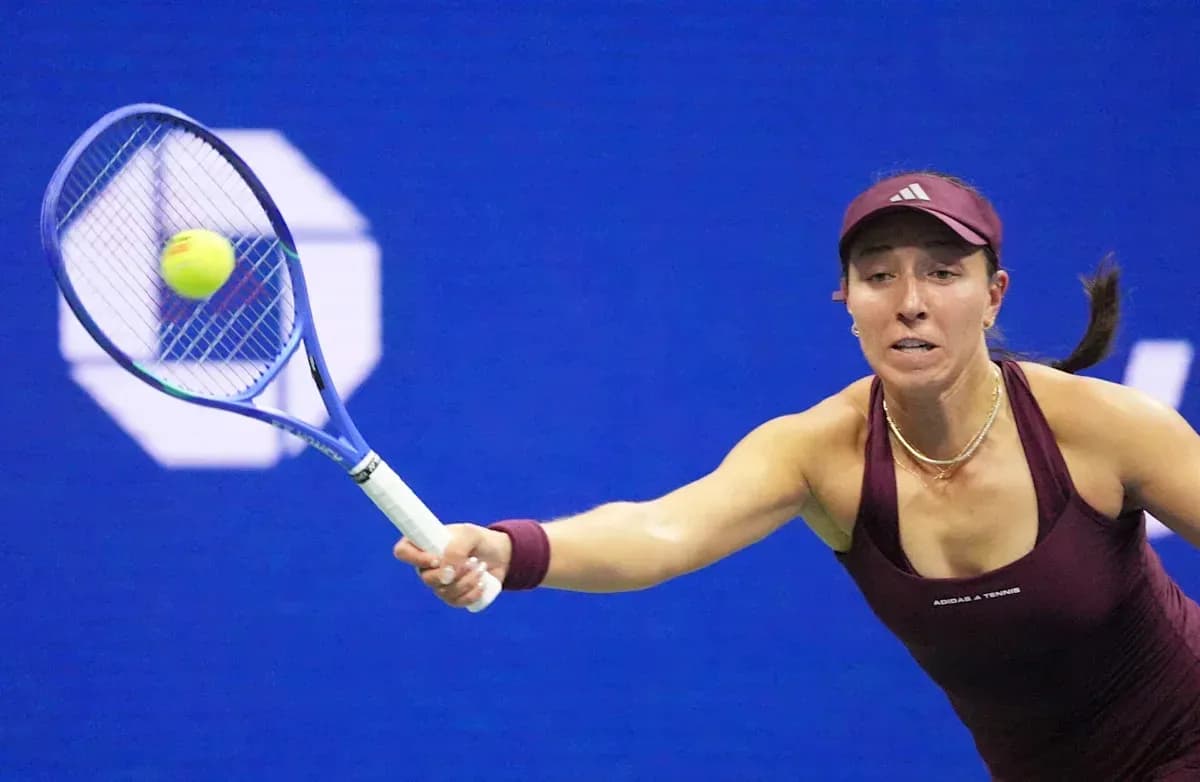
The defending champion dismantled fellow American Iva Jovic 6-1, 6-4 in 1 hour 33 minutes on Arthur Ashe Stadium, extending her winning streak on the WTA Tour to 10 matches and her run of consecutive sets to 20. She hasn’t dropped a set since the second round in Cincinnati against Liudmila Samsonova. Right now, she’s running hot.
This will be Gauff’s 12th Grand Slam quarterfinal. That number tells its own story.
A different kind of normal
Gauff didn’t celebrate wildly. She didn’t need to. The way she spoke afterwards revealed where her career – and her mindset – now sit.
She talked about the “fine line” between appreciating a Slam quarterfinal and treating it as standard procedure. For her, this stage is no longer a breakthrough. It’s the baseline.
She’s “constantly” putting herself in this position, she said, and that repetition has shrunk the moment. The magnitude is still there, but it doesn’t swallow her anymore. It’s a shift from wide-eyed contender to hardened campaigner, and it’s starting to show in the way she closes matches.
From Rome marathon to New York sprint
When these two met in Rome earlier this year, it was a scrap. Gauff had to claw back from a set down to win 5-7, 7-5, 6-2 on the Italian clay before going on to reach the final, where Elina Svitolina stopped her.
This time, there was no such drama in the opening act.
Jovic broke in the first game, then watched the match run away from her. Gauff ripped through the next six games to take the set in just under 35 minutes, turning what had been a tight rivalry into a one-way street, at least on hard courts.
From the middle of the first set through to 0-30 early in the second, Gauff won 25 of 30 points. That’s suffocating pressure at any level, let alone on Ashe, under the lights, against a younger opponent still learning to manage the stage.
Jovic, who had pushed Gauff so hard in Rome, struggled badly on serve, winning only 45% of her service points. When she walked off the court, there were visible tears. This was a chance to test herself against the reigning champion in a marquee setting. Instead, she spent long stretches pinned behind the baseline, reacting rather than dictating.
Jovic fights back, Gauff slams the door
The second set, at least, brought some resistance.
Gauff earned the early break and looked ready to cruise, but Jovic steadied and dragged herself back to 3-3, finally finding some rhythm and loosening her arm. The crowd sensed a contest. For a few games, Gauff’s grip on the match loosened.
That’s when the champion’s composure told.
Serving at 4-5, Jovic blinked. Gauff pounced, broke at the perfect moment, and walked to the line to serve for the match with the calm of someone who’s done this dozens of times before. No fuss, no wobble, just clean, controlled closing.
She later spoke about refusing to dwell on “missed opportunities” and instead focusing on what comes next, on trusting that the same chances will come again. That mindset is exactly what showed in that final game: a player who doesn’t panic when the gap narrows, who believes the match will tilt her way if she keeps asking the question.
Andreeva again – with higher stakes
Next up is Mirra Andreeva, another teenager with a precocious game and a rapidly growing reputation. Gauff knows her well – and knows how to beat her.
She leads their head-to-head 5-0. Four of those meetings have come on clay, including their battles in Europe, while the only hard-court clash arrived right here at Flushing Meadows in 2023. Each time, Gauff has found a way through.
The numbers say she should feel comfortable. The setting says nothing is guaranteed.
Gauff returns to the quarterfinals of the US Open three years after her last run to this stage in New York, but she does so as a very different player: a Grand Slam champion, a regular in the latter stages, a woman who now treats the second week of majors as her natural habitat.
She’s not just defending a title. She’s defending a standard.