Craig Bellamy Commits to Wales Amid Burnley Interest
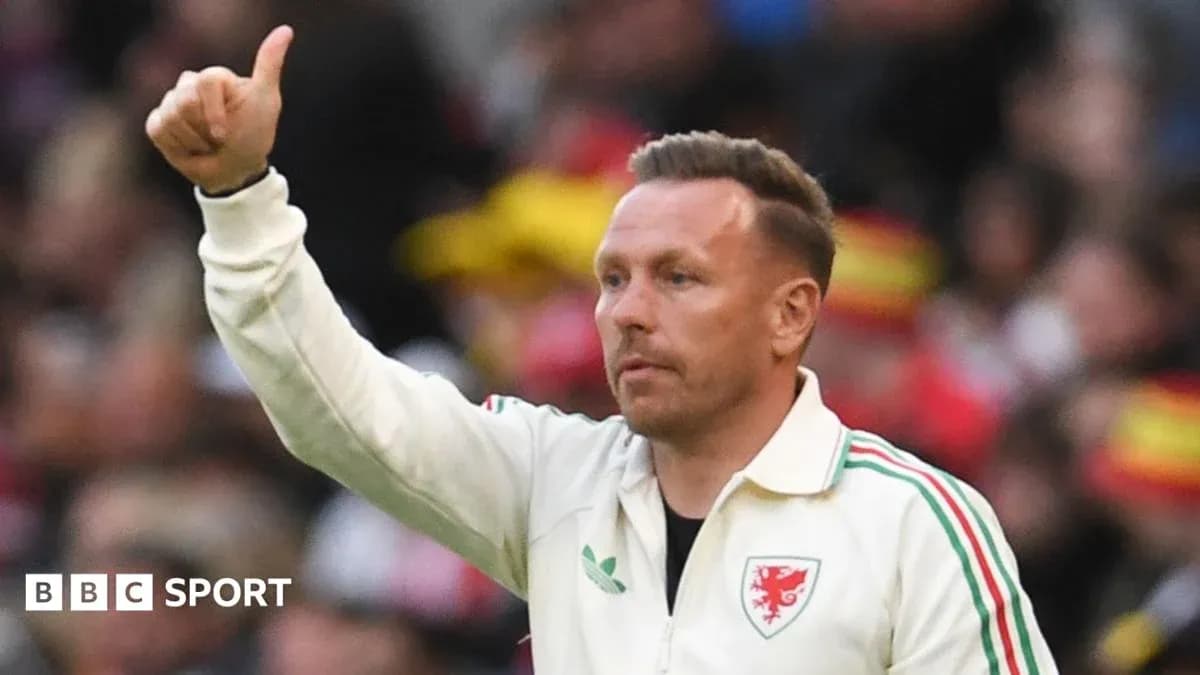
Craig Bellamy has turned his back on a return to club football and nailed his colours to the Wales mast, insisting the national job is still where his future lies.
The 47-year-old confirmed he rejected an offer from Burnley in the summer, ending weeks of speculation that he could walk away from Wales just two years into a four-year deal.
Burnley call, Wales answer
Burnley’s approach was serious. The Championship club triggered a compensation clause and received permission from the Football Association of Wales to speak to Bellamy in June, sounding him out as Scott Parker’s replacement after relegation from the Premier League.
Bellamy listened. He owed them that much. His time at Turf Moor as Vincent Kompany’s assistant had been a key step in his coaching rise, and his respect for the club ensured he took the call.
But that was as far as it went.
"I had a decision to make and I made it," he said. "It didn't break down. I said no, it's not for me. That was it. There was no walk away from discussions. It wasn't for me.
"I made the decision to stay because this is the right place for me."
The offer, he admitted, was "flattering". It stroked the ego, as he put it. Yet the pull of Wales – and the stability for his partner and children – proved stronger than the lure of a return to the day-to-day intensity of club football.
"For me, my partner, my kids, this is the place and we didn't see anything else being able to move that."
Under scrutiny after summer speculation
Bellamy was speaking as he named his 28-man squad for Nations League A fixtures against Portugal, Denmark and Norway, the first time he had faced questions head-on about the Burnley saga.
The timing of the approach had stung some Wales supporters. Only weeks earlier, Bellamy had declared he was "not going anywhere". When the Burnley talks emerged, a number of former players suggested he might have to win the fans back. Some supporters voiced disappointment and doubt.
Bellamy did not bite back. He rarely has as a manager.
"I know how it could be seen, but I've only one person I have anything to prove to, and that's me," he said.
"I'm comfortable with the decision I've made. I've always been committed in everything I do and that hasn't changed.
"Now, winning people over? I don't know, that's the honest truth."
Promise, pain and pressure
His tenure with Wales has already packed in both promise and pain.
After replacing Rob Page in 2024, Bellamy oversaw an eye-catching start: Wales went unbeaten as they earned promotion to the top tier of the Nations League. Performances carried a new edge, a new intensity. Optimism returned quickly.
Then came the blow.
In March, Wales fell agonisingly short of a place at the 2026 World Cup, beaten on penalties by Bosnia-Herzegovina in the play-offs. For all the tactical tweaks and renewed energy, the bottom line was brutal: no World Cup, more questions.
The criticism followed. Not overwhelming, but sharp enough to cut through the early goodwill. In that context, the Burnley interest felt, to some, like a wobble in commitment at the very moment the project hit its first major setback.
Bellamy did not deny the realities of modern management. He spoke openly about the "volatility" of the job and refused to promise he would definitely see out his contract. He knows how quickly football can turn.
Nothing is guaranteed. Not for him, not for anyone.
Eyes on Euro 2028 – at home
Yet when the conversation moved to Euro 2028, the tone changed. The idea of leading Wales into a home European Championships, with games in Cardiff, clearly burns bright.
Asked if that remained his aim, his answer was immediate.
"Oh, I'd love to – but that's two years from now. Nothing's guaranteed. I'm no different, I'm not more special than anyone else (in management)."
There was no grand speech, no sweeping pledge. Just a clear desire and a nod to the unforgiving nature of the profession.
For now, the picture is simple. Bellamy has turned down club football to stay where he believes he belongs. He has chosen the uncertainty of international management, the long gaps, the high-stakes windows, and the chance to build something that might peak on home soil in 2028.
The next Nations League campaign, against heavyweight opposition, will test both his team and the public mood. Results will decide how long the patience lasts.
Bellamy has made his call. The question now is whether Wales, and the game itself, will let him carry it all the way to that European summer on home turf.