Dane Sweeny’s US Open Journey Ends with Promise
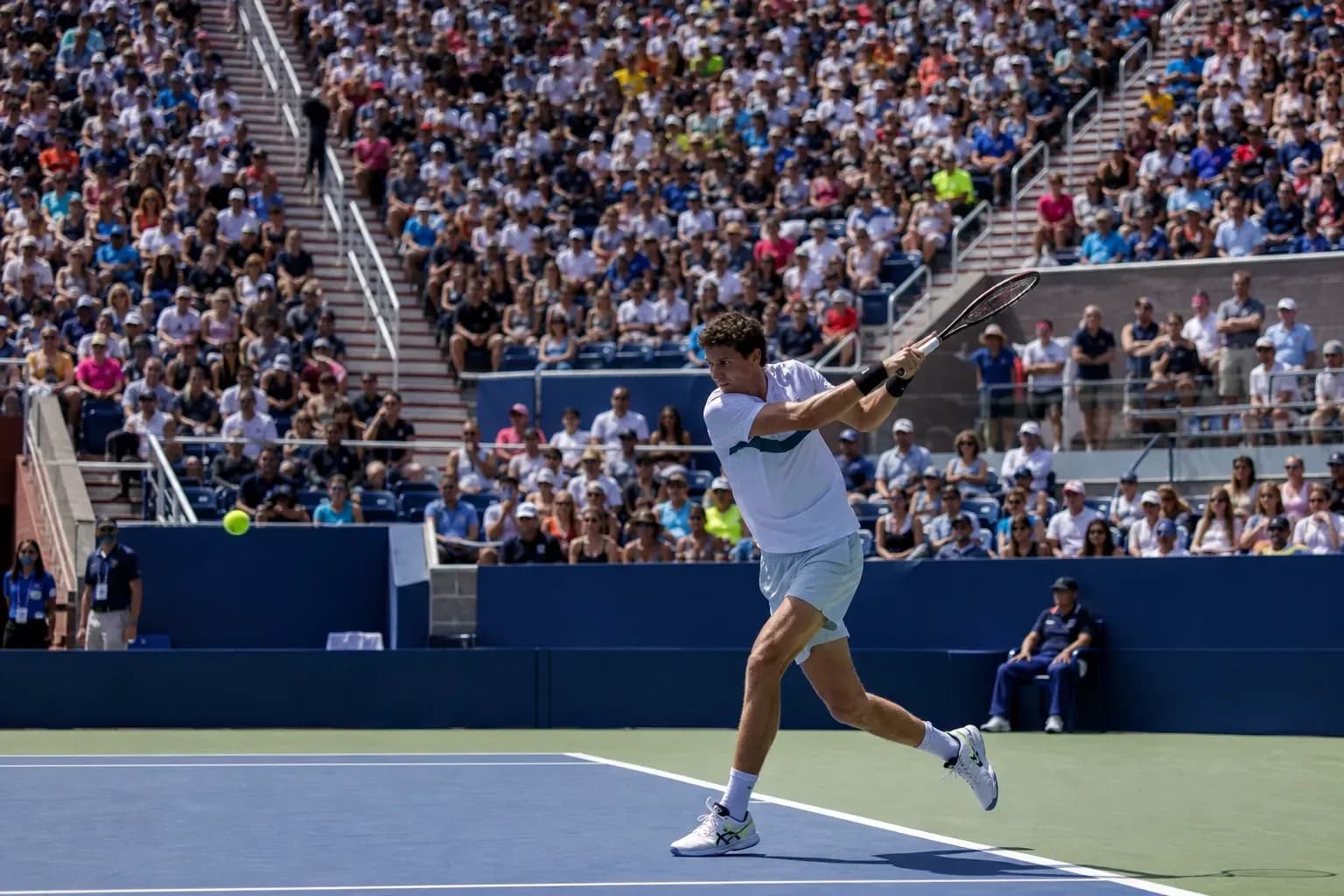
Dane Sweeny walked off Louis Armstrong Stadium knowing two things at once: his US Open was over, and his career had just changed.
The 25-year-old from Australia, a late arrival to the main draw and ranked 123 in the world, bowed out in the third round to 21st seed Luciano Darderi, 4-6, 3-6, 3-6, in New York. The scoreline was straight, the story behind it anything but.
A Late Call, a Big Stage
Sweeny was never meant to be here, not like this. His spot came only after two late withdrawals opened a door that Tennis Australia decided he should walk through, handing him a reciprocal wild card originally earmarked for Alexei Popyrin.
He grabbed it.
From qualifier-level expectations to the round of 32 at a Grand Slam for the first time in his life, Sweeny turned a late invitation into a breakthrough run. He arrived as a fringe player. He leaves as a man on the brink of the top 100.
A Body That Wouldn’t Cooperate
Against Darderi, though, the dream stalled. The Italian, seeded 21, controlled the tempo and the scoreboard, while Sweeny wrestled with more than just the weight of the occasion.
The Australian complained of a hip problem during the match, a nagging issue that stripped him of his usual tools. His pace deserted him. His rhythm never settled. The unforced errors piled up, and with them, his frustration.
He admitted afterward that he simply didn’t play the tennis he expects of himself. The stage was big, the opportunity bigger, but his body and timing betrayed him.
The result was a straight-sets defeat that felt harsher than the week deserved.
A Career Reframed
Even in defeat, the numbers tell a different story. Sweeny’s run to the last 32 delivers $402,500 in prize money and, by early projections, a jump to around 109 in the world rankings — a career high.
That matters. It changes his schedule, his seeding, his sense of belonging at this level.
One more push and the next milestone looms. If he can crack the top 100 before the end of the season, he will secure direct entry into the Australian Open main draw for the first time. No wild cards. No late calls. His place earned outright.
For a player who only slipped into this US Open at the last moment, the symmetry would be powerful.
American Hopes Cut Down Early
Sweeny wasn’t the only one to see a promising run halted on day six in New York. Across the grounds, a string of American names with deep US Open history also fell in the third round.
Taylor Fritz, the ninth seed and last year’s finalist, saw his campaign unravel against Francisco Cerundolo. The Argentine, playing with increasing belief, overturned a two-sets-to-love deficit to win 3-6, 4-6, 6-3, 6-4, 6-4 and reach the fourth round here for the first time.
For Fritz, it marked his earliest exit in four years at his home Slam, a sharp contrast to the run that carried him to the 2024 final.
On the women’s side, Madison Keys suffered a brutal collapse against Zheng Qinwen. After blitzing through the opening set 6-1, Keys built what should have been an unassailable 5-0 lead in the decider. Then it all slipped away.
Zheng clawed back, point by point, game by game, stealing the third set 7-5 and the match 1-6, 7-6 (7-3), 7-5. From the brink of defeat, she now moves on to face world No.1 Iga Swiatek, who edged past Marie Bouzkova in two tight tiebreak sets.
Amanda Anisimova, seeded 10th, also departed, losing 2-6, 5-7 to Anastasia Potapova in a match that never quite turned in her favor.
Coco Gauff, though, held firm. The American star steadied home expectations with a composed 6-3, 6-4 win over Cristina Bucsa, keeping at least one major home hope alive as the draw tightens.
From Wild Card to Marker Laid Down
For Australia, Sweeny’s exit closes the book on their singles presence at this US Open. He was the last one standing, the unexpected standard-bearer.
He leaves with a sore hip, a lingering sense of what might have been on the day, and something far more important: proof that he belongs in this company.
The next rankings update will confirm it. The next few months will decide how far this week in New York can carry him — and whether his next Grand Slam homecoming in Melbourne comes not as a guest, but as a fully fledged member of the sport’s top tier.