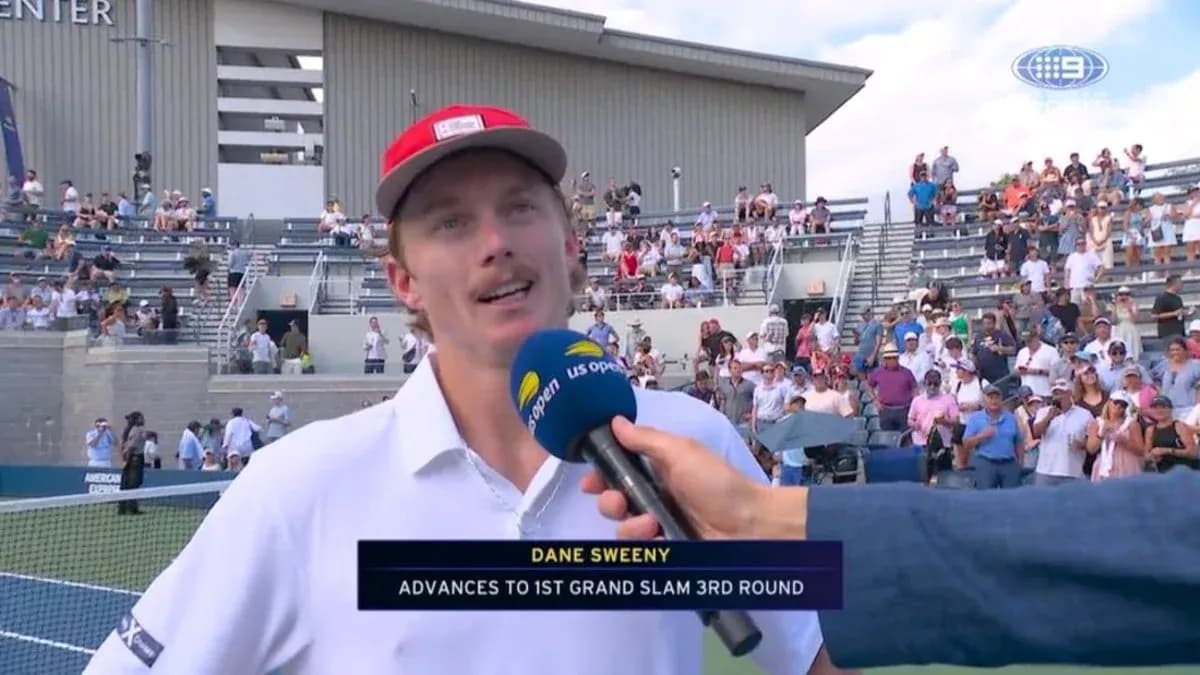
Dane Sweeny Surprises at US Open with Major Victory
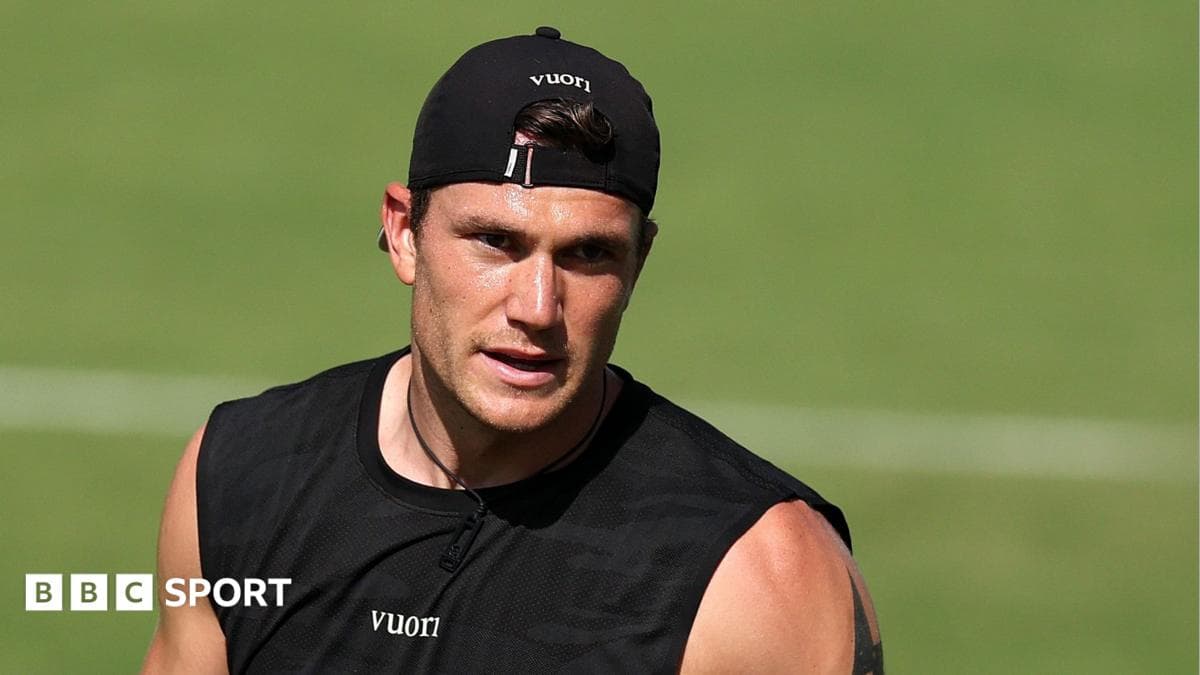
Dane Sweeny had already walked away from this sport once. On Thursday in New York, he walked into the biggest win of his life.
The 25-year-old from Penrith, ranked No.123 in the world, stunned 13th seed Lorenzo Musetti to surge into the US Open third round and rip open a new chapter in a career that once looked stuck in neutral. The victory guarantees him at least $402,000 in prize money — more than double his earnings for the entire year to date.
For a player who once parked his racquets because the results simply weren’t coming, this was a payday and a payoff rolled into one.
“Tennis can change at the flip of a coin, you’ve just got to keep persevering, and that’s what I did,” Sweeny said, still trying to process the scale of the moment. “I wasn’t getting results for a long while, but the law of probability, I knew it was going to swing in my favour if I just kept going, and I did. Now I’m here.
“Best decision I ever made to come back after that two months (away).”
On court, he looked like a man determined to squeeze every last drop out of that decision. Musetti, the elegant Italian shotmaker and heavy favourite, was clearly hampered during the contest, but Sweeny refused to let the opportunity drift. He chased, lunged, and swung with conviction, turning the match into a statement rather than an accident.
When it was over, he almost ran out of vocabulary.
“I don’t know, I’m so grateful to be able to compete in grand slams, I put a lot of work in,” he told the crowd, voice catching between adrenaline and disbelief. “Tennis [is] such a rollercoaster, I’m so incredibly grateful to play in front of this crowd, and to soak up the win... it’s awesome.”
This is what perseverance can look like in raw numbers. Sweeny has banked just over $1 million in prize money across his entire career. One afternoon in New York just added more than a third of that total and locked in a first-ever appearance in the third round of a major.
For Australian tennis, it was another surge of noise on a day already thick with drama.
Tristan Schoolkate
Tristan Schoolkate, backing up barely 24 hours after a straight-sets win over Italian qualifier Andrea Guerrieri, threw everything he had at No.5 seed Flavio Cobolli and still came up just short. The quick turnaround always loomed as a test, but he had rolled past Guerrieri without burning too much fuel, and he carried that form deep into a fourth set that turned into a street fight.
At 5-5 in the fourth, the match hung on a thread. Schoolkate struck first in the game, but Cobolli tightened the screws. Two forced errors — one forehand missing the line by a hair — handed the Italian a sniff. He didn’t waste it. Two clean winners later, the break was his and so, effectively, was the match.
Cobolli walked to the line to serve for it with the poise of a man who had seen this script before. He had already held two match points earlier and needed only one more, sealing the contest with a booming serve out wide. No rabbit came out of the hat for the Perth player this time, but he went down swinging, and the handshake at the net between the two men was genuinely warm. Respect earned, even in defeat.
Alexei Popyrin vs Alejandro Tabilo
On another court, Alexei Popyrin and Alejandro Tabilo were locked in the kind of slog that tests legs, lungs and nerve. Popyrin flew out of the blocks, crunching his way to a 6-2 opening set, only to see the Chilean drag him into the trenches. Tabilo pinched the next two sets in near-identical tiebreaks, punishing every lapse, refusing to budge on serve.
By the fourth, it had become a serving shootout. Popyrin had already racked up 22 aces and was landing 70 per cent of his first serves, but the raw numbers hid a crucial edge. He was winning 72 per cent of points behind that first delivery; Tabilo was up at 85 per cent. On-serve, scoreboard tight, both men staring down the prospect of a fifth set and all the chaos that comes with it.
For Sweeny, there is no such uncertainty. His path is clear, and for the first time at a major, it stretches into the second week’s conversation. The numbers on the cheque will grab attention, but the real story sits behind them: a player who once stepped away, convinced the sport wasn’t giving anything back, now standing under the lights at Flushing Meadows, proof that sometimes the coin really does flip.
The question now is simple: how far can this run go?