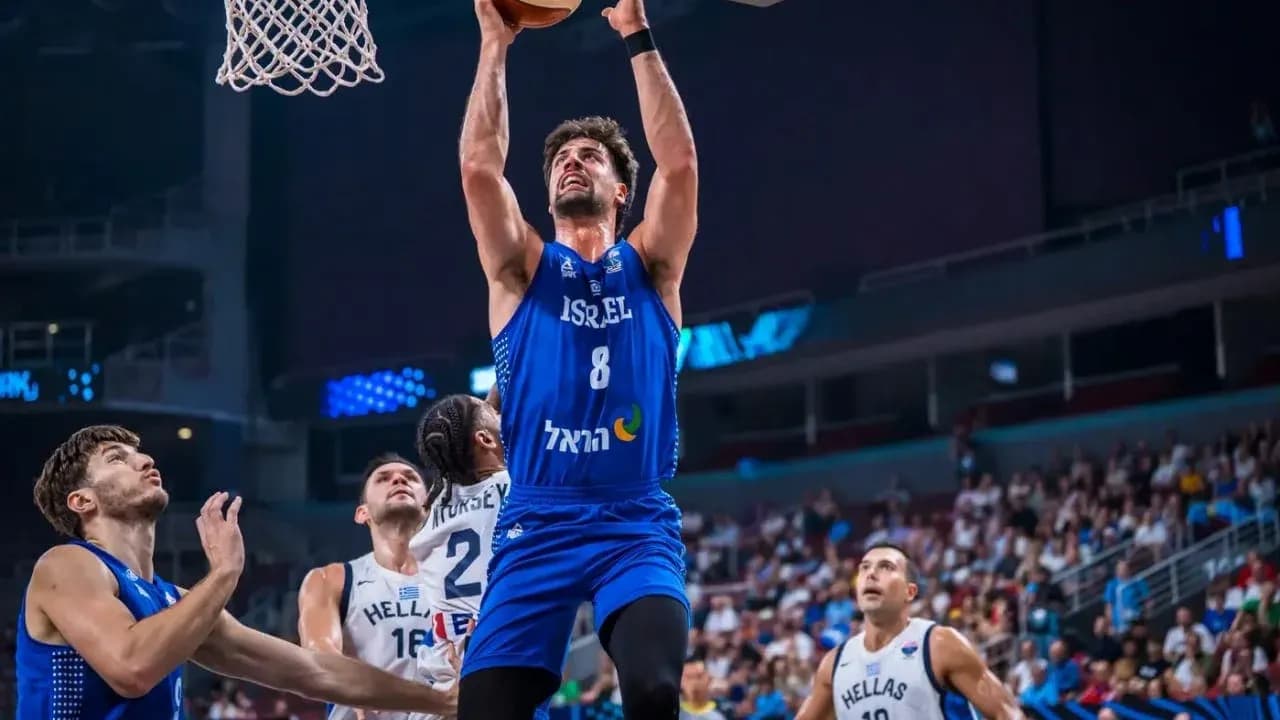
Deni Avdija Addresses Absence from Israeli National Team
Deni Avdija has never been shy about what the blue-and-white jersey means to him. This time, though, he felt he had to spell it out.
Under fire in Israel for missing recent World Cup qualifying windows, the Portland forward released a detailed statement explaining his absence, laying bare both the physical toll of a back injury and the hard line taken by his NBA team.
“I came when I wasn’t at 100%”
Avdija opened with a reminder, not a plea.
“I usually don’t feel the need to explain myself, but this time it is important to me to say a few words,” he wrote. Anyone who has followed his rise with the Israeli national team knows the story: the teenager who showed up every summer, the young NBA player who kept answering the call when it would have been easier—and safer—to stay home.
“I came to the national team when I was in pain. I came when I wasn't at 100%. I came during summers when it might have been most ‘right’ for my personal career to rest. I also came when I was facing a contract year, a period when any injury could change a career. I never looked for an excuse not to come. On the contrary. As long as I could wear the Israeli jersey and step onto the court, I was there.”
That history formed the backdrop to the latest controversy. Avdija did not play in the August qualifying window that ended Sunday, after also missing the previous one. The Israeli Basketball Association had already made it clear when the roster dropped: Portland did not approve his participation.
The warning signs were there early. Back in July, team manager Motti Daniel said Avdija was dealing with a back injury and that Portland had vetoed his involvement. The noise only grew as the national team fought on without its NBA star.
A back injury and a hard stop from Portland
Avdija insists the desire to play never faded. His body, and his employer, had other ideas.
“This time I wanted to be there just as much,” he wrote. “But this summer I dealt with a complex back injury. An injury that anyone who hasn't experienced it cannot truly understand what it requires. And the decision not to participate in this window was not a decision I made alone. Portland was not willing to take a risk with my health, and in the situation that was created, I simply had no option to go out and play.”
No grey area. No quiet negotiation. From his telling, the franchise drew a firm line: no national team, not with that back.
For a player whose international identity is woven into his professional story, that stance cut deep. It also placed him squarely in the crosshairs of a frustrated fan base looking for answers.
“One thing I am not willing to let anyone question”
The criticism came quickly. In Israel, when a leading player is absent in a crucial window, the questions are automatic: Does he still care? Is the NBA coming first? Has the connection to the national team weakened?
Avdija confronted that head-on.
“I understand disappointment. I understand criticism. When you represent a country and there are expectations of you, that is part of it and I accept it. But one thing I am not willing to let anyone question: My commitment to the national team and my country. I don't need to say how much I care. I think I have proven it time and again through my actions.”
This was the core of his message. Not medical detail. Not blame. A line in the sand about who he is when it comes to Israel.
He closed with a simple wish and a clear direction.
“There is nothing I want more than to be healthy, return to the court, and wear the Israeli jersey again. And until then, even when I can't be on the floor, my heart is there.”
The back will heal or it won’t on its own timetable. Portland will continue to protect its investment. The next time Israel calls, the real question will be whether Avdija is finally allowed to answer the way he always has: in person, in uniform, and under the weight of a country’s expectations.