Dheeraj Jadhav: The Domestic Colossus Who Never Wore the Test Cap
There are seasons that launch careers, and there are seasons that leave a question mark hanging over history. Dheeraj Jadhav’s 2003-04 campaign belongs squarely in the second category.
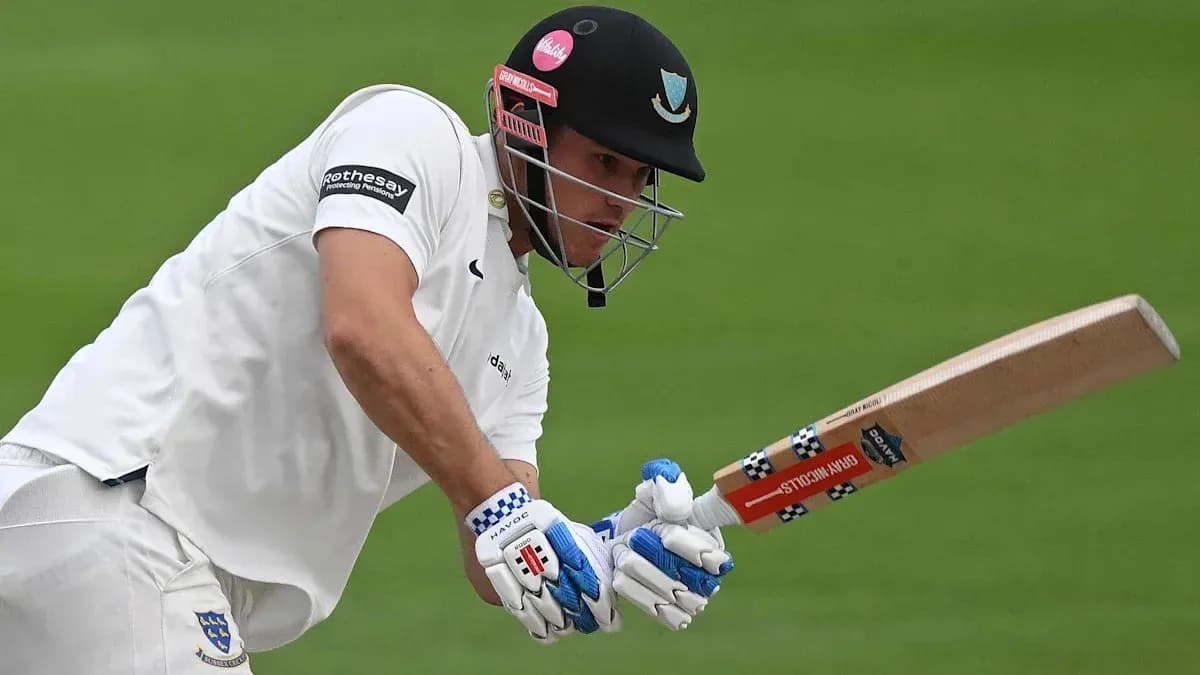
Across the Ranji and Duleep trophies that year, the left-handed opener from Maharashtra batted as if domestic attacks were a minor inconvenience. Fifteen innings, 1,245 runs, an average of 103.75. Five centuries, three of them double hundreds. No one else came close: Hrishikesh Kanitkar finished with 935, Gautam Gambhir with 877. Jadhav was not just prolific; he was operating on a different plane.
And yet, when the Test cap was finally handed out, it went to someone else.
A domestic colossus
This was not a simple case of a precocious prodigy climbing the ladder in neat stages. When Jadhav debuted for Maharashtra in 1999-00, he carried a very different label. He was the “stonewaller”, the man who would bat time, soak up deliveries, and leave bowlers exasperated rather than demolished. Runs came, but not at the rate to force doors open.
So he reinvented himself.
During an off-season that would change his life, Jadhav worked on his options against spin, especially driving, and drilled himself into taking singles more regularly. Occupation of the crease had to turn into weight of runs. The change in mindset detonated his numbers.
By the end of 2003-04, he stood alone as the only player to cross 1,000 runs across the Ranji and Duleep competitions, his 1,245 runs towering over the field. Among his three double centuries, he rated the 251 against Madhya Pradesh in the Ranji Plate final as his finest. It came against an attack led by Narendra Hirwani, who would finish the season as joint-highest wicket-taker, and it sealed a campaign that made Jadhav impossible to ignore.
The selectors didn’t. They sent him to Africa.
Kenya tour: more than just Dhoni’s stage
The India A tour of Kenya in 2004 is usually remembered as MS Dhoni’s personal launchpad, the moment his six-hitting aura began to spill into public consciousness. Gambhir scored heavily there too. Yet the tour’s story was not a two-man show.
Jadhav piled up 257 runs in the triangular one-day tournament and saved his most important hand for the final against Pakistan A. Chasing 210, India A lost Gambhir at 24 and Dhoni at 44. The chase needed someone to stay, someone to build around.
Jadhav did exactly that.
He made 89 from 112 balls, with seven fours and a six, holding the innings together until the target was virtually done. India A won by six wickets under the Duckworth-Lewis method, and Jadhav walked away with the Player of the Match award in a final that featured Misbah-ul-Haq carrying his bat for 89, with Kamran Akmal and Faisal Iqbal in Pakistan A’s ranks.
Then he went bigger still.
In a three-day game against Kenya, Jadhav opened and simply refused to leave. He carried his bat for 260 not out from 386 balls as India A piled up 492, with Dhoni adding 78 and Ambati Rayudu 50 around him. That 260* stood for more than 12 years as the highest first-class score by an Indian carrying his bat, before Samit Gohel finally overhauled it with 359* in the 2016-17 Ranji Trophy.
By now, his numbers were not just loud; they were deafening.
Out-batting the India attack, out of the India XI
The next examination came not overseas, but at home, and not against an A side, but against the full India attack.
In September 2004, as Anil Kumble, Harbhajan Singh, Zaheer Khan and Irfan Pathan tuned up for Australia’s Test tour, India A faced the senior side. Jadhav opened and made 113, batting 221 balls and forcing the frontline bowlers into a long, hard shift. Kumble eventually dismissed him, but the point had been made. At the other end, Mohammad Kaif compiled an unbeaten 103. Gambhir, in the same innings, made a duck.
The Test call still did not come.
Then Nagpur happened. Australia hammered India by 342 runs to clinch their first series win in India for 35 years. The fallout was brutal. Aakash Chopra, Yuvraj Singh, Parthiv Patel and Ajit Agarkar were all dropped. The selectors turned to Gambhir, Jadhav, Dinesh Karthik and Shib Shankar Paul for the final Test in Mumbai.
There was a vacancy at the top of the order alongside Virender Sehwag. Two left-handers had forced their way into the squad. Only one would walk out to bat.
The cap went to Gambhir.
He made just three on debut at the Wankhede, but that selection would age well. Gambhir went on to play 58 Tests, score over 4,000 runs and become one of India’s most influential openers of his era. Jadhav, who had batted his way into the same squad on the back of a season for the ages and a stream of India A performances, never made it into the XI.
He had been close enough to smell Test cricket. That was all.
The Tendulkar window that never opened
A year later, the door seemed to creak open again.
In August 2005, Sachin Tendulkar was still recovering from surgery on his troublesome tennis elbow. He decided he was not yet ready for the rigours of Test batting and pulled out of India’s two-Test tour of Zimbabwe. The selectors named Jadhav as his replacement.
For the second time in less than 12 months, the Maharashtra opener found himself inside a Test squad, India colours within touching distance. The script, though, did not change.
Sehwag and Gambhir remained the preferred opening pair. India won both Tests. Jadhav did not play. He went home once again without a cap, still carrying the weight of that 2003-04 season: an average of 103.75 across Ranji and Duleep, a 260* for India A, and no Test debut to show for it.
Ambition began to fray. Frustration finally pushed him towards the rebel Indian Cricket League in 2007, a move that shunted him outside the BCCI’s recognised structure. When the board later offered an amnesty, he returned to official domestic cricket and switched from Maharashtra to Assam.
What followed mattered, because it underlined a simple truth: this was not a player who faded the moment the India dream dimmed.
A second wave in Assam
By 2011-12, Jadhav was 32, an age when many batters start thinking about winding down. Instead, he produced another remarkable Ranji season, this time in the colours of Assam.
Five matches. Five centuries. A total of 704 runs at an astonishing average of 176.
Years after his near-misses with the national side, he was again stacking up numbers that leapt off the scorecard even in the crowded landscape of Indian domestic cricket. The technique, the temperament, the appetite for runs – none of it had deserted him.
What never came, across all those seasons and all those mountains of runs, was the one thing he had chased from the start: a Test cap.
Gambhir’s story is well known, etched into India’s modern cricket history. Jadhav’s sits in the background, built on the same era, the same tours, the same scorecards – but with a very different ending. It leaves a lingering question hanging over that golden domestic year: how many more runs does a man have to score to move from the fringes to the middle of the stage?