Eddie Howe: The Right Fit for Manchester United's Rebuilding Journey
When Sir Jim Ratcliffe bought into Manchester United in early 2024, the message was loud and clear: this was going to be a club rebuilt around a British heartbeat. Homegrown players, British voices in the dressing room, a manager who understood the league and the culture.
Less than two years on, the reality has proved far messier.
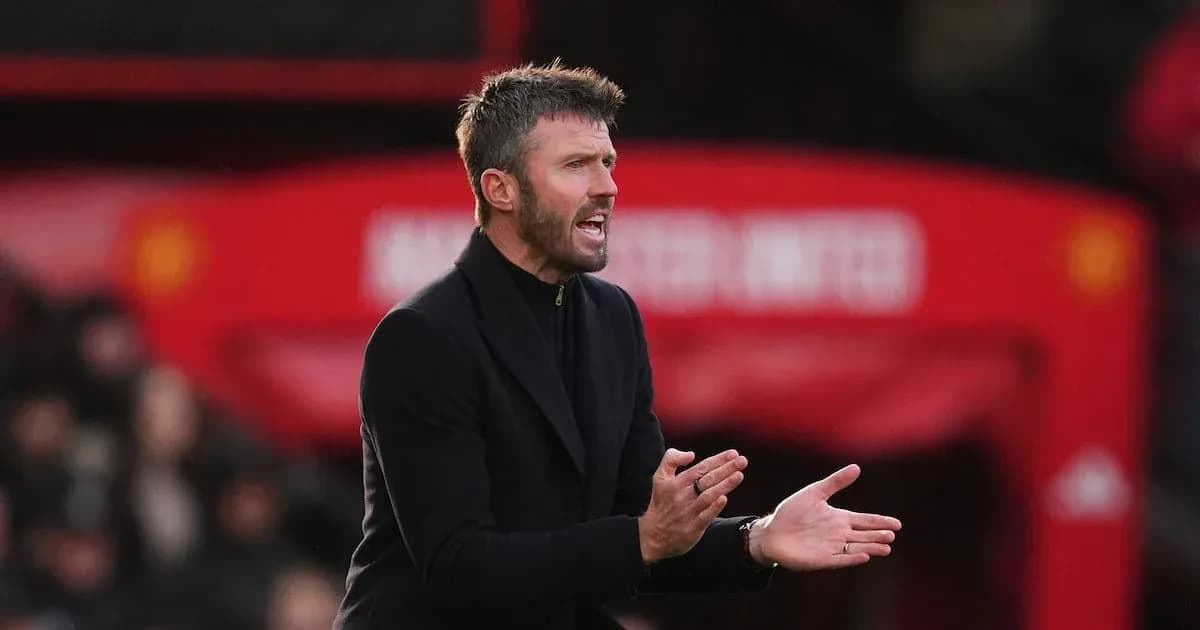
Michael Carrick, the first permanent British manager of the Ineos era, is fighting to keep his job. Performances have dipped, results have followed, and Saturday’s meeting with Chelsea already feels like a verdict rather than just another fixture. If he cannot halt the slide, the project that was supposed to symbolise Ratcliffe’s vision may be torn up ahead of schedule.
And yet, in the middle of this uncertainty, another British coach has moved into view.
Howe on the horizon
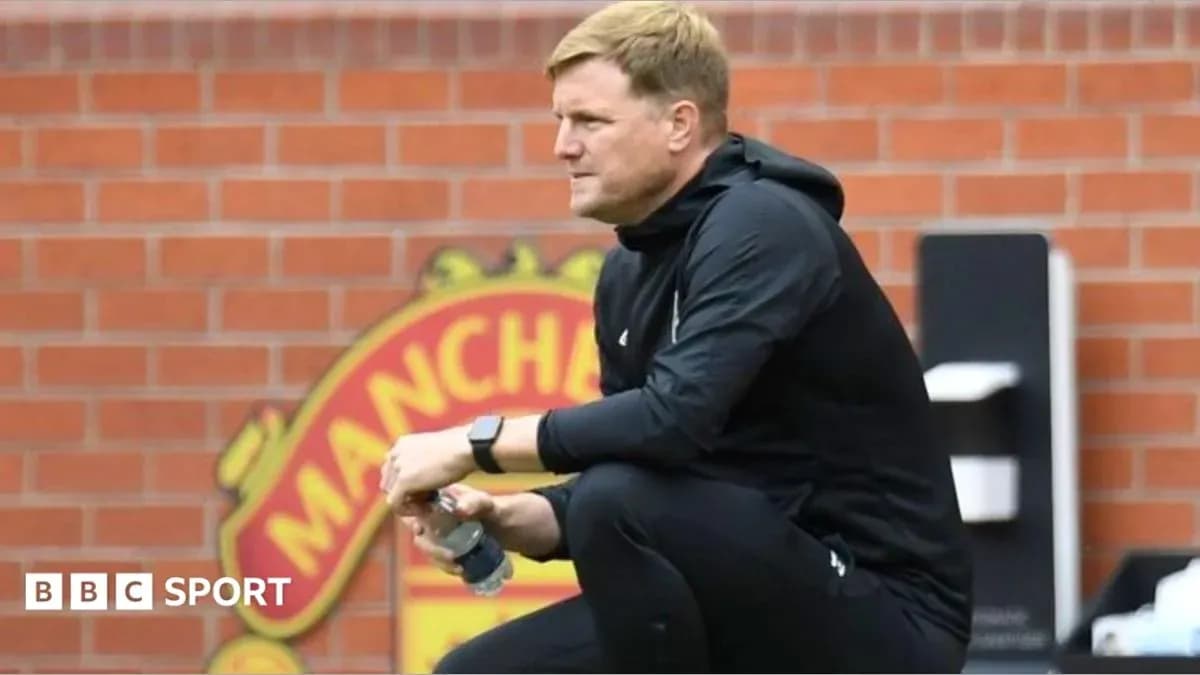
Eddie Howe’s name is not a hard one to link with Old Trafford. Those who have worked with him tend to tell the same story: a coach obsessed with the training ground, relentless in detail, relentless in standards, relentless in squeezing more out of players who didn’t know they had more to give.
They talk about culture, too. Howe’s reputation has been built on creating environments where winning is not just demanded but rehearsed, drilled, ingrained.
He does not come with the sheen of a traditional “super-club” pedigree. There is no previous spell at a Champions League giant on his CV. What he does have, though, is a body of work that commands respect.
At Bournemouth, he walked into a club staring at relegation from League Two in January 2009 and dragged them all the way to the Premier League by 2015. He then kept the Cherries in the top flight long enough to make it feel normal, not miraculous, before leaving in 2020 after a second spell in charge.
At Newcastle, appointed in 2021 with the club in trouble, he did it again on a bigger stage. He took them away from the relegation fight and into the Champions League on two occasions, then delivered the EFL Cup in 2025 – Newcastle’s first trophy in 56 years. That is not a fashionable résumé. It is a substantial one.
Old Trafford, though, is a different beast entirely.
A divided audience
The idea of Howe replacing Carrick has not landed smoothly in every corner of United’s support. On social media, sections of the fanbase have pushed back, arguing that Howe is not a big enough name for a club that still thinks of itself as a global superpower, even if the league table sometimes suggests otherwise.
Former players have not exactly formed a united front either. Paul Scholes and Nicky Butt stopped short of offering full-throated backing on their podcast, a coolness that has been noted. Yet it is also worth remembering that both spoke positively about Howe when Ruben Amorim was sacked in January and the 48-year-old was first floated as a serious option.
Others from United’s past and the wider Premier League fraternity have been more forthright. Roy Keane has publicly backed Howe as a credible successor to Carrick. Darren Bent, Gareth Barry and Jack Wilshere have all touted him as the right fit for the job.
Look hard enough and you can find a camp for or against almost any potential United manager. The noise is constant. The decision will rest not with the loudest voices but with a small group of executives tasked with finally bringing some coherence to the club’s football operation.
The powerbrokers and the bill
Chief executive Omar Berrada, sporting director Jason Wilcox and director of recruitment Christopher Vivell will shape the recommendation. Ratcliffe, as minority owner, and co-chairs Joel and Avram Glazer will ultimately sign off on the direction of travel.
Their first call is not Howe. It is Carrick.
If United decide to part ways with the former Middlesbrough boss, they must first pay him and his staff off. Only then can they start calculating the cost of the next man in.
That is where Howe’s situation becomes interesting. When he left Newcastle in the summer, the full details of his exit agreement were kept confidential. Even so, multiple sources have indicated that any club or national team wanting to appoint him right now would need to pay a seven-figure compensation fee to the Magpies.
Newcastle, wary of Howe walking straight into another job, are understood to have put in place a sliding compensation structure that reduces over time. The figure is believed to have started at £6m and has already halved. As things stand, any move would cost a maximum of £3m.
There is also an expiry date on those payments, thought to be before the end of the season. Once that passes, Howe could be appointed for nothing.
In a sport where transfer fees routinely break nine figures, £3m for a head coach is hardly ruinous. Yet context matters. United have burned through staggering sums hiring and firing managers in the post-Sir Alex Ferguson era. It is no surprise if Berrada and Wilcox are wary of another expensive reset.
Different visions, same problem
Inside United’s football department, there is no single, uncontested vision of what comes next. Wilcox is believed to favour Howe, drawn to his track record of player development and his ability to impose structure and identity over time. Vivell, by contrast, is thought to prefer Julian Nagelsmann, the former Bayern Munich and Germany coach whose profile fits the more modern, continental super-club mould.
Those recommendations will land on Berrada’s desk, before they are carried upstairs to Ratcliffe and the Glazers. Whoever gets the job will tell the football world plenty about the path United intend to follow: British builder or cosmopolitan tactician, long-term project or short-term jolt.
The resistance to Howe from parts of the fanbase has multiple strands. Some of it is simple star power. Some of it appears to stem from the pressure on Wilcox himself, who was targeted by home supporters during the 3-0 defeat by Bournemouth at Old Trafford. For a club used to chasing marquee names, the idea of hiring a coach whose reputation has been forged at Bournemouth and Newcastle feels, to some, like a step down from the fantasy.
Strip away the emotion, though, and a harsher truth emerges.
The weight of the structure
United have not lacked for big names in the dugout. They have lacked a clear, consistent structure above and around them. Since Ratcliffe bought his minority stake, matchgoing fans have grown increasingly disillusioned with the football decisions being made. Yet Erik ten Hag, Ruben Amorim and Michael Carrick have all been backed in turn.
The squad that awaits any new manager is a collage. It has been assembled by six permanent managers, each with different styles, different demands, different ideas of what a United player should be. Any coach walking into that dressing room is not just inheriting a team; he is inheriting a decade of conflicting visions.
Some supporters now argue that no manager can truly succeed at Old Trafford until the structure is fixed. Until the recruitment is aligned. Until the club stops veering from one philosophy to the next.
That is the landscape into which Eddie Howe might step. A club still wrestling with its identity, a fanbase split, a boardroom trying to prove that this time, finally, there is a plan.
If United decide he is their man, the question will not just be whether Howe is big enough for Manchester United.
It will be whether Manchester United are finally ready to be a club that lets a manager like Howe do his work.