Elena Rybakina Becomes World Number One After US Open Victory
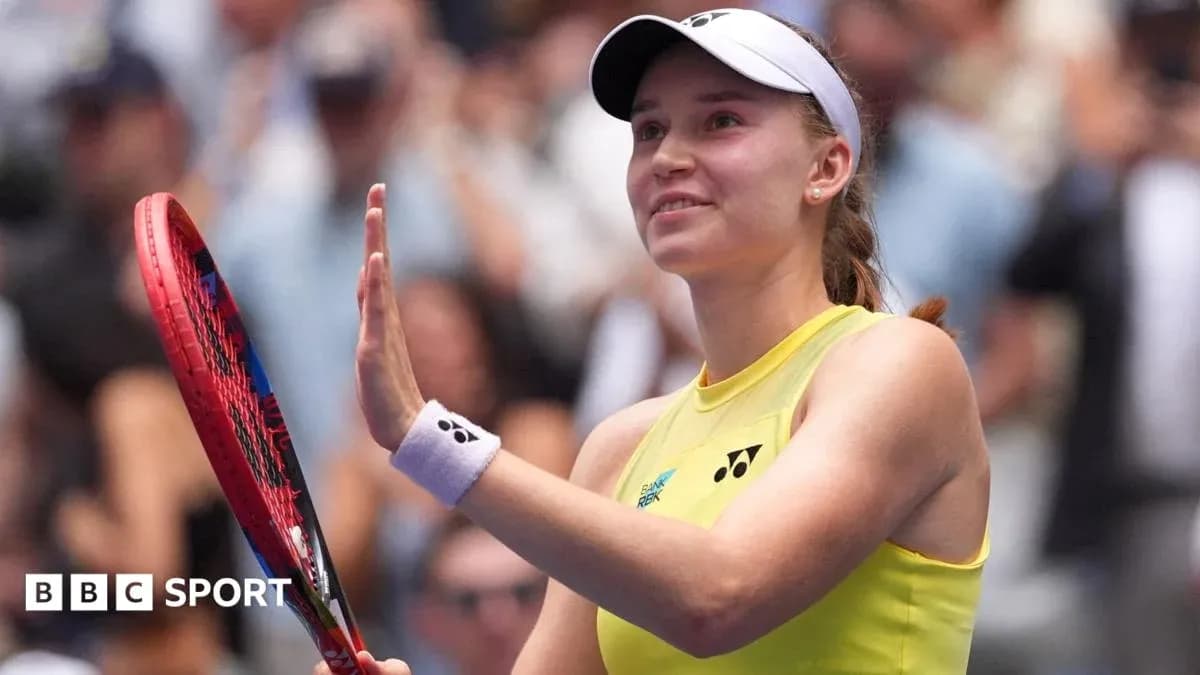
After 99 weeks, the women’s game finally has a new name at the top. Elena Rybakina is the world number one.
The Kazakh sealed it under the lights in New York, grinding past Zheng Qinwen 3-6 6-1 6-4 in the US Open quarter-finals. It was the first time she had dropped a set all fortnight. It didn’t rattle her. It sharpened her.
One break point down in the deciding set, the ranking on the line, momentum with Zheng. Rybakina stared it down, held firm, and then pulled away. When the last forehand from Zheng drifted out, the match was hers. So was the summit of the sport.
She becomes the first Kazakhstani player, man or woman, ever to reach number one in singles. A quiet trailblazer with a brutal baseline game.
Chasing down Sabalenka
Aryna Sabalenka’s grip on top spot had felt iron-clad. Her 99-week reign, stretching back to 21 October 2024, is the sixth-longest in WTA history. For almost two years, everyone else chased shadows.
Rybakina refused to. She has hunted Sabalenka all season, arriving in New York as one of three players with a mathematical shot at dethroning her, alongside home hopes Jessica Pegula and Coco Gauff.
The equation was simple and unforgiving. Pegula, Gauff and Zheng each needed the title, and they needed Rybakina to fall before the semi-finals. She didn’t blink. They ran out of road.
Now the rankings will flip on Monday, but the rivalry might be far from done in New York. The two best players in the world can still collide in the US Open final, a reprise of their Australian Open showdown in January, when Rybakina edged Sabalenka in three tight sets to lift her second major.
For Rybakina, though, the number beside her name comes second.
“It’s just a number right now. My goal is to win the tournaments which I play,” the 27-year-old said, calling the ranking “an amazing achievement” but warning that tennis can turn quickly. The trophy in New York remains the real prize.
First, she must get through either Coco Gauff or Mirra Andreeva in Thursday’s semi-final. On the other side, Sabalenka meets Pegula. The stakes could hardly be clearer.
The climb to the summit
Rybakina’s push to the top did not begin in New York. It started in the closing weeks of 2025, forged in defeats, adjustments and a streak of ruthless indoor tennis.
Last October in Wuhan, she lost to Sabalenka in the quarter-finals. One week later in Ningbo, she responded by winning the title. The real turning point came at the season-ending WTA Finals, where she faced Sabalenka again and this time took the trophy, a statement win that announced a new balance of power.
She rode that surge into 2026. In Melbourne, the pair met in a major final for the first time. Rybakina, the taller, quieter, equally heavy-hitting server, outlasted Sabalenka over three bruising sets to claim the Australian Open, her second Slam almost four years after her breakthrough at Wimbledon.
Their duel has swung back and forth since. Sabalenka struck back in the Indian Wells final and again in the Miami Open semi-finals. Rybakina answered on the clay of Stuttgart, taking the title while Sabalenka’s form wobbled.
Not everything clicked. Paris and Wimbledon brought early exits, a jarring contrast to her usual poise on the big stages. She steadied herself in Toronto, reaching the final before running into Iga Swiatek and losing in straight sets.
Then came Cincinnati, and another blow. A left ankle problem forced her to retire from her quarter-final against Swiatek. The injury had been “bothering me for a long period of time,” Rybakina later revealed, limiting her movement and stopping her from pushing off properly on serve. She insisted she had it “under control,” but her US Open build-up suffered.
A shaky lead-in, a ruthless response
By the time she arrived in New York, her preparation “wasn’t great.” She could barely train for much of the week before the tournament. The rhythm you expect from a future number one simply wasn’t there.
On court, it hasn’t shown. Until Zheng, nobody had taken a set from her. The serve has been heavy, the backhand flat and unforgiving, the temperament icy. She walked into Flushing Meadows with two clear targets: win the title and reach number one.
One is already secured.
The coach in the background
In the shadows of this ascent stands Stefano Vukov, the coach who has shaped Rybakina’s game for most of her professional life and whose presence has not been without controversy.
They first linked up in 2019, working together through to 2025. That partnership ended, and later that year Vukov was banned from the WTA Tour for breaching its code of conduct after an independent investigation into his behaviour towards Rybakina.
Vukov denied any wrongdoing. Rybakina said she was never mistreated by him. She wanted him back.
At the start of 2025 she pushed for his return. The Croat successfully appealed his suspension and rejoined her team in August. The impact was immediate: in their first tournament back together, she reached the US Open fourth round for the first time in her career, then surged through the end of the season to put herself within touching distance of the top.
Now, less than a year later, that push has carried her all the way to number one.
The ranking will change on Monday. The question now is whether New York will also crown her champion, or whether this US Open becomes just the first chapter of a new era with Rybakina and Sabalenka trading blows from opposite ends of the draw.