Empowering Girls Through Basketball in Northern Nigeria
Abuja, Nigeria – In Kano’s heat, where dust hangs over crowded streets and boys usually own the playground, Khamila Sani Ibrahim learned early that a girl with a basketball has to be stubborn.
Courts were rare. Acceptance was rarer.
“When I visit my grandparents, it is very hard for me to train in basketball,” she said. “I only go out to play when they are not around, or I tell them that I’m going to visit my friends, and from there I go to the court.”
In much of northern Nigeria, that quiet deception is the price of a dream. Basketball and football are still widely seen as male territory. For girls, the barriers pile up: no proper courts, no equipment, barely any coaching, almost no funding. And when a game does appear, the chance to compete often goes to the boys.
A different kind of tip-off
That landscape is starting to shift.
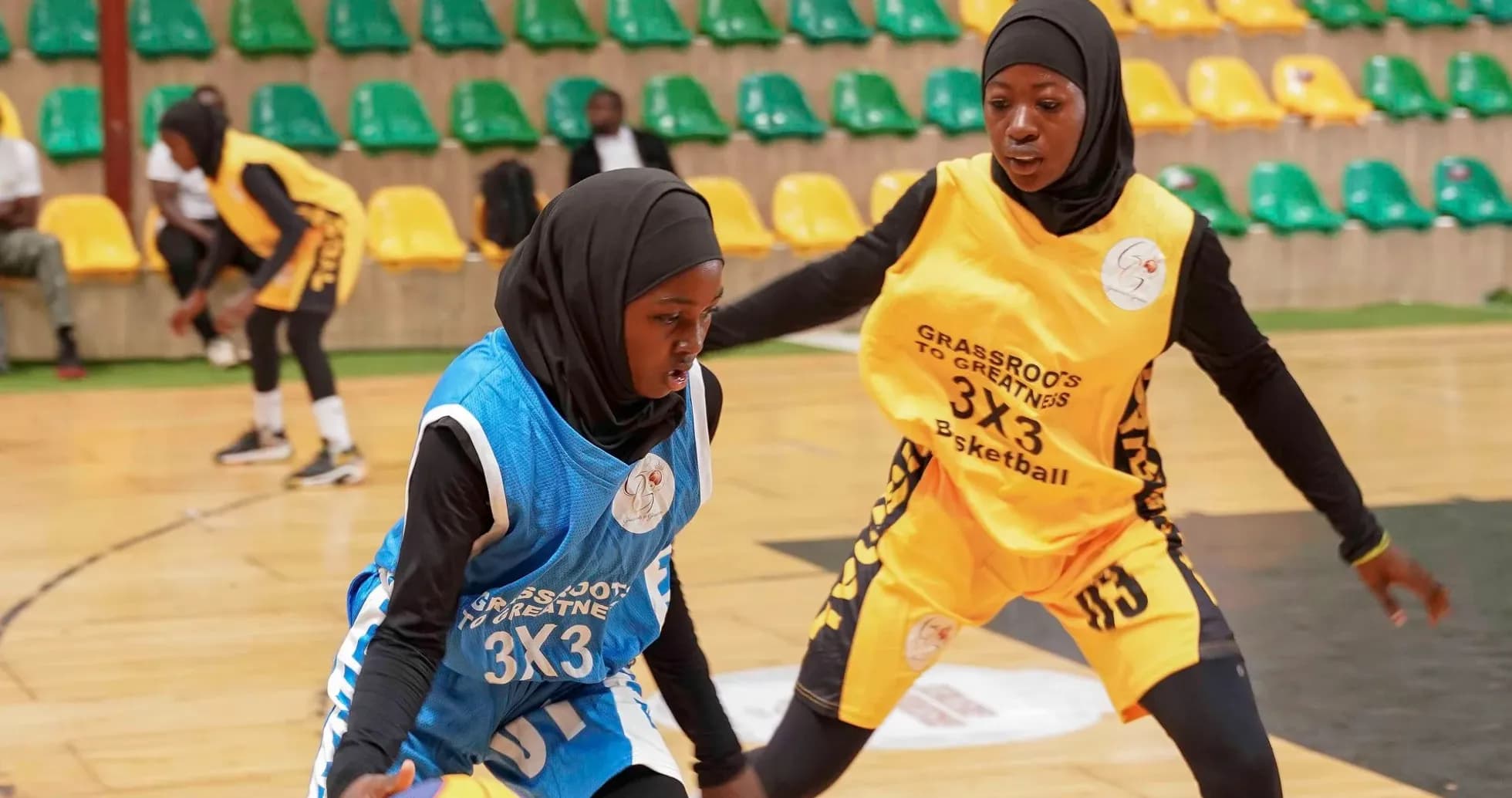
Grassroots To Greatness (G2G), a female-focused sports initiative, has begun carving out space for girls who want to play, compete and be taken seriously. On courts from Kano to Abuja, the sound of the ball on concrete now comes with a different sight: girls in custom hijabs, long sports vests and tights, sprinting, boxing out, diving for loose balls.
Jawahir Bello, a youth sports advocate, saw the gap and decided to fill it. G2G’s tournaments and training sessions are built around a simple idea: you don’t have to choose between your faith, your culture and your sport.
“Our core value is about participating in sports without doing anything that goes against our cultural values or our identity as Muslims,” Bello told Al Jazeera. “Whether you put on a hijab or innerwear under your jersey, modesty is key. You come out modest, decent and fully covered.”
She expected pushback. Female-only tournaments. Structured training for girls. Organised competition in communities where women’s sport barely registers. It had all the makings of a cultural fight.
Instead, something else happened. Local stakeholders, elders and community figures began to show interest. They saw the kit, the rules, the respect built into the programme, and many chose to back it.
To reach the girls who need it most, G2G works with the people who already know them: grassroots coaches running small community teams on dusty courts and school yards. Those coaches provide trust and access that no top-down structure can match.
Their own tournament, their own rules
When Ibrahim pulled on a Kano State jersey for a multi-state G2G tournament, she stepped into a world she had rarely seen: a full competition built for girls like her. No boys to prove herself to. No sidelong glances suggesting she didn’t belong.
The tournament drew female players from up to nine states. For once, the numbers were on their side.
“What G2G did for us was incredible,” Ibrahim said. “They provided jerseys, custom hijabs, basketballs, cover for our transport and even financial stipends for all the teams, regardless of who won or lost. It made us feel seen and valued.”
For many, that detail mattered as much as the scoreboard. The message was clear: your effort is worth investing in.
In Abuja, 11-year-old schoolyard games were the start of something bigger for Fatima Diouf. She joined the G2G programme not just to play more, but to measure herself against better opposition. The step up was sharp. Her team missed out on the finals.
The experience stayed.
“I have learned a lot beyond just basketball. I learned teamwork, confidence, discipline and how to keep improving,” she said. The loss stung, but it also showed her what was possible.
The battle off the ball
The real struggle doesn’t always come with a whistle.
For Ibrahim, finding time and space to train still feels like a contest. She wrestles with self-doubt, the snide comments from male players who assume girls can’t keep up, and the daily grind of domestic chores and schoolwork that squeezes her training into the margins of the day.
On the touchline of Nigerian women’s football, the pattern looks familiar.
Mansur Abdullahi, assistant coach of Nigeria’s U-20 women’s national team, the Falconets, sees how crucial the grassroots level has become for girls’ sport.
“Official sports bodies have big structures, but local groups provide the actual trust and cultural understanding,” he said. “So it’s only through community-led initiatives that more professional teams will understand what’s acceptable for girls and boys and how to frame sports so it fits the existing values instead of clashing with them.”
The message is blunt: if change is going to last, it has to start in the neighbourhood, not the boardroom.
Dreams that stretch beyond the baseline
For the girls, the tournaments are more than a weekend distraction. They are auditions for a different life.
Before G2G, Ibrahim’s father worried that competitive sport might drag his daughter away from family standards and expectations. Then he went to watch her play. He saw the long vests, the hijabs, the discipline, the organisation. The fear eased. Pride took its place.
Now he is one of her loudest supporters.
“I want to secure a college sports scholarship in the United States and eventually turn professional,” Ibrahim said. “More than that, I want other Muslim girls across northern Nigeria to see that sports build your health, strength, and confidence, and that nothing should hold you back from chasing your dreams.”
Diouf’s horizon has widened too. Standing among coaches, organisers and scouts at the tournament, she began to picture herself not just playing in Abuja, but travelling the continent, testing herself in gyms and arenas far from home.
Bello’s ambition for G2G runs along the same lines. The programme is not just about putting on another girls’ event. It’s about rewriting who belongs in Nigerian sport and how.
“You can keep your identity, stay covered and still achieve something in life,” she said.
On courts where girls once watched from the sidelines, the ball is now in their hands. The question is no longer whether they should be there. It’s how far they can go.