England v Pakistan: Lawrence Shines Amid Chaos at Lord’s
By the time the umpires finally called it a day at Lord’s, the sun was out, the floodlights were off, and the boos were echoing around the old ground. It was the best weather of the day. It arrived half an hour too late.
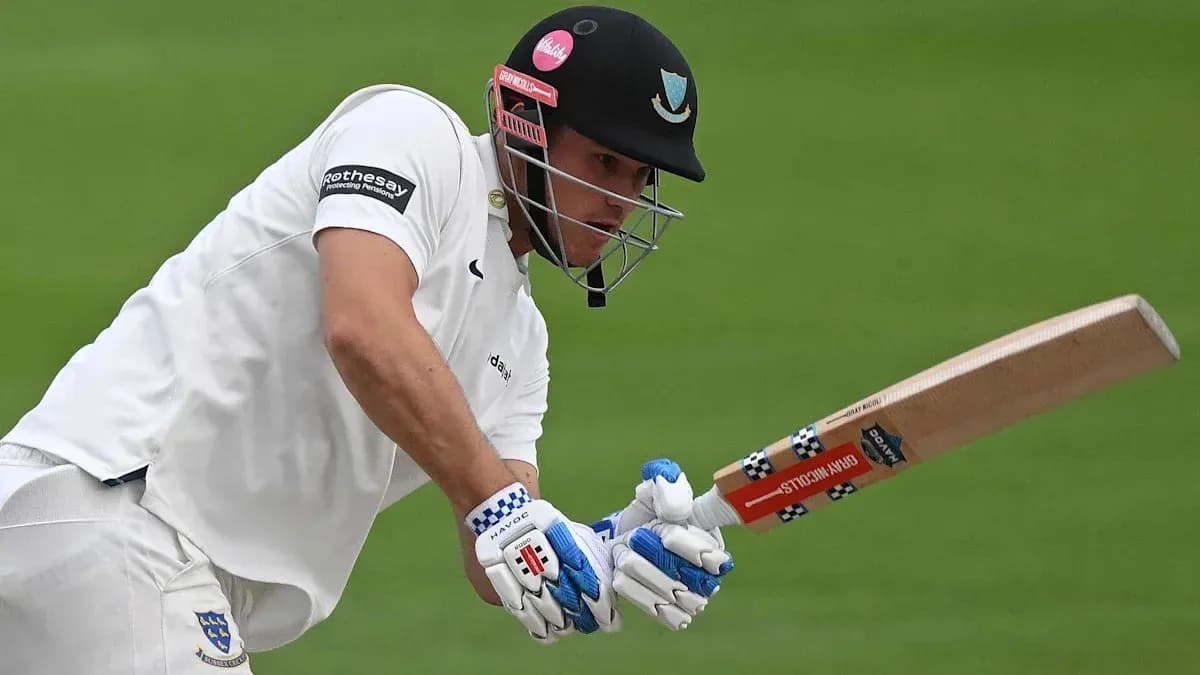
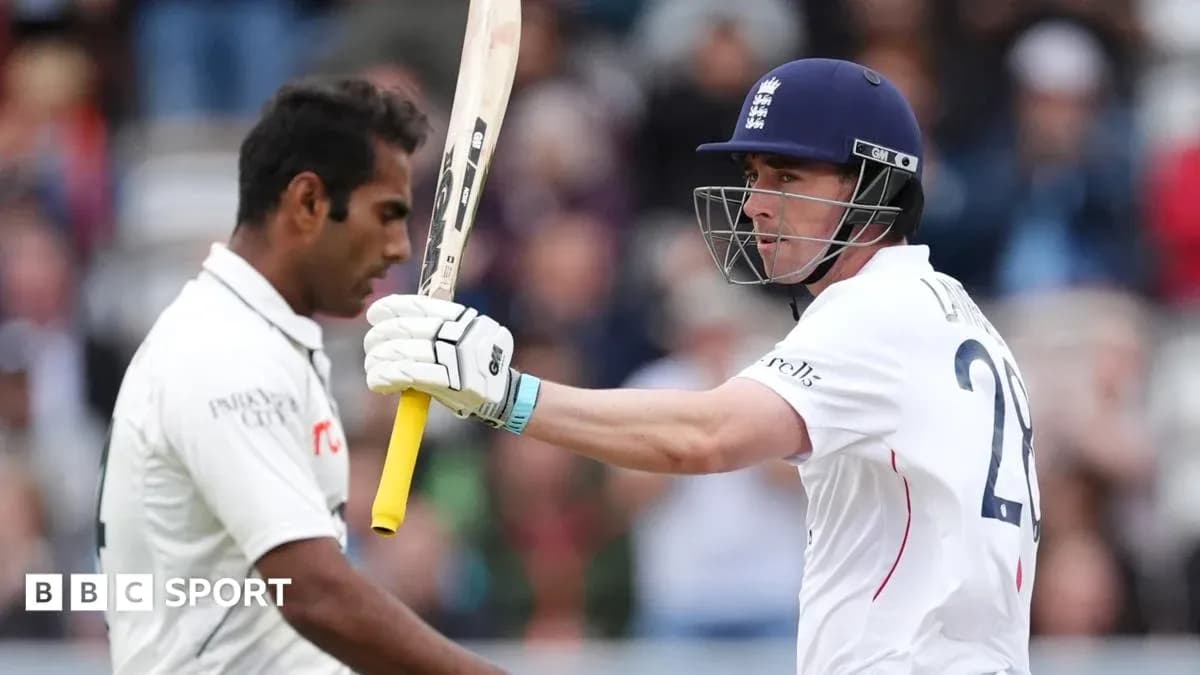
Somewhere inside that muddle of delays, drizzle and dark skies, Dan Lawrence played the innings of the match.
On a pitch that misbehaved from the first session of this Test, under heavy cloud and relentless interruption, Lawrence’s unbeaten 50 dragged England to 177-7 in their second innings and a lead of 357. In this game, on this surface, against this Pakistan batting line-up, it feels enormous.
Lawrence grabs his moment
Lawrence is not just batting for runs; he is batting for his future. In a new-look England side still searching for a settled top six after Ben Stokes’ retirement, every innings for the middle-order right-hander carries extra weight.
He responded with his second half-century in as many Tests, and this one came with teeth marks.
England resumed on 81-3, already 261 ahead but with Pakistan’s seamers licking their lips at a juicy Lord’s surface. The ball swung late, seamed sharply and, at times, misbehaved off the deck. It was the sort of day when an inside edge could miss leg stump by an inch, and the next ball might not get off the ground at all.
Lawrence first dug in alongside Harry Brook, then chose his moment to counter-attack. He rode blows to the body as deliveries spat at him, then suddenly began to free his arms, driving and cutting with intent as the field spread. Attack became his defence, and Pakistan briefly lost their line as he moved briskly towards a fifth Test fifty.
In an England batting order still in flux, this was the kind of innings selectors remember.
Abbas and the ‘shooter’ that changed the mood
If Lawrence’s innings carried the authority, Muhammad Abbas delivered the moment that will be replayed and argued over for days.
Emilio Gay had done much of the hard work the previous evening, scrapping his way to 30 not out in conditions that bordered on unfair. On Saturday, he faced just five balls. The fifth barely left the turf.
Abbas sent down a delivery that pitched on a good length and simply didn’t bounce. Gay, playing forward in textbook fashion, could do nothing as it thudded into his pad. Plumb lbw for 31. Crestfallen, he trudged off, while Joe Root shook his head on the balcony.
One ball, and the Lord’s pitch debate roared back to life.
For Gay, in his first summer as a Test opener, this was another brutal examination. The numbers – an average of 23 – do not yet scream permanence, even if the context of his dismissals might earn him some sympathy in the dressing room.
Abbas, meanwhile, tightened his grip on the match. Having taken 4-73 in the first innings, he again led Pakistan’s attack with 3-48, his nagging length and late movement exploiting every ounce of help from the surface.
Brook adjusts, Rizwan pounces
Between Gay’s dismissal and Lawrence’s late surge, Brook played the kind of innings that rarely makes headlines but wins respect in the dressing room.
Known for his belligerence, Brook reined himself in, adjusting his game to the conditions. He left well, picked off anything overpitched and accepted that on this pitch, 30s and 40s might be worth twice as much.
He and Lawrence added 45 for the fifth wicket, a partnership that felt far larger in context than on the scorecard. Just as Brook seemed set, Pakistan struck with a piece of skill that matched the conditions.
Brook edged behind and Muhammad Rizwan, standing up to the stumps, pulled off a superb catch. It was the kind of dismissal that underlined just how fraught batting had become: no room to breathe, no margin for error.
From there, wickets kept England in check, but Pakistan never quite broke Lawrence. He remained, unbeaten and unbowed, as the rain returned and the light wavered yet again.
Rain, farce and rising frustration
Only 24.5 overs were possible on a day that veered from attritional cricket to outright farce.
Play finally began at 14:40 BST after a long wait, only to be repeatedly interrupted by showers and inspections. The players left the field for what turned out to be the final time at 17:08, with the light still playable and the weather improving.
By 18:30, as the abandonment was confirmed, Lord’s basked in its most pleasant conditions of the day. The remaining spectators let the umpires know exactly what they thought of that with a chorus of boos. There was potential for another hour of play; it went unused.
For England, the frustration lay in momentum halted just as Lawrence was beginning to dominate. For Pakistan, the stoppages offered temporary relief from a task that already looks mountainous.
England’s new-look attack, Pakistan’s uphill climb
Strip away the rain and the theatre, and the numbers are brutal. Pakistan need at least 358 to win. Across three completed innings in this series, they have managed only 416 runs.
They must now face an England pace attack that looks quietly settled in the post-Stokes era. Robinson, Archer and company tore through Pakistan for 110 in the first innings, with Robinson’s 4-11 and Archer’s 3-26 exposing every technical doubt.
With the ball seaming, the pitch misbehaving and the forecast finally set fair for Sunday, England’s bowlers will fancy this. If Imam-ul-Haq’s injury keeps him out of the chase, Pakistan’s top order will walk out under even greater pressure.
The sense, already, is that England have more than enough.
A battle for places beneath the surface
Beneath the scoreboard pressure sits another contest: the quiet jostling for long-term spots in this side.
Jacob Bethell’s eventual return from a knee injury will force at least one difficult decision. It is not hard to imagine that Gay and Lawrence could be vying for the same place when that moment comes.
Gay has shown courage in brutal conditions but lacks the weight of runs. Lawrence, by contrast, has now stitched back-to-back fifties into a narrative of resilience, taking blows, riding uneven bounce and still finding a way to score.
On a day when every run felt like an act of defiance, his 50 not out carried more value than the number suggests.
The rain will clear. The pitch will not improve. Pakistan will walk out knowing they must climb a mountain that has already claimed most of their batting. England’s quicks will have the new ball, the scoreboard, and the conditions on their side.
If Lawrence’s innings turns out to be the decisive act in a first series win since 2024, it may also be the day he stopped being a fringe player and became part of England’s future.