Erling Haaland's Controversial Goal Sparks VAR Debate
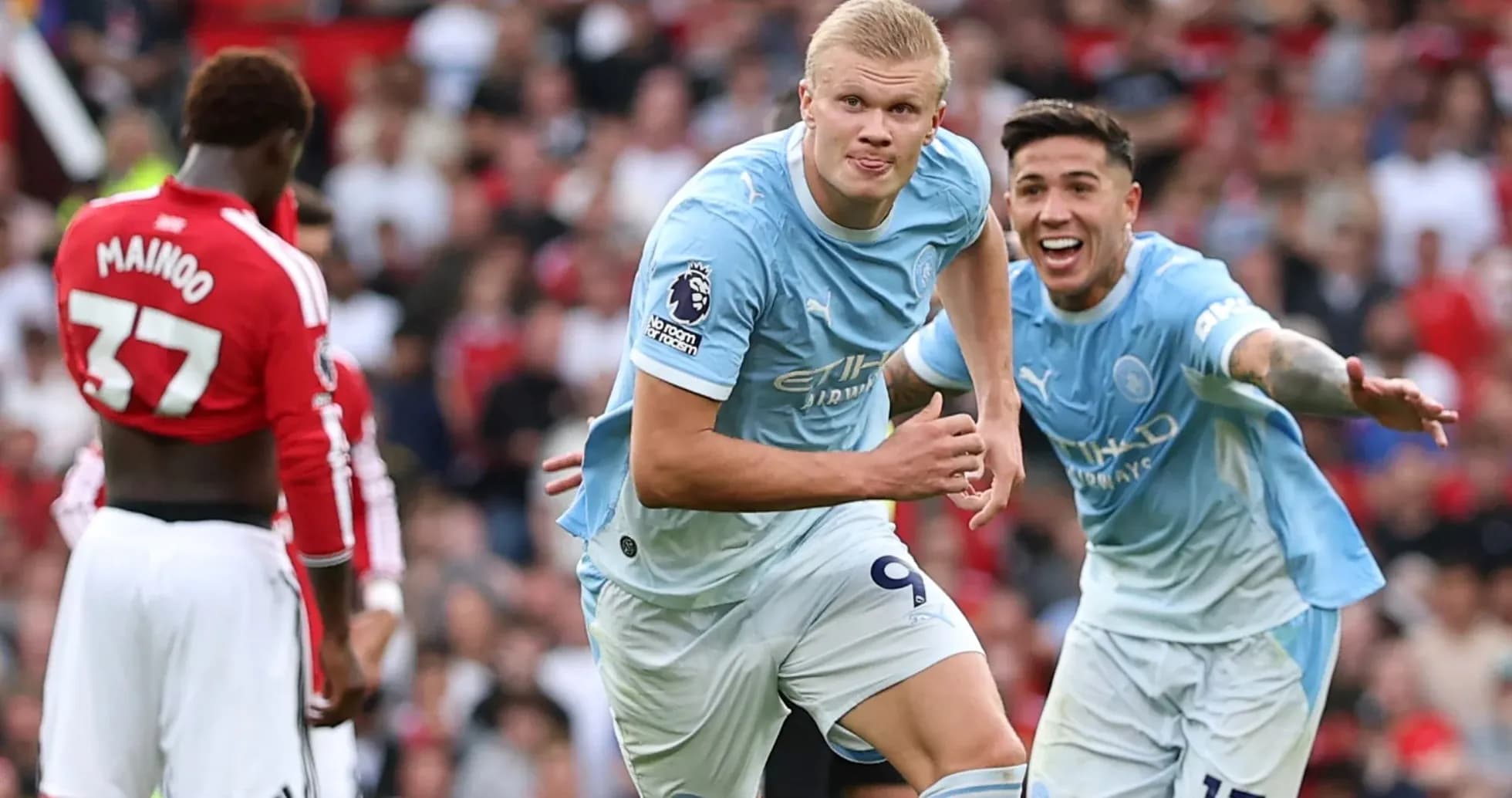
The moment came on the hour and, for a few seconds, it felt routine. Erling Haaland, tight angle, roof of the net. City’s No.9 doing what City’s No.9 does. Then the flag went up, Old Trafford exhaled, and the derby teetered on a knife edge again.
It did not stay there for long.
A VAR check overturned the assistant’s call, the goal stood, and Manchester United were left with a 1-0 defeat, a torrent of fury and, by the end of the night, an official apology that will not return the points.
The goal that changed everything
The move itself was simple, brutal. A low ball driven across the face of goal from the left, Patrick Dorgu stretching, his boot inadvertently playing Haaland onside. The Norwegian did not hesitate, thrashing the ball high into the net.
The assistant’s flag, though, had gone up against Haaland. That became the starting point for a review that has now ignited yet another debate about how VAR is used, how the offside law is interpreted, and who exactly this technology is helping.
Replays showed Dorgu’s touch clearly playing Haaland on. That part, in isolation, looked straightforward. The officials in the VAR booth saw it, drew their lines, and overturned the on-field call.
The real argument sat six yards from goal.
Enzo Fernandez, stationed as City’s furthest man forward, never got back onside. As the ball flashed across the box, he hurled himself at it, attempting a diving header. He did not make contact, but his movement dragged Lisandro Martinez towards him, forcing the United defender to abandon Haaland’s run behind him.
Haaland scored. Fernandez missed. United protested.
“It absolutely beggars belief”
Inside the VAR hub, former referee and current analyst Mike Owen has seen dozens of tight calls. This one, he believes, was anything but.
“I've sat in the VAR hub and gone through lots of decisions and it isn't easy. I mean it's 10 times harder than people think,” he told GOAL, ahead of his return to hosting ‘Match Officials Mic’d Up’ alongside referees chief Howard Webb.
“However, this was as straightforward as it gets really. I simply don't know how they can come to this decision.”
Owen revealed a crucial detail: “What I do know is that the linesman gave offside for Haaland. So he gave offside for Haaland, I know that for a fact. So that can only have distorted their view in terms of they think, ‘right well we've got to check for Haaland, let's draw the lines, oh my word he's onside’.”
Once Haaland was cleared, the focus should have shifted to Fernandez’s position and movement. For Owen, that is where the system failed.
“But how they can't check, or if they do check, how they can't pull it up for an offside from Fernandez - he clearly makes a movement towards the ball. What movement is more obvious than a diving header! It's not a case of has he tried to touch that or not? He's flung himself for a diving header. It absolutely beggars belief. It doesn't get any more straightforward in my eyes.”
United legend Gary Neville, on co-commentary duty for Sky Sports, had predicted in real time that an apology would follow. He felt a “huge call” in one of the season’s showcase fixtures had gone badly wrong. He did not have to wait long to be proved right.
Carrick’s anger and a hollow apology
Michael Carrick cut a controlled but visibly frustrated figure after the final whistle. His side had played more than 65 minutes against 10 men after Phil Foden’s early red card for kicking out at Bruno Fernandes, yet still left with nothing.
“I can't understand how we are trying to help referees - putting so many layers behind them, so many people, so many bodies, so many screens and so many offices, to try to come up with the right decisions,” he said.
“And if that's how the rule is interpreted, that you're not interfering with play because you have thrown yourself at the ball six yards from goal and pretty much nearly touched it, it's worrying if that's how the game is seen by those who are officiating it.”
The pressure told. Later that evening, Pro Ref issued a statement that effectively sided with United’s complaints.
“It was established that Enzo Fernandez did not play the ball and therefore that makes any offside offence subjective,” it read. “However, on this occasion, the VAR did not recognise the likely impact of his position and should have recommended an on-field review.
“Contact has been made with Manchester United this evening to acknowledge what we deem is an error of judgement. A review of the incident will take place.”
For United, that acknowledgement is thin comfort. The game is gone, the table unchanged, and the sense of injustice lingers.
VAR under the spotlight again
This is not an isolated flashpoint. The season is only weeks old and yet VAR has already dominated too many post-match conversations. Each controversy piles on the last, eroding trust in a system that was supposed to reduce, not multiply, arguments.
Owen, like many within the game, wants something simpler: clarity and consistency. The laws may allow for subjectivity when a player in an offside position does not touch the ball, but the game itself tells a different story when a defender clearly reacts to that player’s movement.
Here, Fernandez’s dive towards the cross shaped Martinez’s decision. Martinez’s decision left Haaland free. Haaland’s finish settled the derby.
The technology worked out the lines. The humans behind the screens failed to read the moment. How many more nights like this will it take before the sport decides what it really wants VAR to be?