Roger Federer Inducted into International Tennis Hall of Fame
NEWPORT, R.I. — The tears arrived before the punchlines, before the polished anecdotes, before the crowd at the International Tennis Hall of Fame could fully settle into their seats.
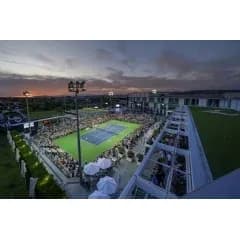
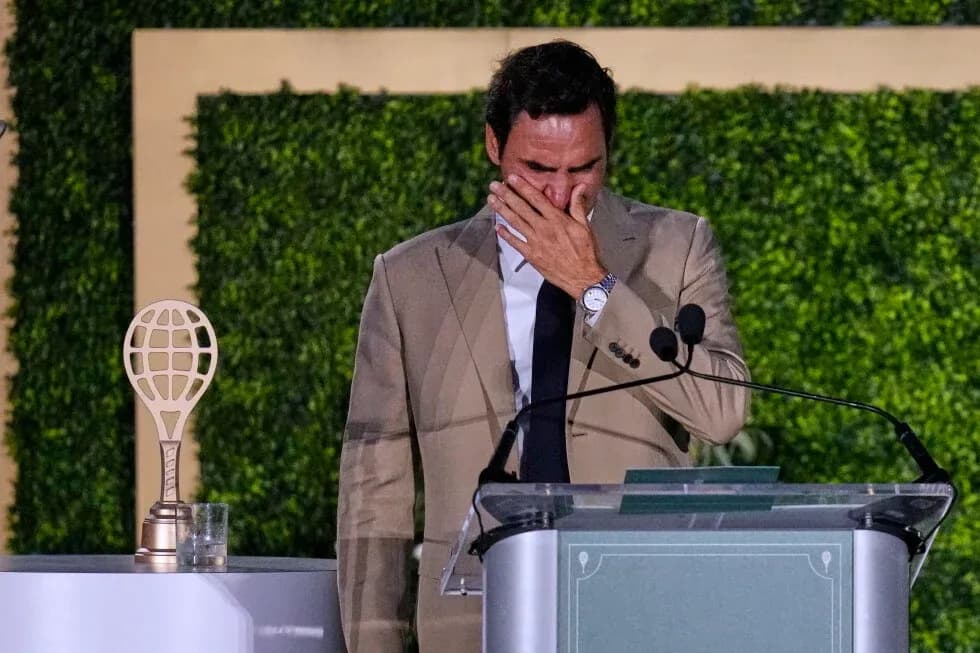
Roger Federer walked onto the grass horseshoe court at Newport in a tan suit, kissed and hugged his wife Mirka, and looked up at the stands as the late sun dropped behind the Hall’s facade. The 45-year-old, the first man ever to win 20 Grand Slam singles titles, suddenly understood this would be far harder than any fifth set.
“Oh man,” he began, voice already heavy. “This is very high level and a tough act to follow.”
Mirka had just introduced him, and Federer tried to deflect the emotion with a joke.
“I don’t know if you have been practicing secretly,” he said, smiling through the nerves, as the Hall’s 272nd inductee tried to find his footing in a different kind of arena.
A Maestro on the Edge
For nearly 30 minutes, the “Swiss Maestro” — as he was billed on the Hall’s first red-carpet show earlier in the evening — stood where so many of the sport’s greats had stood and let the memories rush over him.
He admitted it straight away: “I was a little stressed to be honest.”
This was not the Federer who glided through 237 consecutive weeks as world No. 1 in the ATP rankings, who built a dynasty on fluid movement, a quick approach to the net, and a one-handed backhand that seemed to obey a different set of laws. This was a man fighting his own voice.
Halfway through the speech, the emotion finally caught him. He began talking about his childhood hero, Stefan Edberg, and the words stuck in his throat. The crowd saw it coming. Federer felt it coming.
“These are happy tears,” he managed, but the dam had cracked.
The more personal the subject, the harder it became. When he turned to longtime coach Severin Luthi, the tears returned. When he tried to thank Mirka, they overwhelmed him.
“Now the Mirka part,” he said, stopping as the emotion surged again. “Oh gosh, this such a mess.”
He tried to laugh it off, but the tears moved faster than his punchlines.
“I need tissues and sunglasses, everything to protect me right now,” he told the crowd, still battling to regain control.
Closing Like a Champion
Federer has always known how to close. Whether it was five consecutive U.S. Open titles from 2004 to 2008 or a run of 10 straight Grand Slam finals — eight of them victorious — he built his legacy on finishing the job.
Newport was no different.
He steadied himself, turned his attention to the people who rarely make the headlines, and thanked the ball boys. Then he spoke directly to the players who will follow him, urging them to keep pushing the game to new heights, just as he and his rivals once did.
Federer’s résumé hardly needs embellishment. Eight Wimbledon titles. Six Australian Opens. One French Open, in 2009, to complete the career Grand Slam — a feat only eight men have achieved. Three weeks removed from his 45th birthday, he stood in front of the sport’s past and present and tried to process his place among them.
“I’m thrilled to have made the journey here,” he said. “It’s amazing to see yourself in a place like this. To immerse yourself in the history of the sport means a lot to me.”
The line hung in the evening air, a champion finally talking about permanence instead of performance.
Carillo Joins the Legends
Federer did not enter alone. Mary Carillo, the former player turned acclaimed broadcaster, was also inducted, honored as a contributor to the sport.
Presented by Billie Jean King, Carillo stepped into a Hall that has already recognized her broader impact: she is a member of the Sports Broadcasting Hall of Fame, a voice and presence that has helped shape how tennis is seen and understood.
King did not dress it up.
“She has earned her spot in sports journalism and she has earned her spot in Newport,” King said, a simple verdict on a long, decorated career.
Carillo, 69, stood before a cluster of Hall of Famers and allowed herself a moment of disbelief.
“To walk through these gates here in the company of you people, that was beyond my dreams,” she said.
As the light faded and the ceremony wound down, the stage held two figures who had spent their lives explaining tennis in very different ways: one with a racquet, one with a microphone. On this night in Newport, both were written into its history, side by side.