Flora Pili: From Anonymity to Croke Park Showdown
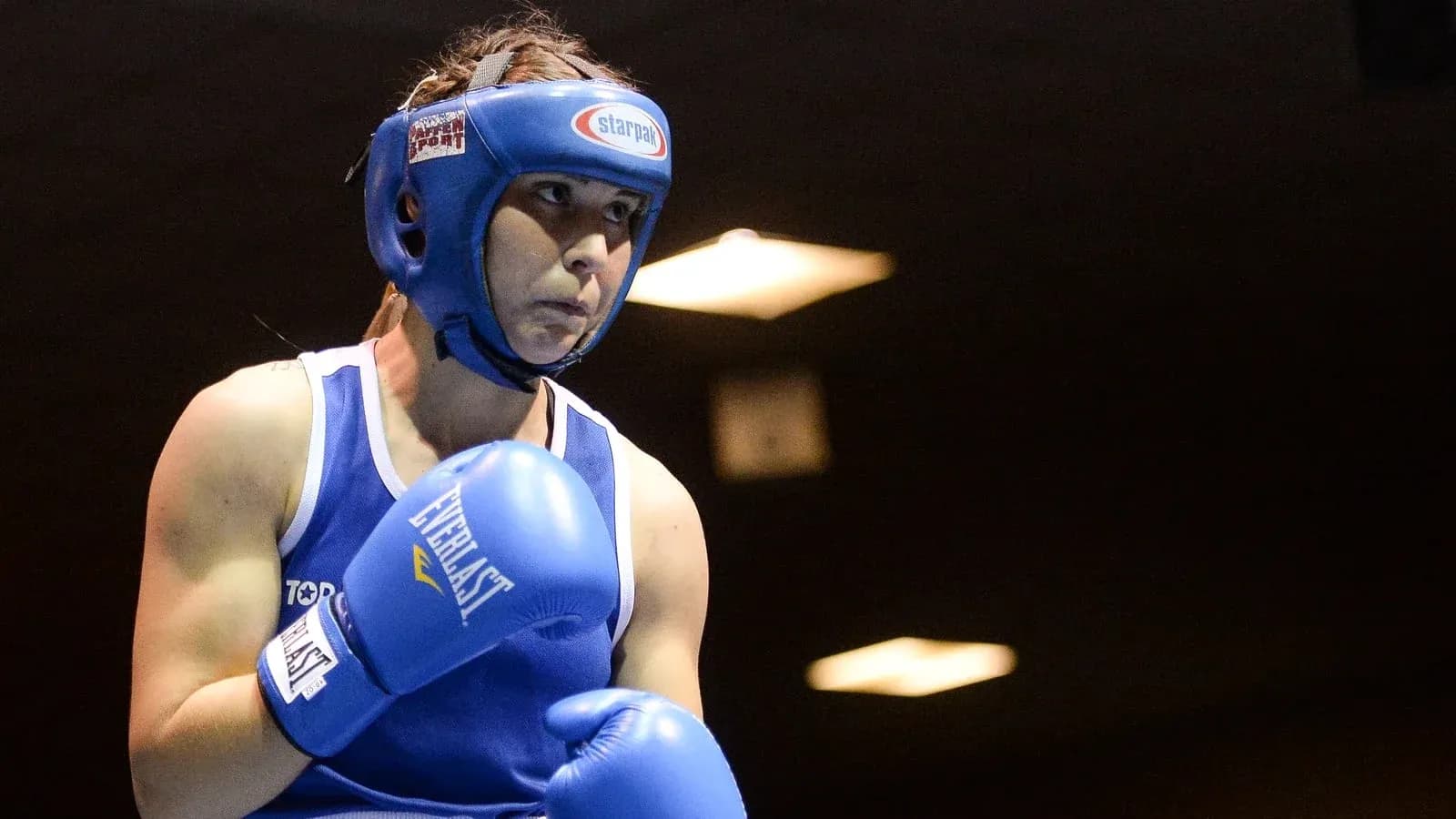
On a damp Dublin week seven years ago, a teenager from France slipped into the National Boxing Stadium, took her beatings and disappeared back into anonymity.
Her name was misspelled on the bout sheet: “Flora Pile”. The opponent was Kellie Harrington. The result was brutal in its clarity – a 5-0 defeat – and the rest of the trip was no kinder. Twice more she lost to Italy’s Irma Testa, another future Olympic medallist. Three fights, three defeats, no glamour, no fanfare.
The teenager was Flora Pili. And on Saturday night, she walks out at Croke Park to face Katie Taylor.
From sparring partner to headliner? Not quite. From forgotten name on an IABA running order to the other half of a stadium event that will echo through Irish sport? That’s closer.
From harsh lessons to hard edges
For most young boxers, a week like that in Dublin would linger as a warning. Outclassed by Harrington, undone by Testa, Pili left Ireland with nothing but bruises and experience. She had pedigree – French Youth Champion in 2015 – but beyond her own federation, few were paying attention.
She kept going.
In 2019, she climbed to the top of the French domestic scene, winning the French Senior National Championship at Super Lightweight. It did not trigger a rush of international invitations. There was no Olympic breakthrough, no world championship run. Her best continental result was a European Under-22 quarter-final exit that same year.
That was the ceiling of her amateur career. So she walked away from it.
Late in 2019, at 21, Pili turned professional. No grand unveiling. No fanfare. Just a quiet restart.
Since then, she has done the one thing that always gets noticed in the end: she has not lost. Twelve fights, twelve wins. No defeats, no draws.
Most of those nights have played out far from the sport’s spotlight. Small halls and modest arenas in France. One trip to Rumelange in Luxembourg. Another to Padua in Italy. No travelling army of fans. No viral knockouts. Just steady, unfussy progress.
Her last three contests have all been staged in her hometown of Saint-Avold, in the north-east of France near the German border. That is where, in December of last year, she made the first significant dent in the wider consciousness of the sport.
On that night, Pili edged Serbia’s Jelena Janicijevic by majority decision to claim the vacant IBO World Super Lightweight title. It was a world title of the second tier, but it was still a belt, still a marker, still proof that the quiet road she had taken was leading somewhere.
The unknown walking into the light
Yet in Ireland, she remains a mystery. To all but the most obsessive boxing reporters, Flora Pili is a name they had never written, never typed, never even Googled before this summer.
She does not yet have a Wikipedia page. In the modern sporting world, that absence almost feels like a verdict. For now, she exists mainly on bout sheets, federation records and the memories of those who have watched her work the smaller European circuit.
So when reporters walked into the Croke Park press conference back in June and saw “TAYLOR V PILI” splashed across the backdrop, there was a double take. Taylor, of course. But Pili? Who?
Eddie Hearn reached for history. He reminded the room that Muhammad Ali had been the last man to fight at Croke Park. That was 1972, when Ali beat Al “Blue” Lewis. The main event that lived forever, and the opponent whose name survives mainly in quiz questions and pub debates.
Pili arrives in that role. The outsider. The lesser-known champion. The name that, years from now, might be used to test who really remembers the details of this night.
Her own camp felt the jolt when the call came.
Christian Cherchi, her Italian coach, admitted the scale of the offer floored them. This was not just another away corner assignment, not just a chance to nick a belt and a payday.
“This is not a boxing fight... it is a historic event. We were in a bit of shock when we received the message – ‘are you interested in fighting Katie Taylor?’” he said.
He did not hesitate.
“I didn't even call Flora to ask. I said, ‘Yes, it will be an honour!’ Because it was a no-brainer.”
The fighter herself needed no sales pitch. When Hearn nudged her to speak at the top table, she did so in French, with Cherchi translating. No bluster, no trash talk, just a clear sense of what this night means.
She has followed Katie Taylor’s career. She knows exactly whose orbit she is stepping into. A legend of women’s sport. The face of Irish boxing. The standard-bearer for a generation.
“She's a legend of women's sport. I'm coming here with all my team to make a name for myself,” came the message.
From forgotten undercard to Croke Park
That is the arc that gives this fight its edge. Taylor, the icon returning to a stadium that has waited decades for another great boxing night. And across from her, a woman who once slipped quietly through Dublin as a beaten teenager and now walks back into the city at the very centre of its sporting attention.
Pili is still the unknown. Still the one without a Wikipedia page, without a long trail of viral clips, without the weight of expectation on her shoulders.
But she is also something else now – unbeaten, a world title holder, hardened by years of work away from the cameras.
On Saturday, under the lights at Croke Park, Ireland will finally find out who Flora Pili really is.