Flushing Meadows Chaos: A Grand Slam Experience
By the time the last few stragglers drifted out of Flushing Meadows, the tennis was over but the chaos was not. Under the harsh strip lights of a tournament shop, a small crew of workers huddled beneath a jagged hole in the ceiling, wrestling with a burst pipe and a growing waterfall that threatened to ruin thousands of pounds’ worth of merchandise.
It felt less like the climax of a grand slam and more like the clean-up after a storm.
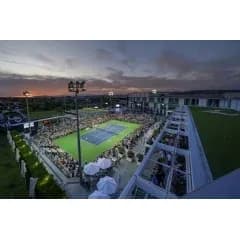
Walk into Arthur Ashe Stadium this year and the warning signs were literally on the walls: “Pardon our appearance while we write the next chapter of Arthur Ashe Stadium.” The message tried for romance. The reality was grim. Inside the bowels of one of the sport’s showpiece arenas, the place looked and felt as if it were coming apart at the seams.
Leaks became part of the daily routine. New ones. Different ones. The media centre sprouted plastic sheeting like some improvised art installation, long transparent tongues hanging from the ceiling and feeding into buckets that filled with a steady, mocking drip. In the workers’ restaurant, a dramatic burst from above forced a full-day closure. The joke among staff was simple and dark: no sensible person would willingly spend every day beneath a ceiling that seemed one bad groan away from collapse.
Photographers had their own ordeal. Several reported feeling ill after breathing in the rancid fumes rising from the drains in the photo pit. The stench matched the mood.
On every level, this was the worst grand slam in recent memory.
The infrastructure was one problem. The atmosphere was another. Years from now, 2026 will be remembered in New York as the year the influencers took over. Ring lights at courtside. TikTok shoots in mid-rally. People repeatedly standing, backs to the court, to frame the perfect selfie while points were in play. The idea that everyone must “grow the game” at any cost curdled into something uglier: a sense that the tennis itself was just background content.
At times the din on Ashe was so relentless that even Aryna Sabalenka’s trademark roars were swallowed by the buzz of conversation and the whirr of phones. When Sabalenka can’t be heard, you know the crowd has lost the plot.
And then there were the hours. On Tuesday into Wednesday, the schedule descended into absurdity. Between 11.30am and 3.33am, Ashe staged 16 hours of tennis, four matches, four deciding sets, drama on a loop. It was gripping. It was also a glaring indictment of a sport that still refuses to take early-morning finishes seriously. Players, fans, broadcasters, staff — all dragged through another marathon night because no one in charge wants to grasp the obvious.
Yet in the middle of the dysfunction, the sport itself fought back.
Women’s tennis, again, carried the tournament. The entire top six reached the quarter-finals. For the first time in 51 years, the top four players in the world locked down all four semi-final spots, slamming the door on the rest of the field. The hierarchy held, and the quality soared.
Sabalenka’s comeback against Linda Noskova, the 21-year-old Wimbledon champion, stood out even in that company. It was one of the matches of the year: raw, ferocious, and deeply human. After a miserable summer that threatened to break her, Sabalenka clawed her way not only through that match but all the way to the final. At some point, when the frustration fades, she will look back at New York and see resilience rather than regret.
Elena Rybakina left with the trophy and something more. She walked into the tournament juggling the No 1 ranking, an achilles problem, and a brutal draw that could easily have swallowed her whole. Instead, she imposed herself. On hard courts over the past year, her level has bordered on ruthless, and in New York she confirmed it. Her quiet, almost understated presence contrasted sharply with Sabalenka’s high-voltage intensity, but that contrast only sharpened the spectacle.
Zheng Qinwen delivered the kind of comebacks that stick in the mind long after the draw sheet is filed away. From 0-5 down to 7-5 in the third set against Madison Keys in round three. From 0-5 to 7-5 in the first set against Iga Swiatek in round four. Back-to-back escapes that defied logic and showcased a fighter who refused to accept the script. Her return to the big stage felt earned, not gifted.
On the outside courts, Iva Jovic and Alexandra Eala showed another side of the sport. They fought deep into the night with a relentlessness that never once undercut their friendship. Every point contested, every changeover shared with the ease of two players who know they can hit each other as hard as possible and still laugh afterwards.
Coco Gauff’s semi-final run offered its own quiet redemption. Twelve months ago, her serve collapsed in front of the world and left her in tears on court. This time, the same stage showed a different player: more assured, more complete, her progress etched into every service game she held under pressure.
The men’s event told a harsher story.
Injuries stalked the draw and the season. Carlos Alcaraz and Jannik Sinner’s struggles grabbed the headlines, but they were only the most visible part of a wider crisis. Jack Draper, Holger Rune, Lorenzo Musetti, Arthur Fils, João Fonseca — all have lost chunks of the past year to their bodies breaking down. Even those who made it to New York did so with the scars and rust of long absences still visible in their games.
Yet from that damaged field came one of the moments of the sporting year.
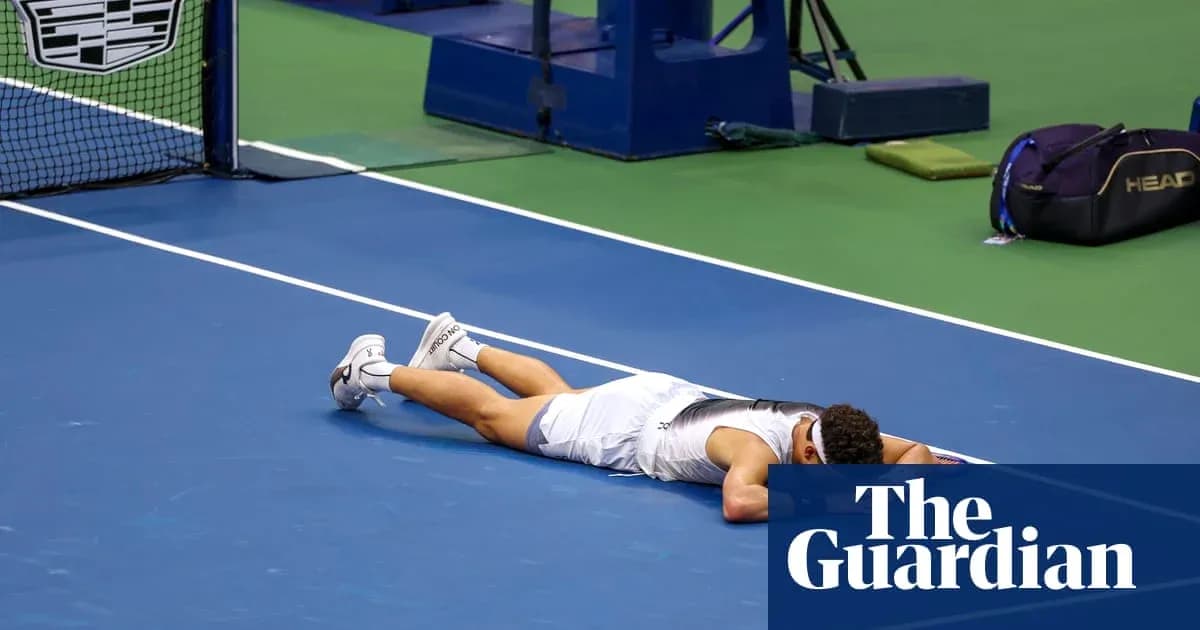
At 3.40am on Wednesday, Ben Shelton finished a monumental win over Alcaraz. The match lasted 4hr 28min and pushed both men to the edge. Alcaraz vomited repeatedly, emptied himself in every sense, and still lost by the narrowest of margins in a fifth-set tie-break. It was brutal. It was also, for him, a kind of liberation.
After four and a half months out with a wrist injury, unsure how his body would hold up, he finally walked off Ashe knowing he had gone the distance again. Not the result he wanted, but the feeling he craved. As he disappeared down the tunnel towards the locker room, a place that has seen so many broken players and broken seasons, his face cracked into a wide, unguarded smile.
In a tournament where ceilings leaked, drains stank, and the night sessions stretched into parody, that smile — defiant, exhausted, utterly genuine — might be the clearest sign that, beneath all the mess, the sport itself is still very much alive.