Gabriel Jesus' Debut at Barcelona: A New Chapter
Gabriel Jesus needs only a few strides to understand a new stage. New shirt, new league, same instinct.
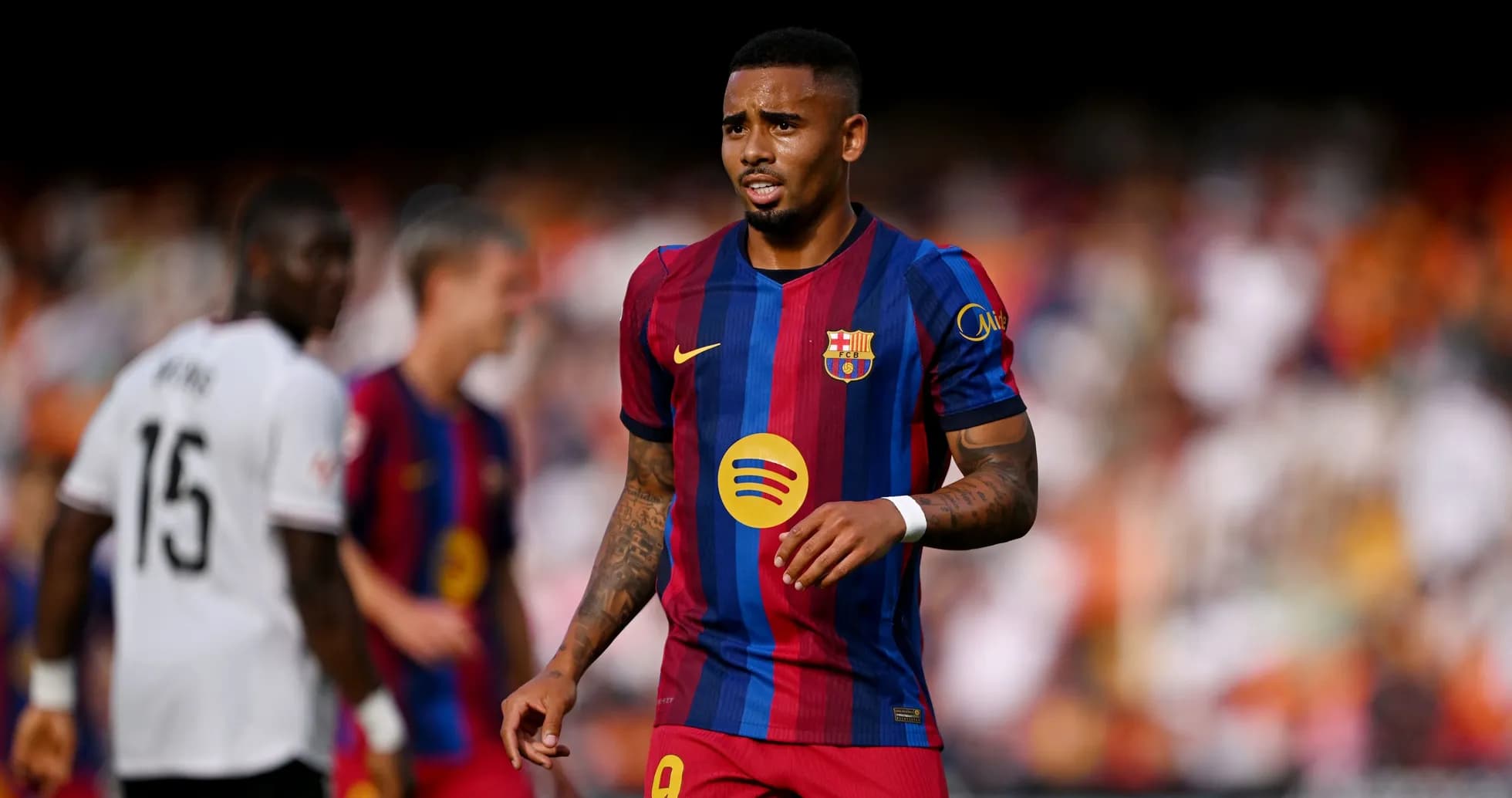
A week after signing for Barcelona, the Brazilian finally stepped over the white line in La Liga, slipping into the game at Mestalla in the 80th minute with the job already done. Hansi Flick’s side were four goals clear, the tension drained from the contest, the away end already in celebration mode. It was the ideal soft landing for a forward whose last 18 months have been anything but gentle.
A whirlwind arrival
Barcelona only pushed his transfer over the line on deadline day, paying €10m plus performance-related add-ons and handing him a three-year deal. For a club forced into creativity by their finances and the departures of Robert Lewandowski and Ferran Torres, it was a move that mixed risk with opportunity.
Jesus, 29 now and far from the raw prospect who arrived at Manchester City, walked into a dressing room that expects its No 9s to do more than just score. Lead the press. Link the play. Live inside the chaos of the penalty area and still make sense of it. On his first night in blaugrana, he had only a small window to show any of that, but the symbolism mattered.
When the final whistle went, he didn’t hide what it meant to him. Debuting in this jersey, in this stadium, with this badge on his chest, hit him hard. The emotion was obvious in his words to the club’s media team.
A body still catching up
Beneath the joy, there was honesty. Jesus has been through a brutal stretch physically, the most serious blow coming with a major ACL injury in 2025 that helped derail the end of his Arsenal spell. The scars of that period are not easily shaken off, no matter how bright the lights are at Camp Nou.
"I feel physically good, but I need more match sharpness. I’m very happy with the minutes I got," he said, offering a clear-eyed assessment of where he stands. He knows what a fully tuned version of himself looks like. This isn’t quite it yet.
He repeated the point because it matters. The legs respond, the lungs hold, but match rhythm only returns with repetition. "Physically I feel good, though I’m still building up match fitness. The more minutes I get, the better I’ll feel. I'm just really happy for the debut and the win."
Flick’s Barcelona do not carry passengers. His system demands a relentless press, constant movement, and forwards who defend as aggressively as they attack. Jesus understands he will be eased in, that his starting place must be earned one substitute appearance at a time.
Flickball and a statement in Mestalla
Barcelona’s performance in Valencia underlined exactly why the club felt they could take this gamble. They were sharp. Fluid. Clinical. The kind of display that leaves a home crowd resigned long before the clock runs down.
Jesus watched most of it from the bench, then joined in once the game had been stretched and broken. What he saw impressed him as much as it reassured the hierarchy who signed him.
"We have a very great team full of quality and we play beautiful football," he said afterwards, the admiration evident. For a player who has spent his career in high-functioning, high-pressing sides, it felt familiar, but with the added romance of a club he has long admired.
"I love football and I love Barcelona. This is the way I love playing. It makes me very happy." Those lines will travel quickly among the fanbase. At a club where emotional connection matters almost as much as end product, that kind of declaration lands.
A calculated gamble with upside
From the boardroom, the picture is clear. Sporting Director Deco walked into this summer needing a centre-forward solution after Lewandowski’s exit and Ferran Torres’s departure ripped out two central attacking options. Money was tight. The margin for error, even tighter.
At €10m, Jesus represents a bet that the worst of his injury troubles lie behind him and that the medical staff can keep him on the pitch. If they can, Barcelona will have secured a forward with experience of title races, Champions League nights and the tactical demands of a pressing game for a fraction of the usual cost.
His track record at Manchester City and Arsenal suggests he fits the template for the "Flickball" era: aggressive without the ball, intelligent with it, able to knit together attacks as well as finish them. The question is no longer about talent. It’s about durability.
For now, the first box is ticked. He is in the shirt, in the league, on the pitch. The debut is done, the nerves released. The next step is harder, and far more important: turning 10 relaxed minutes at Mestalla into a sustained role at the heart of Barcelona’s new project.