Germany's Goalkeeping Future: Matthäus on Ter Stegen, Urbig, and Karius
Lothar Matthäus has seen enough. In his eyes, Germany’s next era in goal is already taking shape – and it could begin with a familiar face finally getting the job he has chased for a decade.
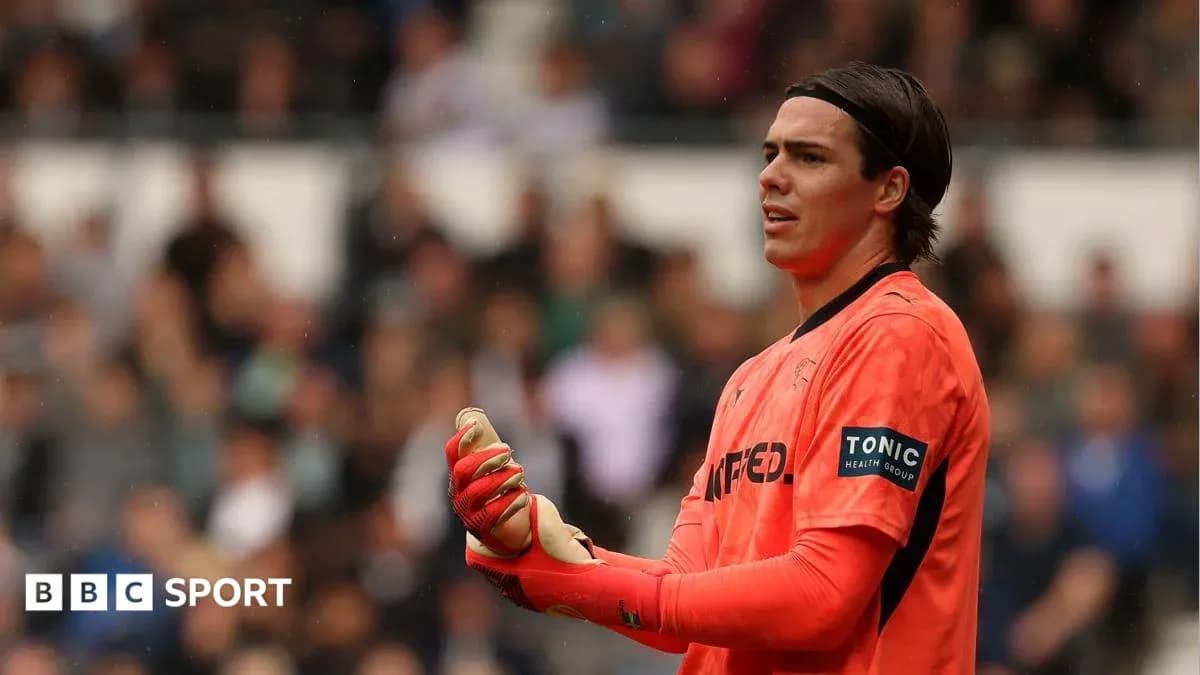
The record international used his Sky column to lay out the new landscape in the Germany goal under Jürgen Klopp. At the top of his list: Ajax keeper Marc-André ter Stegen, reborn in Amsterdam and, in Matthäus’ view, a serious contender to succeed Manuel Neuer yet again.
Matthäus wrote that he assumes ter Stegen “will definitely be involved” in the new cycle and went a step further: if the 34-year-old maintains his level at Ajax, he is “a candidate for the number one spot in the Germany goal.” It is a line that would have sounded routine five or six years ago. Today it carries a different weight, after injuries, setbacks and the long shadow of Neuer have repeatedly blocked his path.
Ter Stegen: the nearly man of German tournaments
Ter Stegen’s Germany story has always felt like a promise that never quite got kept. For years he stood behind Neuer, the undisputed number one. When the door finally seemed to open – with Neuer stepping away from the national team and ter Stegen pencilled in as first choice for the 2026 World Cup – it slammed shut again. Neuer returned from his DFB retirement, and ter Stegen’s body betrayed him once more.
In Barcelona, injuries and a loss of status pushed him down the pecking order. A lengthy saga over his fitness ended with back surgery and a loan to Girona last winter. There, a thigh injury stopped any real momentum. The next reset came in the summer, when he agreed a season-long loan to Ajax, a move designed to give him matches, rhythm, and one last push at the Germany shirt he has never worn as first-choice at a major tournament.
The numbers so far are mixed: 11 goals conceded in seven games, plus a notable error in the Conference League play-offs. His Barcelona contract runs until 2028, but his future at the Camp Nou is effectively over. For Germany, that creates a clear dynamic. A fit, in-form ter Stegen would likely only return if he is promised the starting role he has chased for so long. At 34, he is running out of tournaments to wait.
Urbig: the long-term project
While ter Stegen represents the here and now, Matthäus is already looking beyond him. Long term, he sees Bayern Munich’s Jonas Urbig as Germany’s future number one.
Urbig is currently Neuer’s understudy in what is widely expected to be the veteran’s final season. For Matthäus, the DFB has a duty: they must “build up” Urbig so that Germany has a clearly defined first-choice keeper at future tournaments. Age is the decisive factor. Urbig is young enough, Matthäus argues, to play in “the most tournaments” of the emerging generation.
The message is clear. Ter Stegen may finally get his shot, but the conveyor belt cannot stop. The next decade, in Matthäus’ view, belongs to Urbig.
Karius back in the frame
The most striking name in Matthäus’ list, though, is Loris Karius. The Schalke 04 goalkeeper has spent years trying to escape one night in Kyiv. Matthäus believes his form in Gelsenkirchen has finally earned him that chance.
“Karius, above all, has a good chance” of a call-up if selection is based purely on performance, he wrote. Last season, Karius was “outstanding in goal” and a major factor in Schalke’s promotion. He then underlined his resurgence after going up, with Matthäus highlighting the 0-0 draw against Bayern Munich as a showcase of his class.
The past, Matthäus insisted, “should stay in the drawer.” By that he meant the 2018 Champions League final, the errors against Real Madrid, and the fallout with Jürgen Klopp at Liverpool that effectively ended his Anfield career.
Back then, Karius had been Klopp’s regular goalkeeper, only to make two catastrophic mistakes on the biggest stage. Loans to Besiktas and Union Berlin followed, and in 2022 he finally left Liverpool on a free transfer. During his time in Istanbul, his relationship with Klopp cooled, according to a report by kicker, and he never played for him again.
The story has turned in Germany. In January 2025 he signed for Schalke, a move that has since looked like a stroke of luck for everyone involved. Promotion, stability, redemption. Now, potentially, a way back into the national team picture under the same coach whose trust he once lost.
A crowded queue for Klopp
Karius is not alone. Matthäus estimates that seven or eight goalkeepers are in contention for a Germany call-up as Klopp prepares for his first games in charge. Alongside ter Stegen, Urbig and Karius, he also mentioned Eintracht Frankfurt’s Noah Atubolu as part of the core group.
Beyond that quartet, several other names are firmly on the radar: Alexander Nübel at Besiktas, Finn Dahmen in Augsburg, Mio Backhaus at Freiburg and Hoffenheim’s Oliver Baumann have all been discussed in recent weeks. It is not a crisis of options; it is a puzzle of hierarchy.
Klopp’s debut comes with an away trip to the Netherlands in the Nations League, and he is reportedly considering an XXL squad to open his tenure. After that, Germany face Greece twice and host Serbia to complete a four-match window that will offer a first glimpse of his plans.
Somewhere in that stretch, the new order in the Germany goal has to start taking shape. Will Klopp lean on ter Stegen for immediate authority? Fast-track Urbig as the long-term anchor? Hand Karius the redemption arc of a lifetime?
For a country that once took its number one for granted, the gloves are suddenly up for grabs again.