Guy Sasson’s Grand Slam Dream Falls Short at US Open Final
Guy Sasson’s Grand Slam dream came down to a single match tiebreak in New York – and slipped away by the narrowest of margins.
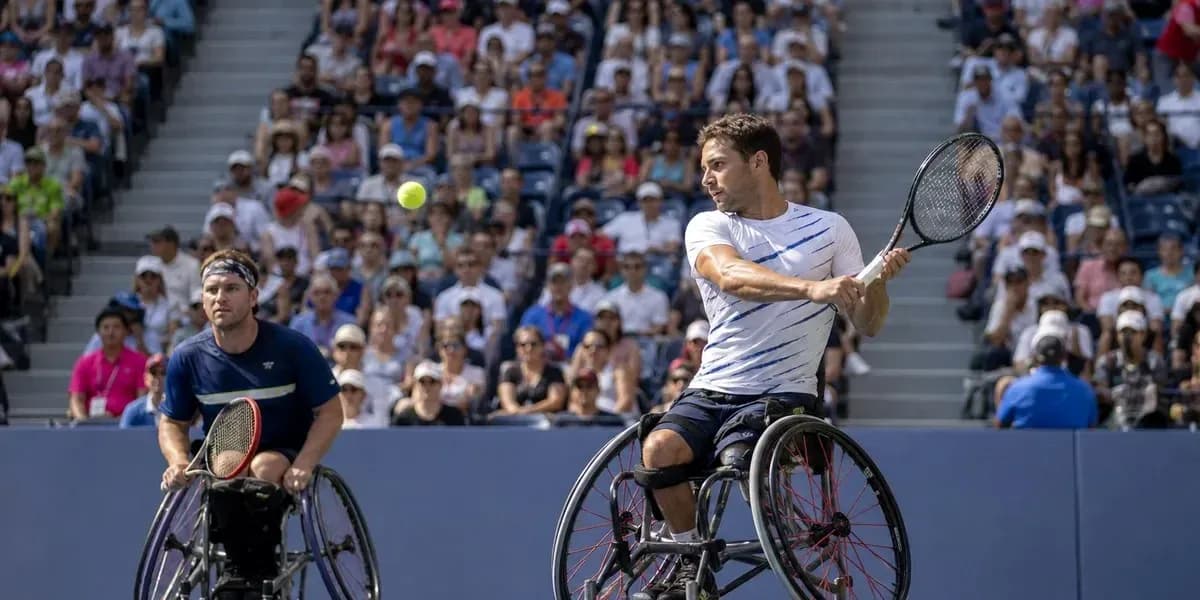
The Israeli quad wheelchair star, chasing a calendar Grand Slam in doubles, and his Dutch partner Niels Vink fell 2–6, 6–3, 7–10 to Sam Schroder and Australian Jin Woodman in the US Open final, ending a remarkable run that had stretched unbroken through Melbourne, Paris and Wimbledon.
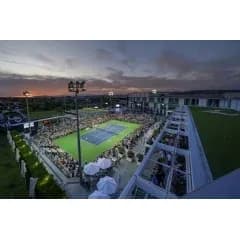
They had arrived at Flushing Meadows as the pair to beat. Top seeds. The dominant team of the season. Schroder and Woodman, seeded second, carried pedigree and power, but Sasson and Vink opened like champions. They ripped through the first set 6–2, imposing their patterns, taking time away, looking every inch the duo destined to complete the sweep.
Then the tide turned.
Schroder’s returns began to bite, Woodman found his range, and the second seeds wrestled back control to claim the second set 6–3. It left the calendar Grand Slam hanging on a match tiebreak – ten points to decide an entire year’s storyline.
The tension told. A couple of loose points, a couple of bold strikes from across the net, and the door slammed shut on history at 10–7. The dream ended in the space of a handful of rallies.
Even so, Sasson’s US Open was far from defined by that final twist.
Vink ends Sasson’s singles run
In singles, the world No. 3 and third seed in the quad division carved his way into the semifinals, only to run into the man who has shared his biggest stage all year – Vink.
The semifinal carried the strange energy of familiarity. Partner versus partner. Sasson fell behind 2–5 in the opening set, seemingly outplayed, then surged. He reeled off games, dragged himself level at 5–5 and forced Vink to dig deeper. The Dutchman answered, edging the set 7–5 and then closing out the match 6–3.
Vink went on to lift the singles title, underlining the level of opposition that blocked Sasson’s path in both draws.
Israeli program earns its stripes
Back home, the performances in New York resonated far beyond a single result.
Israel ParaSport Center CEO Boaz Kramer hailed the work of Sasson and fellow wheelchair player Sergei Lysov, framing their Grand Slam campaigns as the product of years of graft. He pointed to the long, demanding road behind any major title – and the teams that carry athletes through it – and made it clear the backing will not stop here.
The center, Kramer said, will continue to support Sasson and Lysov, along with their head coaches Ofri Lankri and Damien Martinique, as they build toward LA28. The message was simple: this is not a finish line, it is a checkpoint.
Tough lessons for Lysov
For Lysov, the US Open delivered harsher lessons.
Competing for the second time in the men’s wheelchair division, he lost his opening singles match in three sets, a tight contest that refused to tilt his way. In doubles, he again found himself edged out, this time in a first-round match decided by a match tiebreak.
No deep run, no late-round spotlight – but valuable minutes on one of the sport’s biggest stages, and another marker in his development curve.
Brand’s first taste of the big time
If Sasson’s week was about legacy, Dan Brand’s was about beginnings.
Just 17, Brand made his junior US Open debut and wasted no time making an impression, winning his first-round singles match and settling into the surroundings of Flushing Meadows. In the second round he fought into a deciding set, only for severe cramps to strike midway through the decider. He battled on, but the match slipped away in three sets.
His doubles campaign, alongside Austrian partner Tilo Berman, carried similar promise. Seeded fifth, they advanced to the second round before falling to Yannick Alvarez of Puerto Rico and American Ryan Cozad.
The margins were small, the experience huge.
Brand will not linger in New York for long. After a brief visit with his family in Israel, he is scheduled to head to Japan for the J500 Osaka Mayor’s Cup World Super Junior Tennis Championships, running from September 21–27. Another continent, another test, another step.
Sasson’s near-miss, Vink’s title, Lysov’s battles, Brand’s first strides – together they sketch a clear picture: Israeli wheelchair and junior tennis is no longer just arriving at the big events. It is starting to shape them. The only question now is how far this generation can push by the time LA28 comes into view.