Harry Kane's Ballon d'Or Challenge: Goals vs. Trophies
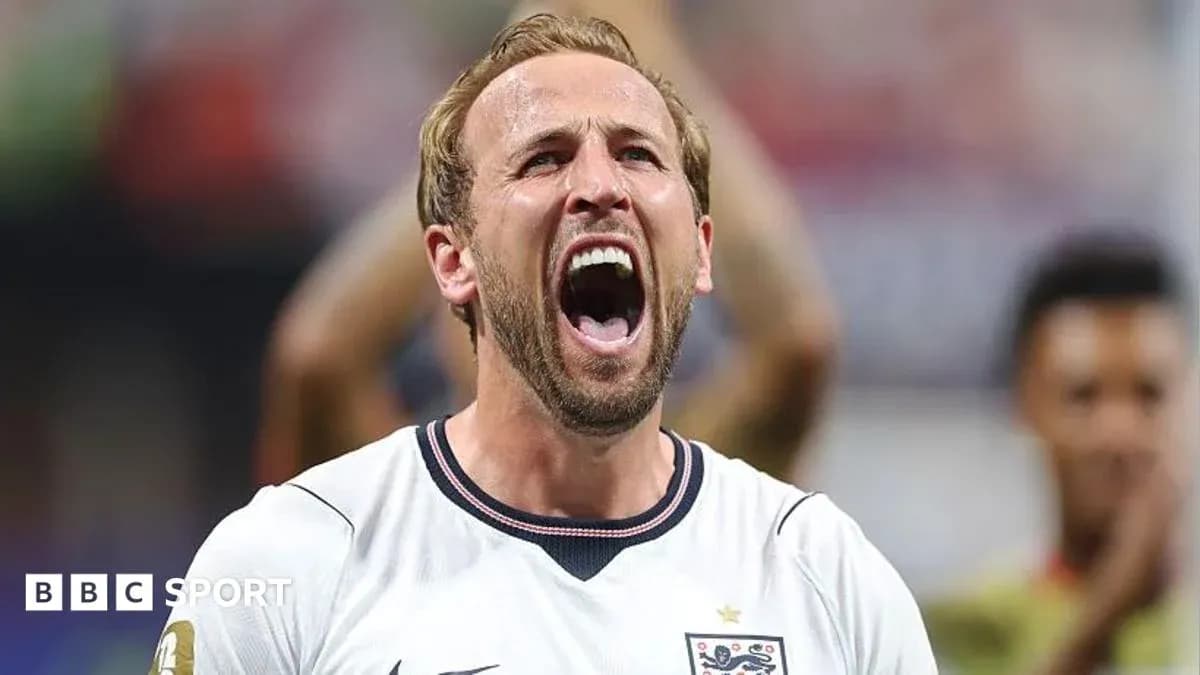
Harry Kane stands on the brink of football’s most coveted individual prize, the bookmakers’ clear favourite as the Ballon d’Or shortlist lands on Tuesday. Goals have dragged him here – a torrent of them for club and country – but history keeps whispering the same warning.
The weight of the World Cup
Since 1956, when Sir Stanley Matthews took home the first Ballon d’Or, the game’s grandest stages have tilted the vote. World Cup years, in particular, leave fingerprints all over the trophy.
France Football’s own retrospective work laid that bare. To mark the award’s 60th anniversary in 2016, the magazine re-examined every pre-1995 edition, when only European players were eligible. Its conclusion was stark: had the prize always been global, Pele would have walked away with the 1958 Ballon d’Or after firing Brazil to their first World Cup at just 17.
Raymond Kopa officially won that year, rewarded for driving France to the semi-finals. Four years on, Josef Masopust was the official winner after captaining Czechoslovakia to the 1962 final, yet France Football judged Garrincha as the true standout, the man who carried Brazil to back-to-back World Cups.
The pattern hardened over time. The same review handed Pele another retroactive crown for 1970, when he orchestrated Brazil’s third World Cup triumph. On the official roll of honour, Bobby Charlton (1966), Paolo Rossi (1982), Lothar Matthaus (1990), Zinedine Zidane (1998), Ronaldo (2002) and Fabio Cannavaro (2006) all climbed the Ballon d’Or podium with the World Cup already in their hands.
Even the “exceptions” barely broke stride at the tournament. Johan Cruyff in 1974 and Luka Modric in 2018 both lost World Cup finals, but their runs, their influence, and their aura carried them past the rest.
France Football’s revisionism delivered one blunt message: from 1958 to 1994, every South American World Cup-winning side would have produced a Ballon d’Or winner had the rules allowed it.
That is the tide Kane is swimming against.
When trophies trump numbers
The World Cup is not the only giant in the room. In the modern era, the Champions League, European Championship and Copa America have all become powerful levers in the vote.
Look at the last 19 winners. Only four failed to lift one of those major trophies in their Ballon d’Or year. To escape that gravitational pull, you need to be Lionel Messi or Cristiano Ronaldo at full tilt.
Messi did it three times – in 2010, 2012 and 2019 – despite Argentina’s lack of silverware in those years, riding seasons of such outrageous individual brilliance that voters simply could not look away. Ronaldo’s 2013 triumph came with Portugal stuck in the World Cup play-offs, yet his campaign with Real Madrid still bent the ballot his way.
On the flip side sit the near-misses that define the award’s ruthlessness. Wesley Sneijder’s treble with Inter Milan and run to the 2010 World Cup final. Franck Ribery’s role in Bayern Munich’s 2013 treble. Mohamed Salah’s record-breaking 2017-18 season. All monumental. None enough.
Narrative, as much as numbers, decides this prize.
Kane against the current
Into that landscape walks Kane, a man who has never finished higher than 10th in the Ballon d’Or voting. Now he arrives with one of the most explosive goalscoring seasons of the modern era behind him, yet without the kind of major international or continental trophy that usually seals the deal.
The field around him is loaded with winners.
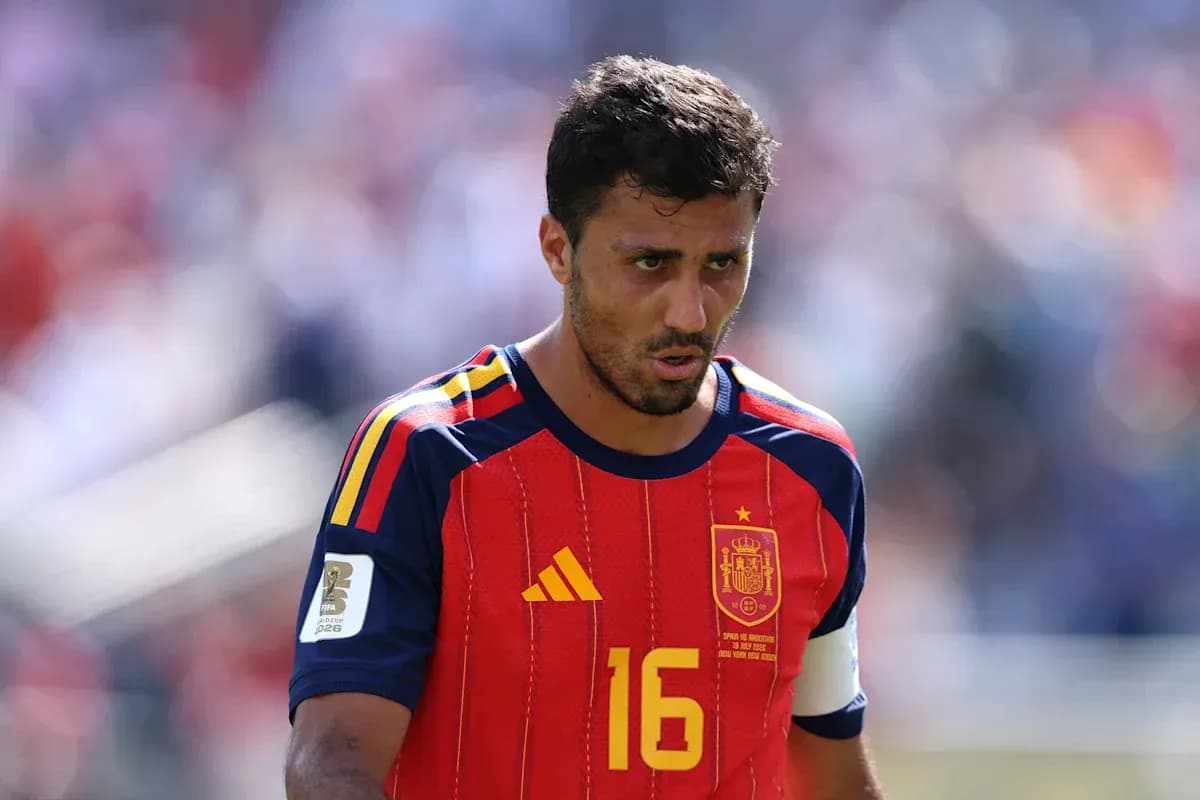
Rodri may be his most dangerous rival. The midfielder emerged as Spain’s heartbeat at the World Cup, sweeping the Golden Ball as they claimed a second title. He married control with authority, exactly the sort of all-round influence that often sways an international jury.
Lamine Yamal added a World Cup winner’s medal to a breakthrough season in which he helped Barcelona reclaim La Liga. Pau Cubarsi, his teenage team-mate, walked away with Fifa’s Young Player Award after a string of assured performances that belied his age.
Then there is Kylian Mbappe, again impossible to ignore. He finished as the World Cup’s top scorer with 10 goals and also took the Champions League Golden Boot and La Liga’s top scorer prize, even as France fell short of the final and Real Madrid ended the season empty-handed in terms of major honours.
Messi, at 39, refuses to leave the stage quietly. He captained Argentina to a second successive World Cup final and scored eight times during the tournament, another deep run on the biggest platform of all.
Kane’s case is different. It is built almost entirely on volume and consistency, on the relentless rhythm of the net bulging week after week. No World Cup lifted. No Champions League crown. No continental title to wave in front of the voters.
What he does have is a goalscoring résumé few can match.
A rare English shot at gold
Should he break through, Kane would join one of English football’s most exclusive clubs. Only four Englishmen have ever won the Ballon d’Or: Matthews, Charlton, Kevin Keegan and Michael Owen. No one from England has touched it since Owen in 2001.
There is another layer of rarity. No player representing a Bundesliga club has won the award since Matthias Sammer in 1996. Kane would drag both England and Germany’s top flight back into a conversation long dominated by La Liga and the Premier League, with the occasional interruption from Serie A and Ligue 1.
History says the odds are against him. The pattern leans heavily towards those who hoist the World Cup or Champions League, or at least stride deep into those competitions with decisive performances.
Yet few players have arrived at a Ballon d’Or election with stronger individual numbers and such a clear attacking narrative.
Now the decision falls to an international panel of journalists, one from each of the men’s top 100 nations. They must weigh the old logic against the new reality: does an extraordinary avalanche of goals, on its own, deserve to break the spell of football’s biggest prizes?
If Kane’s season cannot bend that tradition, whose ever will?