India Dominates Pakistan Again in Women's Asia Cup
The game had barely finished when Irfan Pathan reached for his phone.
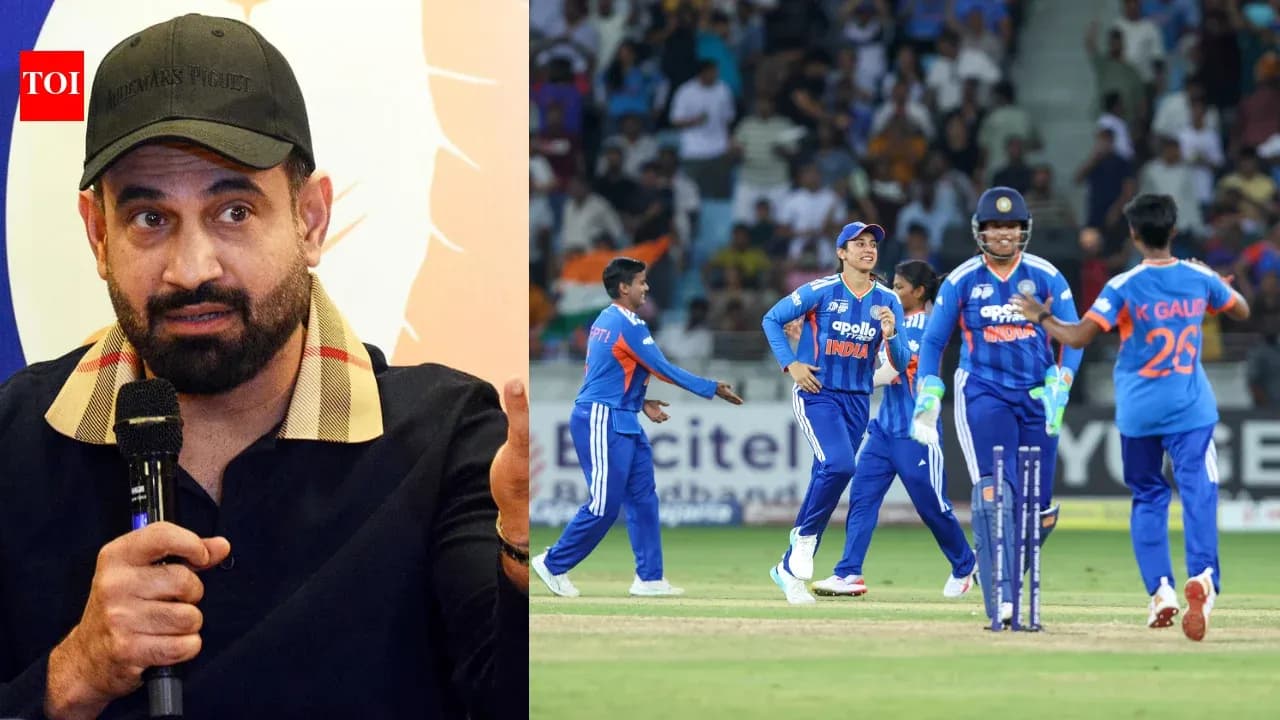
“Aaj Sunday hai kya?” he posted on X. Four words. No explanation needed. The subtext did the heavy lifting.
India had just bulldozed Pakistan by seven wickets in the Women’s Asia Cup 2026, another lopsided chapter in a rivalry that once promised drama but is fast turning into a procession in this format. Pathan, never shy of a jab across the border, knew exactly which nerve he was pressing.
His line was a deliberate echo of last year’s viral taunt, when India’s men beat Pakistan in three T20Is on consecutive Sundays and he repeatedly needled, “Sunday kaisa raha padosiyo.” That phrase became a weekly reminder of dominance. This time, the women supplied the ammunition.
Spin twins rip through Pakistan
For 27 runs, Pakistan looked settled. The openers were ticking along, the pitch looked placid, and there was at least the illusion of a contest.
Then Harmanpreet Kaur turned to her spinners.
The match flipped in minutes.
Shree Charani, just 22 and bowling left-arm orthodox, settled into a ruthless rhythm. She didn’t just contain; she choked. Her figures – 3 for 7 from four overs – told one story. The 78 dot balls India delivered across the innings told an even harsher one. Pakistan simply could not get the ball off the square.
At the other end, 24-year-old leg-spinner Prema Rawat matched her stride for stride. She finished with 3 for 9 in four overs, ripping through the middle order as Pakistan’s innings disintegrated from steady to shambolic.
Muneeba Ali’s 13 and Shawaal Zulfiqar’s 14 hinted at a platform. Once they fell, the floor vanished. From 27 without loss, Pakistan crashed to 36 for 6 after 10 overs, losing six wickets for just nine runs. Panic set in, strokes grew desperate, and India’s spinners tightened the noose with clinical calm.
Shafali Verma chipped in with 1 for 10 from three overs, Deepti Sharma cleaned up the tail with 2 for 5 in 3.1, and Pakistan were bundled out for 55 in 18.1 overs – their lowest total in T20 cricket. A scoreline, and a collapse, that will sting for a long time.
Harmanpreet’s landmark night
If ever a stage demanded a captain’s imprint, this was it.
Harmanpreet Kaur walked out knowing she was already making history: the first international captain, male or female, to lead India in 150 T20Is. It is a staggering number, a testament to longevity, trust, and sheer competitive fire.
She marked it in the most Harmanpreet way possible – by reading the surface quicker than anyone else. Once she sensed grip and turn, the seamers were ushered away, the spinners unleashed, and Pakistan never recovered.
With the ballers having done the heavy lifting, the chase was little more than a formality. It still had its stumbles. Shafali Verma fell for 12, Smriti Mandhana for 9, Pratika Rawal for 4. On another night, those early wickets might have opened a door.
Here, they barely nudged it.
Harmanpreet walked in with the result already written, and simply underlined it. She stayed unbeaten on 18, Deepti Sharma supported her with 12 not out, and India cantered to the target in just 8.4 overs. The captain finished it with a clean swing down the ground, a six that ended the match and, symbolically, any lingering doubt about the gulf between the sides.
A rivalry losing its balance
The numbers are brutal. India have now beaten Pakistan in seven of their eight Women’s T20 Asia Cup meetings. Pakistan’s solitary win feels more like an exception than a trend.
This latest result didn’t just extend that record; it reinforced a pattern. India’s depth, their spin resources, their composure in big games – all of it stood in stark contrast to a Pakistan side that started brightly and then unravelled under pressure.
That’s why Pathan’s four-word post hit so hard. “Aaj Sunday hai kya?” was not just a joke; it was a reminder that, once again, an India-Pakistan clash that should have crackled with tension ended up as a one-sided stroll.
For India, it was another emphatic statement in a tournament they have long owned. For Pakistan, it raised a sharper question: how many more nights like this can they afford before this rivalry stops being a rivalry at all?