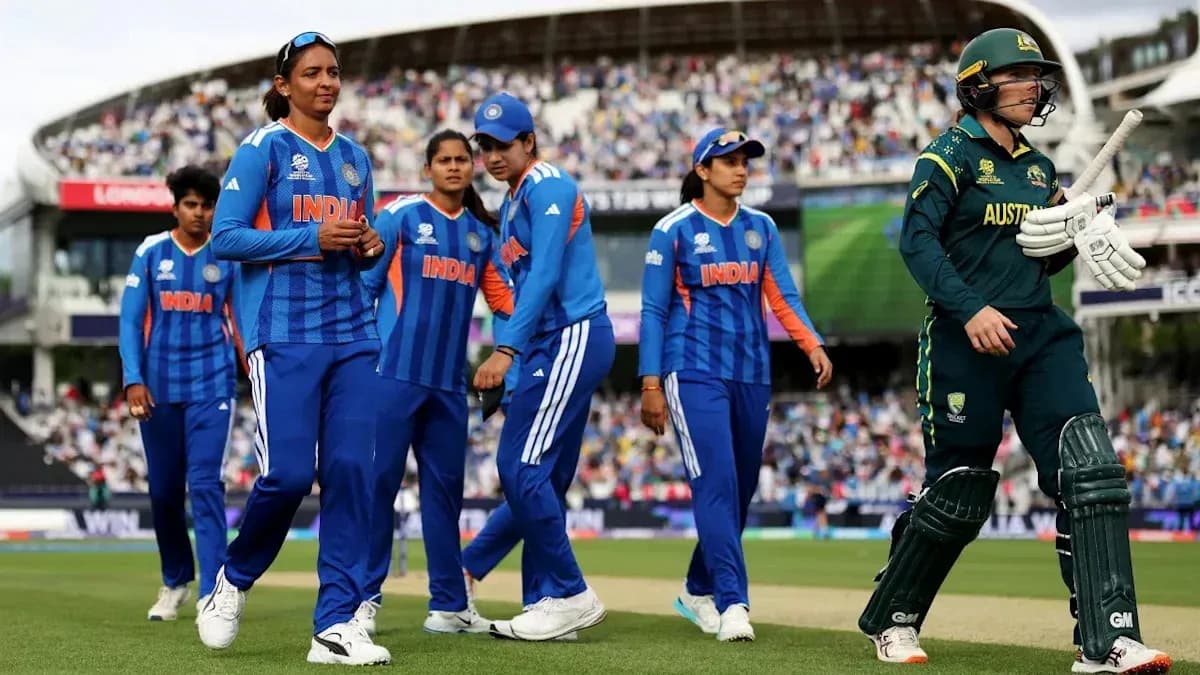
India vs Pakistan Clash at Dubai: Women's Asia Cup 2026
India vs Pakistan at Dubai. Under lights. In a tournament that already feels like it belongs to this stadium.
The Women's Asia Cup 2026 throws up its marquee group-stage clash on September 5 at the Dubai International Cricket Stadium, a ground that has quickly become the beating heart of the women's T20I game. Every ball of the 2024 Women's T20 World Cup was played here. Every one of the 15 matches in this Asia Cup will be, too. The players know every blade of grass, every patch of rough, every strip on the square.
Some know it better than others.
A venue that remembers
India and Pakistan have already shared this stage in recent memory. Back in October 2024, during the T20 World Cup, India chased calmly to win by six wickets. Same venue, same format, same sense of occasion. That night underlined the gulf between the sides in these conditions.
The record book drives the point home. Pakistan own the unwanted mark for the lowest women's T20I total at this ground. India hold the highest. One team scarred, the other emboldened. The contrast could hardly be sharper.
Dubai has hosted 19 women's T20Is so far, most of them packed into the 2024 World Cup and a 2023 bilateral between Namibia and UAE. Across those games, chasing teams have won 11 times. Captains walk out for the toss already half-thinking about the dew, already calculating what the ball will feel like in the 16th over of a night innings.
The stage and its quirks
The Dubai International Cricket Stadium, nestled in Dubai Sports City and opened in 2009, holds around 25,000 spectators. It doubles as the permanent home of the International Cricket Council's headquarters, but in the women's game it has become more than an administrative backdrop. It is a laboratory for modern T20 cricket.
The pitch itself is no caricature. It starts with a bit of bounce for the quicks, enough to keep batters honest but rarely enough swing to terrify them. Then the game tilts. As the surface dries through the middle overs, the ball grips. Spinners come on, slow bowlers drag the pace down, and the innings can stall in a handful of overs.
History at this ground backs that up. Across women's T20Is here, slow bowlers have claimed more wickets than the pacers. The ball turns, it holds, it nags. If you can't play spin, you don't last long in Dubai.
Yet the bowlers never truly feel in control because of one word: dew.
Evening games often descend into a different sport in the second innings. The outfield grows slick, the ball gathers moisture, and suddenly those subtle variations slip from the fingers. Yorkers become full tosses. Cutters sit up. That is why chasing sides enjoy that 11–8 edge over teams setting a target. Captains know it, batters relish it, bowlers dread it.
Chases, landmarks and a Caribbean surge
When a chase does come off here, it tends to stick in the memory. West Indies own the record for the highest successful run chase at the venue, set during the 2024 Women's T20 World Cup when they overhauled England Women's 141.
Hailey Matthews and Qiana Joseph turned that pursuit into a statement. Both struck half-centuries, both controlled the tempo, both showed how to manage a target on a surface that can suddenly feel flat once the dew arrives. It was a chase built on clarity rather than chaos.
But if Dubai has a true batting monarch, she wears India blue.
Mandhana’s kingdom
India Women hold the highest team total at the stadium: 193 for 5 against Hong Kong in this very Women's Asia Cup 2026 group stage. That innings did more than rewrite a line in the record book. It showcased a batter at the peak of her powers.
Smriti Mandhana carved a blistering 124 from just 64 balls, a masterclass that tore past India’s own previous record here of 172 for 3, set during the 2024 Women's T20 World Cup. She didn't just beat the mark; she obliterated it.
Mandhana now sits atop the run-scoring charts at this ground with 212 runs in five matches, at an average of 42.40. One century, one fifty, and the sense that she is nowhere near finished. Only South Africa’s Laura Wolvaardt, with 181 runs from five innings at 45.25, comes close.
With Pakistan next on this pitch, Mandhana walks out not just as India’s opener, but as Dubai’s most prolific batter. Every extra run she scores will stretch a record that already feels imposing.
Her 124 remains the highest individual score in women's T20Is at the stadium. No one else has reached three figures here. The next best is Anneke Bosch’s unbeaten 74 for South Africa. That gap tells its own story: on a ground full of good knocks, Mandhana’s stands alone.
The bowlers’ battleground
Batting numbers shine, but the bowlers have carved their own legends into this surface.
South Africa’s Nonkululeko Mlaba currently holds the record for most wickets in women's T20Is at Dubai, with 11 scalps in five innings. Her best figures, 4 for 29 against West Indies in the 2024 Women's T20 World Cup, underlined how left-arm spin can dictate terms here. She attacked, she strangled, she finished.
Yet even Mlaba’s consistency has been overshadowed by one extraordinary spell.
Sri Lanka’s Chamari Athapaththu produced scarcely believable figures of 7 for 5 against India Women on September 2 in this Asia Cup. Seven wickets. Five runs. On a ground where batters have often dictated the narrative, Athapaththu ripped it up in a single afternoon.
Those figures stand as the best bowling return in women's T20Is at the Dubai International Cricket Stadium. They also leave her just two wickets shy of Mlaba’s overall tally at the venue. One more outing like that and the record will fall.
A rivalry written into the turf
All of that history pours into the India–Pakistan clash.
India arrive with the highest total, the leading run-scorer, the only centurion and a recent six-wicket win over Pakistan on this ground. Pakistan carry the memory of the lowest total at the venue and the knowledge that any early collapse can feel terminal against India’s deep batting order.
Yet Dubai has its own way of levelling things. A bit of grip for the spinners. A wet ball under lights. A toss that suddenly matters more than it should.
The records suggest India should dominate again. The pitch whispers that any side that reads its shifts, masters its dew, and holds its nerve in the middle overs can bend the game to their will.
On September 5, under the lights and the haze, we find out which story this stadium chooses to tell next.