IPL Media Rights Tender: JioStar's Challenge and the Need for Competition
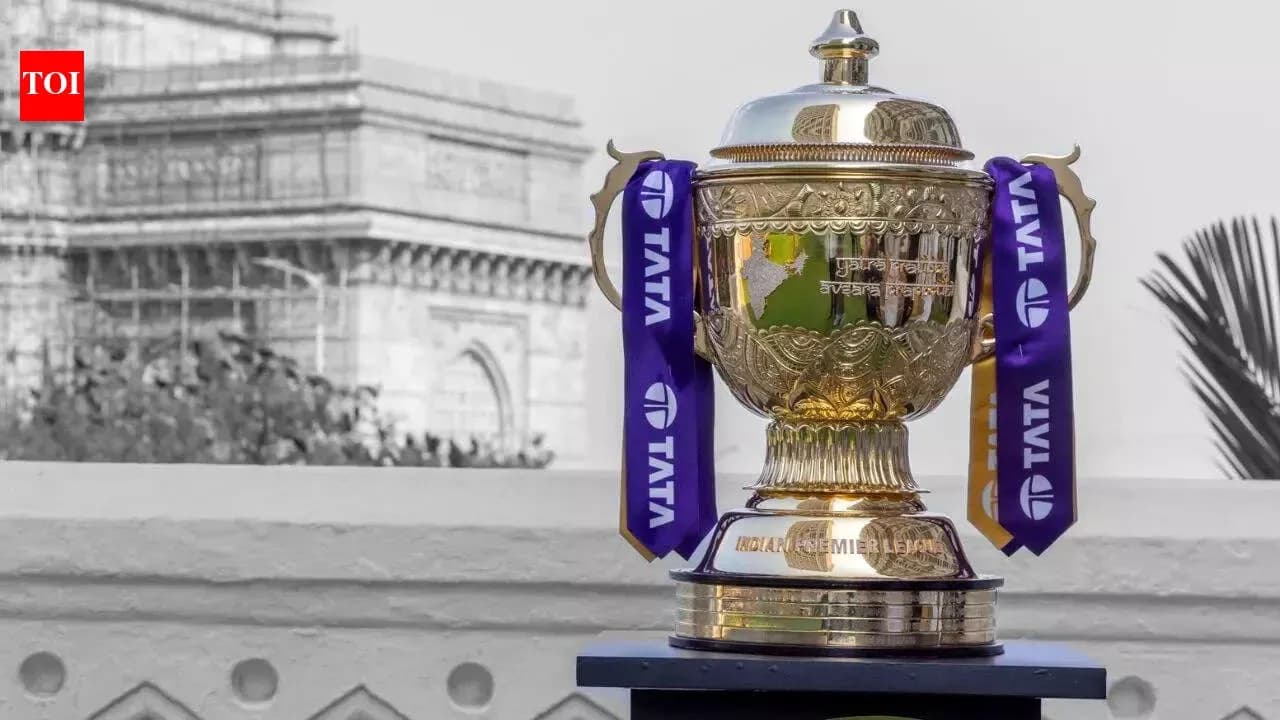
The IPL trophy sits polished and waiting. The problem is, the marketplace it’s about to walk into looks strangely empty.
With roughly six months left before the final IPL season of the 2023-27 media rights cycle, the Indian board is heading towards its next tender with one heavyweight in the ring and very little else. JioStar will be there. Everyone knows that. What worries the industry is who won’t.
For more than a decade, the value of IPL rights has soared on the back of one simple force: competition. Multiple broadcasters and platforms fought, and the league cashed in. Now, that fight has all but disappeared.
Uday Shankar, the media executive who once helped drive that arms race and now serves as vice-chairman of JioStar, laid out the new reality at the ET World Leaders Forum. A decade ago, he said, you’d have “multiple and serious media companies (around four) competing for major sports rights.” Real bids. Real battles. Real jeopardy.
“Today, increasingly, it feels as if we are the only ones standing. And that's not healthy,” he warned.
The reasons are no mystery. Rights fees have exploded. The ability to monetise those rights has not kept pace. The economics that once made sense for a crowded field now scare many players away.
“The fundamental issue is that the cost of the rights has risen dramatically. But the ability to monetise those rights hasn't necessarily risen at the same rate,” Shankar said. The value of live sport remains “enormous”, but only if “the rights holder, broadcaster and platform all need to participate in a sustainable ecosystem.”
That word – sustainable – cuts to the heart of Indian cricket’s current dilemma.
JioStar’s interest is not in doubt. Its subscription engine runs on cricket. It will bid, and bid hard, for the IPL. In many ways, it is the ideal Plan A for the BCCI.
The unease sits elsewhere. What happens if Plan A is the only plan?
The board’s apparent reluctance, or inability, to draw more serious bidders into the contest has baffled many in the business. The global sports media landscape is shifting fast. New-age giants that barely glanced at cricket a decade ago now pour billions into live sport. Yet they remain, for now, largely spectators when it comes to the IPL.
Take YouTube. Its move into rights aggregation and bundling has quietly reshaped parts of the industry. Sport, for YouTube, is no longer a series of one-off acquisitions. It is the anchor of a broader subscription and pay-TV ecosystem.
The clearest example sits in the United States: a seven-year deal for exclusive distribution of NFL Sunday Ticket, reportedly worth around $2 billion a season. The package pulls double duty – a premium hook for YouTube TV subscribers and a standalone product on YouTube channels. It is not just content; it is infrastructure.
The numbers in the West, of course, live in another universe. Average revenue per user there looks nothing like what the Indian subcontinent can generate. Volume alone doesn’t close that gap. That reality has long been used to explain why global tech platforms tread carefully around Indian sports rights.
Yet if there is one property in this part of the world that could tempt a player like YouTube into a serious experiment, it is Indian cricket. More specifically, it is the IPL.
Then there is Netflix. Co-CEO Ted Sarandos recently told The Economic Times that the company is interested in live sport, including cricket, but has no desire to become a “conventional full-season sports broadcaster.” That line rules out some models, but it leaves a very large door open for others.
A compact, high-intensity, story-rich tournament like the IPL fits that space almost perfectly. It is India-first, but not India-only. It speaks to a billion-plus domestic viewers, a vast global diaspora, and markets where cricket has quietly become one of India’s most potent exports and a subtle tool of soft power.
The storytelling potential is obvious. The question is whether anyone is actively selling it.
“At some point, the economics have to make sense,” Shankar said. For that to happen, he argued, the onus rests with the federation – in this case, the BCCI – to market what is, by any measure, a blue-chip product.
That is where the current concern sharpens. The IPL is India’s most prized prime-time asset. Yet assuming that a media conglomerate sitting several time zones away fully understands the India story, without hearing it directly from the people crafting it, is a risky bet.
This tender cannot be treated as a routine auction. It demands a genuine global marketing push: targeted conversations with media houses, tech giants, and streaming platforms across continents; a clear articulation of what the IPL is today and what it can become; a realistic, data-backed narrative that bridges the ARPU gap and turns scale into value.
JioStar is the board’s Plan A. That much is clear.
The real test of Indian cricket’s imagination is whether, when the tender lands, there is a serious Plan B – or even a bold Plan C – waiting in the wings.