Jack Grealish's Decline at Everton: A Cautionary Tale
On the biggest night in Manchester City’s history, Jack Grealish was trusted above all others. Phil Foden, Julián Álvarez, Riyad Mahrez – all on the bench. Grealish started, stayed on for the full 90 minutes and walked off a Champions League winner against Inter, the embodiment of Pep Guardiola’s faith.
Three years on, that feels like a different lifetime.
The trust eroded, chipped away by injuries and inconsistency, and with it went his place in Guardiola’s inner circle. Across the next two Premier League seasons he managed only 17 starts. By the summer of 2025, City were ready to move him on. Everton stepped in, first with a loan, then by taking him back again for this season. It looked like a lifeline.
Six appearances into this campaign, that lifeline is already fraying.
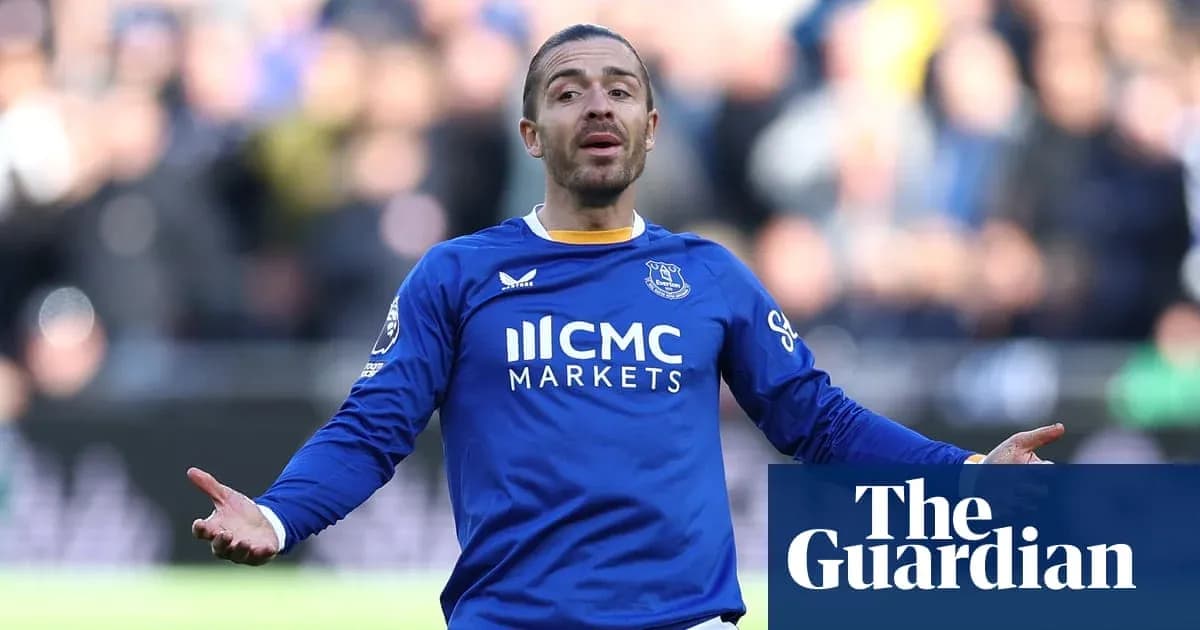
On Thursday, as Everton knocked Newcastle out of the Carabao Cup, Grealish was nowhere to be seen. Not injured. Not rested. Omitted. The club did not bother to cloak it in mystery, confirming there had been “a breach of club discipline” after he missed training on Monday. For a 31‑year‑old with 39 England caps, a player who should be setting standards, it was a depressingly familiar storyline.
The pattern is well worn. Breaking lockdown rules. A driving ban. Nights out that turn into viral clips of him unsteady on his feet. Each incident on its own is survivable. Together, they sketch a picture he cannot escape. Guardiola warned him years ago, dropping him for a game against Newcastle in 2021 when he and Foden turned up for training in no fit state to work. The message was blunt: talent is not a free pass.
Grealish has never pretended otherwise. He knows who he is. He admitted as much to Sky Sports last year. “People go: ‘He likes to go out, he likes to party,’ and I do,” he said. “I want to be able to live my life and enjoy myself but obviously there’s a time and a place to do that. Sometimes, I’ll be honest with you, I probably haven’t picked the right times.” Self-awareness, though, is only useful if it leads to change. So far, it has not.
For a while, Everton looked like the fresh start he needed. Early in his first season there, he was decisive and alive. Winners against Crystal Palace and Bournemouth by December, six assists in 20 league appearances, flashes of the player who once dragged Aston Villa up the pitch on his own. Then a foot injury in mid‑January cut him down and ended his season.
Even before that, the inconsistency lingered. He has not played more than 28 league games in a season since 2019‑20 at Villa. For someone whose game relies on rhythm and confidence, that stop‑start existence is a serious concern.
So when the question came up in the summer about bringing him back, Everton hesitated. There were doubts. Yet the sale of Iliman Ndiaye to City created a hole, and Grealish, available and familiar, became the pragmatic choice to fill it. City had put him through a full pre-season under Enzo Maresca, who handed him chances in the Community Shield and on the opening day against Bournemouth. For a brief moment, a wild thought surfaced: could there be a late redemption arc for him at City?
That idea did not last long. The door closed, the loan went through, and Grealish was back at Everton. Maresca, speaking on Friday, still offered warmth. “I still think that he’s a good boy, big heart,” the Italian said. The affection was real. The opportunity at City was not.
At his best, Grealish remains a joy. Socks rolled down, ball glued to his left foot, drifting past defenders who can only stop him by dragging him to the turf. He creates chances, draws fouls, lifts a stadium with a swivel of the hips or a burst between the lines. Those moments, though, have become scattered rather than sustained. Teasers instead of a full show.
The next seven months will define what comes next. He is at an age where he should be ruling games, not fighting to stay relevant. On his CV sit a £100m transfer fee, a treble, a Champions League final start. They are impressive, but they are also history. The present is harsher: a loan player at Everton, dropped for a breach of discipline, his status shrinking by the week.
His contract at City expires at the end of the season. The incentives could not be clearer. Perform, and there is still time to secure another big move, another chapter at the top level, perhaps even to drive Everton towards the trophy their fans crave. Drift, and the market will treat him accordingly. Right now, his career sits uncomfortably in between.
David Moyes did little to disguise his irritation on Thursday. The Everton manager was terse when asked about Grealish and offers no indication he will push to keep him beyond this loan spell. With a small squad, he cannot afford to lose senior players to self-inflicted absences. That sort of avoidable disruption does not just disappoint a manager; it erodes trust in a dressing room.
The irony is that away from the training ground and nightclub headlines, Grealish is one of the most approachable figures in the modern game. In an era of distance and security cordons, he lingers with supporters, signing autographs long after others have disappeared down the tunnel. He leans into the selfies, embraces the chaos around the Hill Dickinson Stadium, feeds off the adoration and returns it with a disarming warmth. He throws out so much positive energy to strangers.
What he has not yet managed is to turn that same care inward.
“With me, I’m a big confidence player – I want to feel loved,” he once said. Right now, that love will not be coming from Moyes unless something drastic shifts. The question, as another season threatens to slip by, is whether Jack Grealish finally wants it enough to change – or whether that night in Istanbul will stand forever as the peak he never truly built on.