Jack Grealish’s Return to Everton: A Crossroads Moment
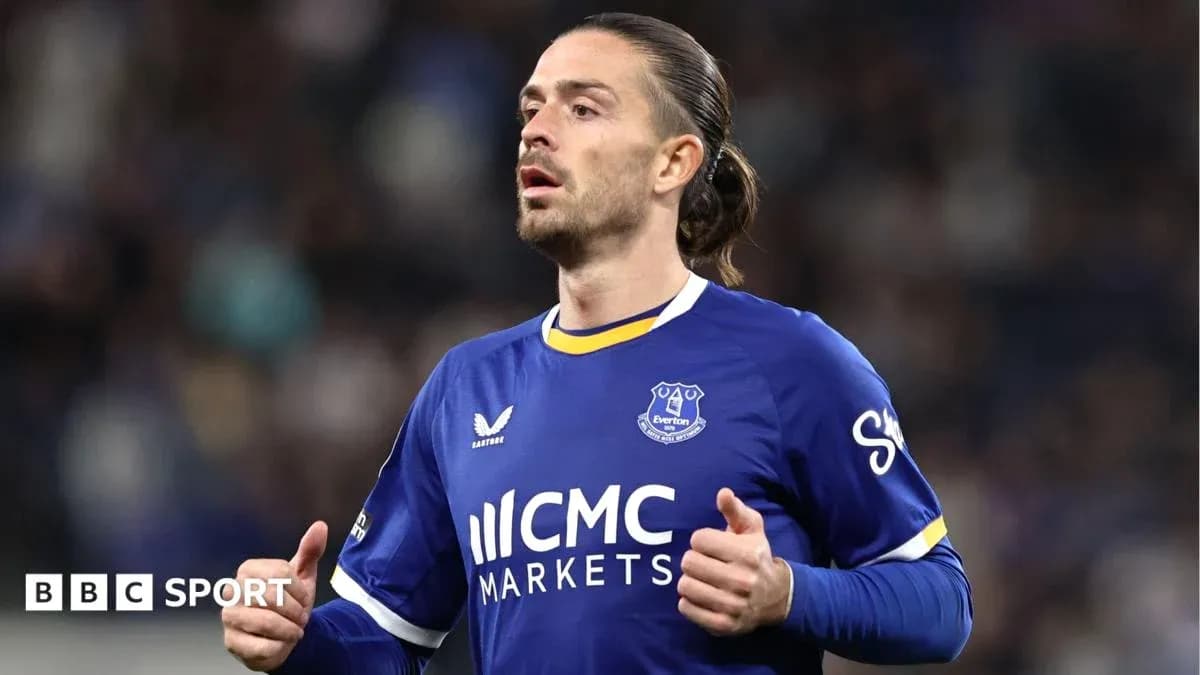
Jack Grealish’s white Lamborghini rolled back into Finch Farm an hour before the transfer deadline and, for a fanbase numbed by a bleak summer, it felt like a jolt of electricity.
Here was the returning maverick, the £100m showman whose first spell at Everton had been cut short by a broken foot but not before he’d left enough stardust in the Merseyside air to be remembered as one of their own. He stayed into the early hours, signing every shirt, posing for every selfie. It had the feel of a homecoming, of a player and a club convincing each other they still belonged together.
Now that romance is on the line.
A breach, laid bare
Grealish’s omission from Everton’s squad for the Carabao Cup tie against Newcastle United was not dressed up or hidden behind vague language. The club called it what it was: “a breach of club discipline”.
The detail was stark. He failed to report for training on Monday. For a 31-year-old who was once Britain’s most expensive footballer, now in the final year of his Manchester City contract and effectively exiled from the champions, it is a damaging misstep at the worst possible time.
Everton’s decision to go public before kick-off underlined the severity. This was not an internal slap on the wrist. It was a statement. A line in the sand.
For Grealish, it feels like a crossroads moment. If it goes wrong here, at a club where he has been embraced and indulged, the slide from the Premier League elite could be rapid and unforgiving.
Everton, for their part, are not yet calling it his last chance. David Moyes cannot afford that luxury. With only 18 senior players after a botched window and owners The Friedkin Group reluctant to spend as they prepare to sell, he simply does not have the numbers to cast out potential match-winners.
But the margin for error has shrunk to almost nothing.
Moyes’ anger, Everton’s values
Inside Finch Farm, the message to Grealish has been made “crystal clear”. There must be no repeat. Not under Moyes, a manager whose reputation as a disciplinarian is no myth and whose patience for what he sees as avoidable drama is limited.
The punishment, taken at a high level within the club with Moyes’ full backing, comes at a time when Everton suddenly have more to play for. A 3-1 win over Newcastle, arguably their best display of the season, has carried them into a Carabao Cup quarter-final at League Two Fleetwood Town, the team that stunned Arsenal in the previous round.
They did it without Grealish. They did it with 20-year-old Tyrique George on the left flank, a role many would have pencilled in for the City loanee. George brought energy and direct running, exactly the tempo Moyes demands and exactly what Grealish has struggled to provide this season.
After the game, Moyes chose his words carefully.
“You probably know I'm not going to give any details. It's a club decision and I support it. It's something I don't want to speak too much about,” he said.
Then came the line that will have resonated inside the dressing room as much as outside it.
“The one thing about Everton is that they have got real good values. All the players stand behind it and accept the values, on the pitch and off the pitch, and I think the players did a good job.”
He praised the humility of a small squad “doing our best to keep challenging” and refusing excuses. He did not name Grealish, but the subtext was obvious. Standards apply to everyone.
From treble winner to thin ice
This is not a youngster learning the ropes. Grealish is a treble winner with Manchester City, a key part of the side that swept the Premier League, FA Cup and Champions League in 2023. When he first arrived at Everton on loan in August 2025, he spoke glowingly about Moyes and the club.
“As soon as I spoke to the manager, I knew there was only one place that I wanted to go and that was Everton,” he said then.
That bond grew quickly. He trained hard, charmed staff, and played with a freedom that connected with the Gwladys Street before that foot fracture at Aston Villa in January abruptly ended his season.
So happy was he at Everton that he chose not to return to City for his rehabilitation, staying at Finch Farm rather than heading back to the Etihad. The club’s hierarchy took their time over a second loan: the injury, the finances, and yes, the question of character were all weighed before Moyes pushed again to bring him back. Grealish, for his part, made it clear Merseyside was where he wanted to be.
This season, though, has not matched the sentiment. Across eight appearances – two for City before the move, six for Everton – he has neither scored nor assisted. His habit of slowing attacks has jarred with Moyes’ demand for speed and aggression in transition.
He missed the weekend defeat at Arsenal through what was described as “illness”. Then came the no-show at training. For a manager already working with a threadbare group, the frustration is obvious. Everton cannot carry passengers. They certainly cannot afford self-inflicted absences.
A complex character
Inside the club, the disappointment is sharpened by how highly Grealish is thought of as a person. Staff talk about him as “a lad with a heart of gold, kind and charming, who actually loves being here”. He is popular in the dressing room. He engages with everyone from canteen workers to academy kids.
His actions back that up. Recently, he donated £10,000 to a GoFundMe page for Everton fan Leon Skapars, a 36-year-old father of three with cancer. Skapars’ wife, Crystal, spoke of the hope that gesture gave their family, calling it something they would “never forget”.
Grealish has long lent his profile to causes away from the pitch. He presented awards at the Daily Mirror’s Pride Of Britain event, telling the audience: “Footballers are classed as heroes - but these are the real heroes.” In April, he extended his role as principal ambassador for Special Olympics Great Britain for another three years, having first taken it on in 2022.
To mark that extension, he hosted five of the 10 Special Olympics GB athletes who completed the London Marathon at Everton’s Hill Dickinson Stadium, giving them a VIP experience, a tour, and time on the pitch. At Finch Farm, he is often among the first to volunteer for community events, including meeting the Everton in the Community Down Syndrome team.
He frequently speaks about the inspiration he draws from his sister Hollie, who has cerebral palsy. Those who know him talk about warmth, generosity, and an instinctive connection with supporters and vulnerable groups.
That is one side of Grealish. The side that makes this latest lapse sting even more for those invested in him.
Old headlines, new problems
The other side has been visible for years. BBC Sport understands there have been minor time-keeping issues in the past, but nothing close to failing to show for training. The pattern is not one of a serial rebel, but of someone whose off-field judgement has occasionally betrayed him.
In April, he was photographed asleep at a Manchester rooftop bar, surrounded by drinks. It broke no laws, yet for a high-profile player in rehabilitation, surrounded by phones and cameras, it was a poor look.
Back in March 2020, during the pandemic, he was fined by Aston Villa and issued a public apology after breaking lockdown rules to visit a friend. Later that year, in November, he admitted two counts of careless driving after incidents in which a Citroen van and a Mercedes were damaged.
None of this has stopped managers, team-mates and staff offering glowing references about his character. At Everton, those endorsements remain. But patience, even for the most likeable players, is not infinite.
Now or never
This is where Grealish finds himself: 31 years old, talent undimmed, adored by many inside a club that fought to bring him back, yet suddenly on thin ice after a decision that has infuriated a manager who needs him more than ever.
Everton’s win over Newcastle, and George’s vibrant performance on the left, changes the landscape. Moyes now has proof his team can function – and flourish – without Grealish. Wembley has edged into view. The stakes have gone up.
The door is not closed. Talks have taken place, the expectations are clear, and there is still time for Grealish to repair trust and reassert his value on the pitch.
But the reality is brutal. For a player once at the heart of a treble-winning side, whose second chance at Everton was supposed to be a fresh chapter, there are only so many times the same questions can be asked.
The next answer he gives will define where his career goes from here.