Japan's Rising Cricket Ambitions: A New Frontier in Sports
Japan is still a minnow on the field, but in the boardrooms of cricket it has become a heavyweight piece on the global chessboard.
This is a country that has already staged the Olympics, the World Aquatics Championships and the World Athletics Championships. Now it is rolling out the Asian Games. The International Cricket Council can see the pattern: if you want a reliable, well-drilled host for major events, Japan is moving to the front of the queue.
So the ICC is leaning in.
A long game in a new market
For William Glenwright, the ICC’s GM – Development, Japan is no longer a curiosity on the fringes of the sport. It is a project.
Part of the governing body’s long-term strategy is simple in concept, complex in execution: help Japan build the infrastructure and know-how to host serious cricket. Not just the odd bilateral, but potentially a Youth World Cup down the line, and then whatever that unlocks.
To do that, the ICC needs more than nets and scoreboards. It needs Japan to live the experience of staging elite teams, with all the operational demands that come with them. That is where India’s visit becomes far more than a goodwill tour.
India arrive, and the stakes rise
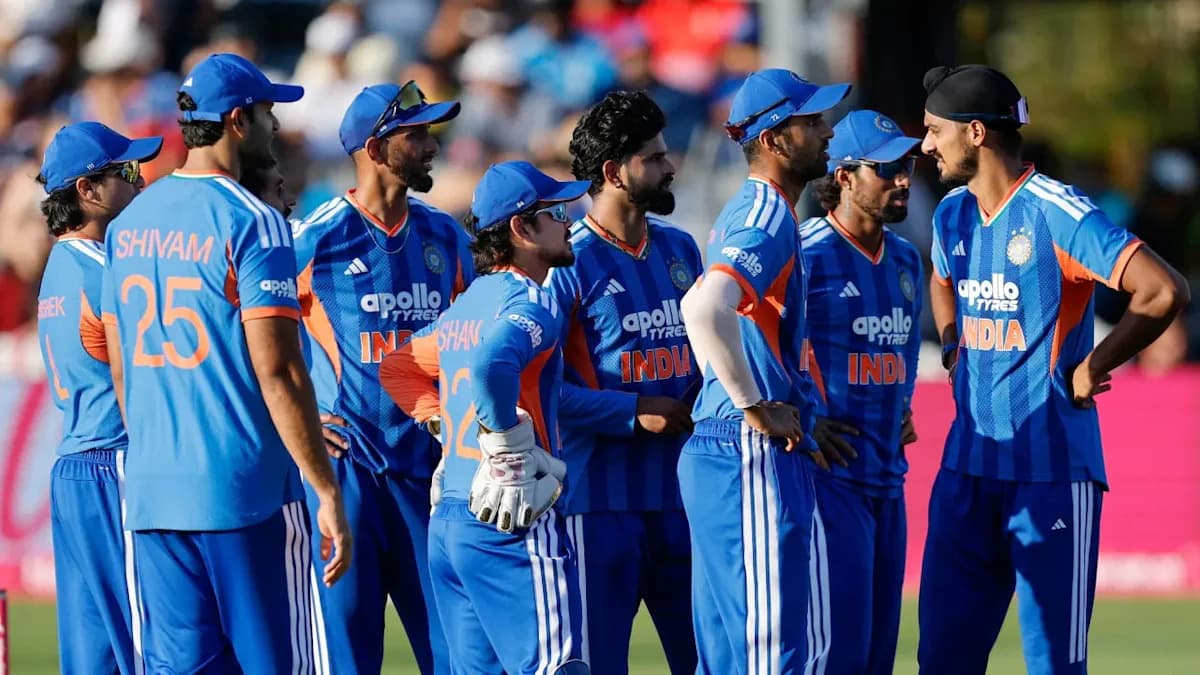
India agreeing to play a T20I against the world’s 41st-ranked side might look like a mismatch on paper. For the ICC, it is a test event in everything but name.
Having the world champions turn up is a stress test for the Japan Cricket Association (JCA). Can administrators handle the logistics, the broadcast requirements, the security, the media? Can they deliver the sort of operation that would make Japan a credible host for a major ICC tournament?
From the ICC’s point of view, a full member taking an associate nation seriously sends a powerful signal. It validates the work being done on the ground and suggests a growing confidence that associates can host big teams in proper international cricket, not just development fixtures tucked away out of sight.
There is another layer too. When India play, people watch. That matters in a country where cricket is still fighting to be noticed.
Numbers that no longer look like an outlier
On the field, Japan’s rise has not been spectacular, but it has been steady and unmistakable.
The men’s team played seven games in 2022, winning five. They followed that with eight in 2023 (four wins, four defeats), then exploded into a busier calendar: 25 matches in 2024, with 18 wins and just six losses, plus one abandoned. In 2025 they played 11 (six wins, five defeats), and in 2026 they have already logged 10 matches, winning eight.
Crucially, those wins are not just against fellow strugglers. Japan have taken down Kuwait (ranked 23rd), Bahrain (27th) and Papua New Guinea (22nd) in that period. The gap to the middle tier is narrowing.
The women’s team have moved even more sharply. Four straight defeats in 2022 gave way to a 2023 in which they won four of 16. Then the curve bent upwards: 10 wins from 14 in 2024, seven from 11 in 2025, and three wins in five so far this year. That is not a statistical blip; that is a programme finding its feet.
The ICC has started to respond with visibility. For the first time, select matches were live-streamed on YouTube and Facebook in key emerging markets. The response in Japan was striking.
Across platforms, those streams generated more than 1.1 million views in the country. On YouTube, non-English feeds aimed at Japan and Indonesia drew 201,000 views, with Japanese-language coverage accounting for 58 per cent of that total. On Facebook, the tilt was even stronger: 70 per cent of the 252,000 non-English views from those two territories came from Japanese feeds.
The message is clear. When cricket is offered to Japanese fans in their own language, they turn up.
Mai Yanagida and a surreal opportunity
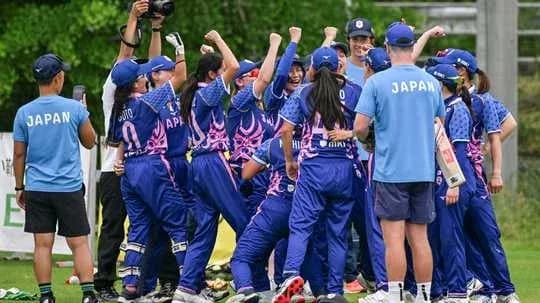
No one embodies this quiet surge more than Mai Yanagida, captain of Japan’s women’s team.
She knows the reality. Japan is not a cricket nation in the way India is. But she has seen the change up close over the last decade: more players, more awareness, more people who can actually name a cricketer.
Her hope is simple: that this Asian Games, and this match in particular, will pull more of those curious onlookers into the grounds and onto the bandwagon.
Japan open their Asian Games campaign against India on Friday morning (IST). For Yanagida and her teammates, it is the kind of fixture that used to belong only on television screens. They watched India win the recent Asia Cup. They have followed the WPL. They know the names, the reputations, the highlight reels.
Now they will share a field with them.
For Yanagida, the prospect is “unreal” and “very exciting”. She is under no illusions about the gulf in class. India are packed with top-class players who have just lifted a major trophy. That can be intimidating. For Japan, though, the overriding emotion is excitement: a chance to measure themselves, to test their nerves, to see how far the gap really stretches when the first ball is bowled.
Asian Games as a gateway
For the ICC, the Asian Games are not just another tournament. They are a crucial lever in its development model.
The Olympics are capped in size. Spaces are limited. Many members will never get a look-in. Regional multi-sport events such as the Asian Games offer a broader doorway. More teams can participate, more governments take notice, more Olympic committees and sponsors are willing to write cheques.
That cascade of funding and attention is gold for a sport still planting its flag in new territories.
In Japan, the impact is already tangible. The Asian Games have effectively given the country a second international-standard cricket ground. Sano was the first. Now Nagoya joins it.
That changes the equation. Two proper facilities mean Japan can realistically be considered for major ICC events, which almost always require at least a pair of venues. What felt like a distant ambition now has concrete, grass and floodlights.
Pitch perfect, with work still to do
Not everything has been smooth. The Asian Games sit under the Asian Cricket Council, and there have been negative reports about elements of the venue infrastructure.
The ICC’s stance is clear on one crucial point: the playing surface and outfield are not a concern. A World Cup qualifier was held there earlier this year, and the feedback on the pitch and outfield was strong. The ICC would not have taken a global pathway event there if it did not trust the cricket square.
The issues flagged by the ACC have been around the supporting structures – athletes’ enclosures, changing rooms, media areas. Those, the ICC understands, are being addressed. The latest updates point to improvements being made in time.
On the field itself, though, there is confidence that the venue will reflect the importance of the occasion and the ambitions of the teams taking part.
A new frontier, with India as the spark
So Japan stands at an intriguing crossroads: still miles away from the traditional powers, yet suddenly central to the sport’s long-term plans.
The numbers show a country catching up. The facilities now meet international standards. The fans are starting to click on streams in their own language. And this week, the world champions arrive to play a team that, not so long ago, barely registered on the global radar.
For the ICC, it is a calculated investment in a market that knows how to host the world. For Japan’s cricketers, it is a chance to step into that world, even for a day, and prove they belong in the conversation when cricket talks about its future.