Katie Taylor Retires as Undisputed Champion at Croke Park
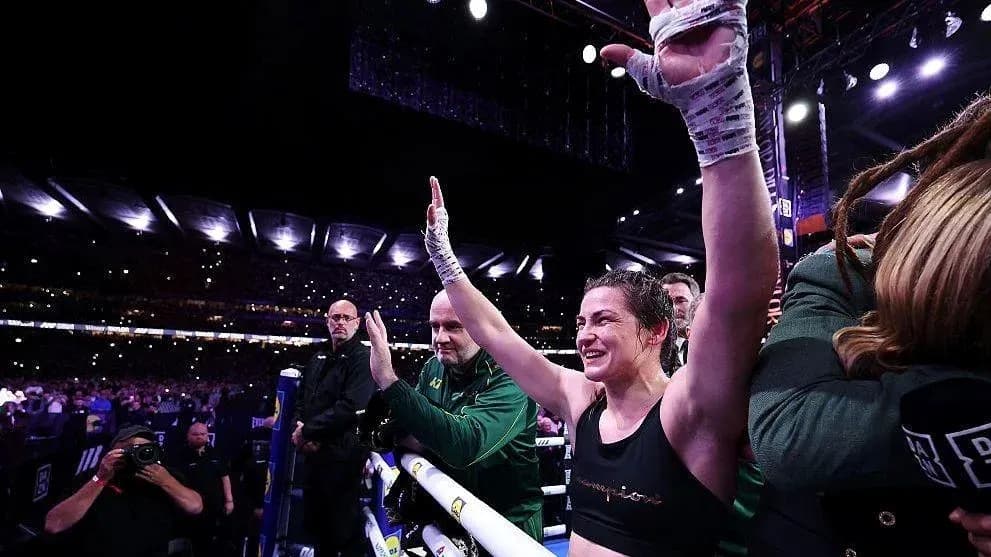
Katie Taylor always said she wanted Croke Park to be the final chapter. On a cool Dublin night, in front of more than 80,000 people and a wall of noise, she wrote it exactly the way the great ones do – with her hands still raised and her legacy beyond debate.
At 40, Taylor outboxed France’s Flora Pili over the distance to become undisputed light-welterweight champion, adding a third undisputed crown across a second division to a career already gilded with Olympic gold. Twenty-six wins from 27 professional fights. Multiple eras shaped. An entire sport shifted.
She walked away on her terms. Boxing noticed.
A champion’s farewell
From the moment Westlife finished their set and the lights dimmed for the main event, the occasion felt less like a routine defence and more like a state ceremony for Irish sport. Taylor has never been a natural showwoman, but Croke Park responded to her ring walk like a homecoming queen returning from a decade-long crusade.
Once the bell rang, the sentimentality stopped. Taylor was sharp, precise, ruthless in the only way she knows. She repeatedly beat Pili to the punch, stepping in, letting her hands go, then sliding out of range. No farewell spar, no gentle testimonial. It was a proper fight, controlled by a woman determined that the last image of her as a boxer would be one of command, not survival.
The closing moments belonged on a highlight reel. With the clock running down, Taylor emptied the last of the tank, stitching together those trademark rapid-fire combinations that once terrorised an entire generation of amateurs and then professionals. The crowd rose, roaring every flurry as if trying to hold her career in the air for just a few seconds longer.
The decision was a formality. The significance was not.
‘One of the best to ever do it’
What followed was an outpouring of respect from the very fighters who now carry the sport she helped build.
Unified lightweight champion Caroline Dubois, one of the brightest stars of the new wave, called Taylor “one of the best to ever do it” and thanked her publicly for “paving the way”. For Dubois and so many others, Taylor didn’t just win belts; she bulldozed doors.
Claressa Shields, the American who styles herself the Greatest Woman of All Time, watched the Irish icon seal one last undisputed crown and delivered a simple verdict: “Congrats Katie. Now ride off into the sunset. You deserve it all.”
Super-featherweight champion Alycia Baumgardner described Taylor as “a trailblazer who helped set the stage for all of us”, adding: “What a legacy. It’s been a privilege watching your journey from the beginning.” The word “trailblazer” has followed Taylor for years, but on this night it felt less like a cliché and more like a job title.
Ringside, Mikaela Mayer took in the final act as Taylor removed her gloves and left them in the centre of the ring – boxing’s oldest, rawest symbol of goodbye. “It’s like a story,” Mayer said, struck by the image. It was. One that had finally reached its last page.
‘There will never be another one like her’
Inside Irish sport, Taylor’s bond with the public has long been something different, something deeper. Former world champion Carl Frampton tried to put it into words.
“You can tell that she doesn’t enjoy doing stuff in front of the media, but she still has this adulation from everybody,” he said. “Katie Taylor is different, she’s special and there will never be another one like her.”
That disconnect between her quiet, almost shy demeanour and the scale of the adoration has always been part of the fascination. Taylor never chased fame. Fame came thundering after her anyway.
Tony Bellew, the former cruiserweight world champion, has seen champions come and go, exits handled well and exits botched. This one, he insisted, belonged in a class of its own.
“I don’t think in all of my years of watching this game, I have seen an exit as beautiful, amazing and fitting,” he said. “She has just retired as the greatest champion ever. I have never seen a fighter leave as an undisputed champion on their own terms.”
Bellew doesn’t see a comeback. Not this time. “No way,” he said, though he expects Taylor to remain a quiet force in the background, mentoring and advising the next generation. “She will always be there to give her advice, speak to her and help her. But ultimately she will sail off into the sunset and who could possibly deserve it more.”
The last 20 seconds
For former world champion Barry Jones, the defining image wasn’t the walk, the crowd, or even the gloves resting in the centre of the canvas. It was the final 20 seconds of the fight itself.
“That’s what you really remember about her,” he said on the Dazn broadcast. “Those rallies of big punches, combinations and that’s how she finished her last fight.”
It felt fitting that Taylor’s career – from Olympic podiums to sold-out arenas – should end not with a clinch or a desperate last stand, but with her doing what made her famous: attacking in waves, trusting her engine, trusting her heart.
This was the night she had long dreamed of, in the stadium she had always wanted, against the backdrop she had imagined for years. Croke Park didn’t just host her farewell. It crowned it.
She leaves as an undisputed champion, a three-time ruler across two divisions, and the standard by which every woman who laces up gloves will be measured.
The belts will move on. The division will reset. The next wave will chase their own nights under the lights.
But long after the Croke Park canvas has been rolled up and stored away, one question will hang over every new star who rises: can anyone ever do for women’s boxing what Katie Taylor just finished doing?