Kimi Antonelli: A Rising Star in Formula 1
Kimi Antonelli is starting to look uncannily familiar.
The way he slices through a field. The way his pace seems to harden, not fade, as the laps tick by. Even the weakness that still nags at him. So much of it feels like watching Max Verstappen a decade ago.
There is, though, one crucial difference. And right now, it still matters.
A Verstappen-style charge from P19
Start 19th. Win the Grand Prix. For years, that sentence belonged almost exclusively to Verstappen.
He turned back-row starts into party tricks, shrugging off grid penalties and engine changes as if they were minor inconveniences. Pole or P14, it rarely altered the outcome.
At Monza, Antonelli took that script and ran with it.
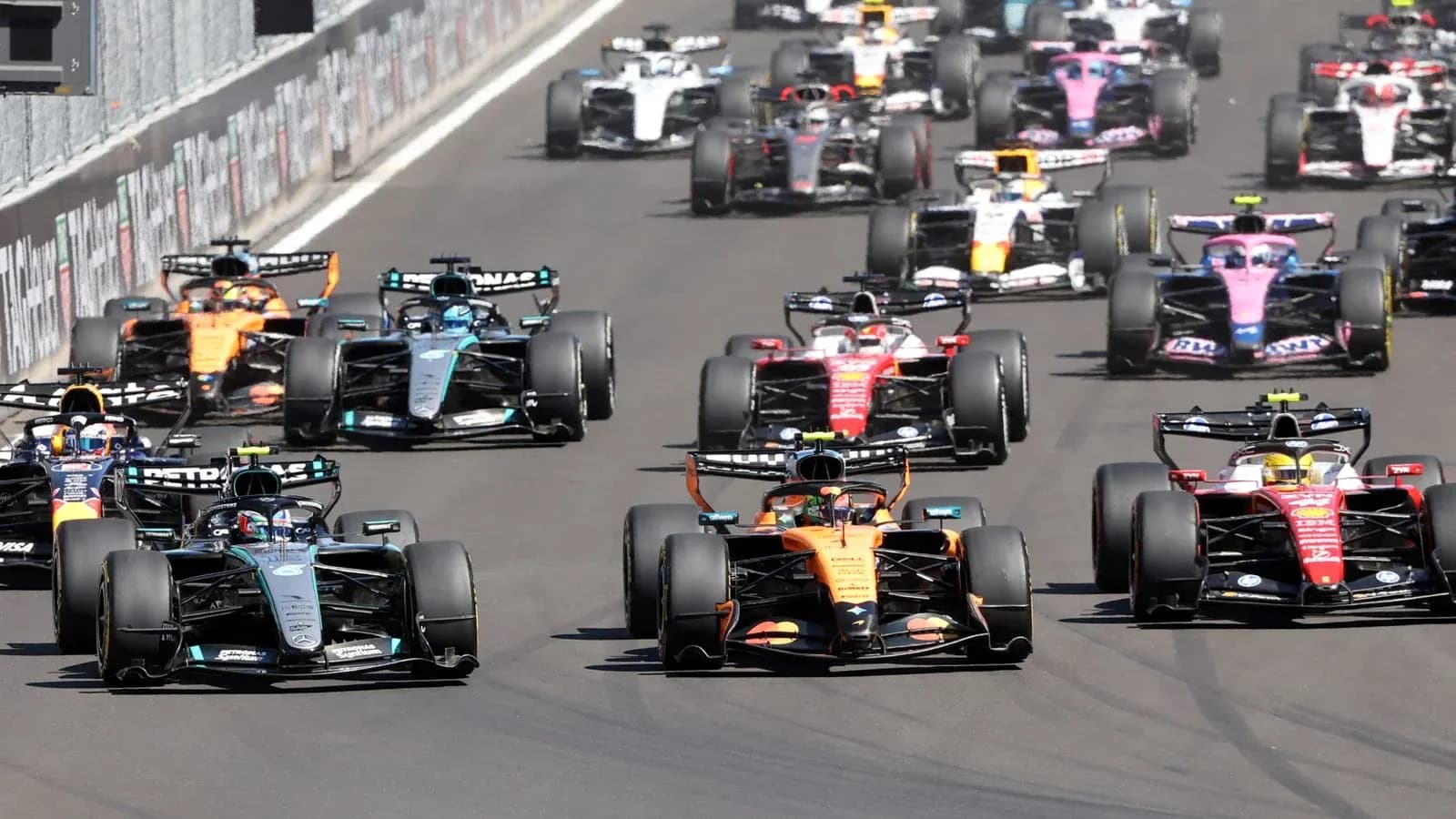
From P19, he carved his way forward with an ease that jarred with the chaos around him. Cars fought, tripped over each other, faded. The 19-year-old simply drove past them. The red flag and restart helped compress the field, but the sense was clear: even without that interruption, this was his race to win.
By the time the chequered flag fell on the Italian Grand Prix, the comparisons were impossible to ignore. The style, the control, the inevitability of it all. It looked like a Verstappen afternoon, only the helmet colours were different.
Russell exposed, Antonelli elevated
For George Russell, Monza cut deep.
At the end of 2025 he spoke like a man ready to fight for a championship. The rhetoric has not survived contact with 2026. Against Antonelli, Russell is being stripped back, exposed, and left with some uncomfortable truths.
He was beaten at Monza in a manner usually reserved for recognised number-twos, the Sergio Perez and Valtteri Bottas types who know their role when the lead driver hits his stride. This was not how Russell saw himself. This is not how he was once seen by the paddock.
What unfolded at Monza is the kind of race Lewis Hamilton or Max Verstappen simply do not allow to happen to them. Not in equal machinery. Not in their prime.
That reality says plenty about Russell. It says even more about the teenager on the other side of the garage.
In only his second season in Formula 1, still just 19, Antonelli is dismantling a teammate long billed as a future world champion. The situation carries an echo of Daniel Ricciardo at Red Bull, watching Verstappen’s rise and realising, with a jolt, how good the Dutchman might become.
The difference for Russell? There is no easy exit left that makes this look better.
Sundays belong to Antonelli
For much of 2025, Russell had the upper hand. Over one lap, over a weekend, he looked the finished article while Antonelli learned on the job.
That balance has flipped. Hard.
Across 13 Grands Prix this season, the numbers on race day are brutal. Take out Belgium, where Russell retired early, and the picture sharpens: in the remaining 12 races, Antonelli has been quicker on race pace 10 times.
Only in China and Austria did Russell produce a stronger race pace, and even then the gap was tiny—less than a tenth of a second on average. Everywhere else, the Italian has driven away from him.
Over those 12 Grands Prix, Antonelli’s average race pace advantage stands at 0.380 seconds per lap. That is not a marginal gain. That is a different level.
It puts him in rare company. In their early years, Verstappen and Fernando Alonso built their reputations not on qualifying fireworks, but on what they did when the lights went out and the fuel loads were heavy. Hamilton and Sebastian Vettel arrived as one-lap sensations. Verstappen’s gift was always the race.
Antonelli, increasingly, looks cut from that cloth.
The weak spot: Saturdays
The resemblance goes further. Like Verstappen in his early Red Bull days, Antonelli’s biggest flaw still shows up on Saturdays.
Verstappen needed years alongside Carlos Sainz and then Ricciardo before he began to dominate both qualifying and races from 2018 onwards. Before that, he often had to make Sunday magic to compensate for Saturday missteps.
Antonelli is in that phase now.
He does lead Russell 7–6 in their qualifying head-to-head this season, but only just. The average gap between them over one lap is a slender 0.093 seconds in Antonelli’s favour—nothing like the chasm he opens on Sundays.
Over a single lap, Russell can still bloody his nose. The Italian’s peaks are higher, but the margin is thin enough to keep Saturdays tense and unpredictable.
Where Verstappen still stands alone
Two big differences still separate Antonelli from the man he is so often compared to.
The obvious one is the scoreboard. Verstappen has stacked up wins and titles over years of relentless excellence. Antonelli has yet to prove he can sustain this level over a full campaign, under the weight of a title fight that doesn’t let up.
The second is more nuanced, and more telling.
Verstappen’s wheel-to-wheel racing remains the gold standard. His judgement under braking, his positioning in traffic, his ability to attack and defend without crossing the line—this is where he bends races to his will. At Monza, he showed it again with decisive, clinical moves that left rivals out of options but not out of track.
Antonelli is not there. Not yet.
His racecraft in clean air is imperious; his management of tyres, pace, and pressure is already elite. But when the fight gets close, the edges still fray. His duel with Russell at Monza spilled over as he ran off the track—exactly the kind of lapse you rarely see from Verstappen in this era.
Charles Leclerc has already called him out this season for those wheel-to-wheel moments. The criticism is not baseless. The footage backs it up.
The encouraging part for Antonelli is that he is learning. The roughness is being sanded down, bit by bit, as the miles and the scars accumulate.
A successor in waiting
What cannot be argued anymore is the scale of the talent.
Antonelli is a unique prospect. His race pace is devastating, his composure startling for his age, his development curve steep. The way he is dismantling a highly rated teammate in just his second year in F1 points not to a good driver, but to a generational one.
A first world title, at this rate, feels less like a question of “if” and more of “when”. In only his second season, that is a staggering place to be.
Verstappen still stands on his own mountain, with the trophies and the scars to prove it. Yet for the first time in years, there is a genuine sense that someone is climbing fast enough to one day share that summit.
Put them in equal cars, on equal terms, over a full season. How long before the old king starts to feel the breath of the new one on his neck?