Kylian Mbappé's Chosen One Remark Sparks Controversy in French Football
Kylian Mbappé’s latest interview was supposed to be another reminder of his status at the summit of the game. Instead, one phrase has set French football on edge.
By calling himself “the chosen one”, the France captain lit a fuse that has now reached the Paris Saint-Germain dressing room and, according to reports in L’Équipe, the inner circle of Ousmane Dembélé.
For Mbappé, talk of Ballon d’Or contention is nothing new. He has lived in that air for years, a permanent fixture in any discussion about the game’s ultimate individual prize. But the way he framed his own destiny this time struck a nerve. L’Équipe reports that Dembélé and those close to him did not appreciate the tone, nor the self-portrait painted by his international teammate.
In a national team built on big egos but often careful with public messaging, the fallout has been swift and loud.
Rothen cries "betrayal"
On RMC Sport, Jérôme Rothen did not bother with nuance. He spoke of “betrayal”, suggesting that Mbappé’s words had deepened a split within the France squad. The former PSG midfielder hinted at two camps, a locker room cut in half by personality and perception.
He did not name names. He didn’t need to. The implication was clear enough: Mbappé on one side, Dembélé on the other, and a group of players aligning themselves accordingly.
That was too much for Christophe Dugarry.
Dugarry hits back
Live on the same programme, the 1998 World Cup winner went straight for Rothen’s argument.
“Jérôme, regarding what you are saying, I want names,” Dugarry demanded. “You are telling me there are two groups within the team. I don’t believe this nonsense!”
He pushed the point. If there really is a fracture, who exactly is standing where? Rothen had opened the door to a dressing-room drama; Dugarry was not willing to let him walk through it without evidence.
Then he turned to Dembélé.
“What is bothering you, Ousmane?” he asked rhetorically. “He has won the Champions League twice and won the Ballon d’Or.”
The line was clumsy – Dugarry’s words rather than a factual record – but his intention was obvious: to underline the absurdity, in his view, of Dembélé taking offence at a teammate talking himself up.
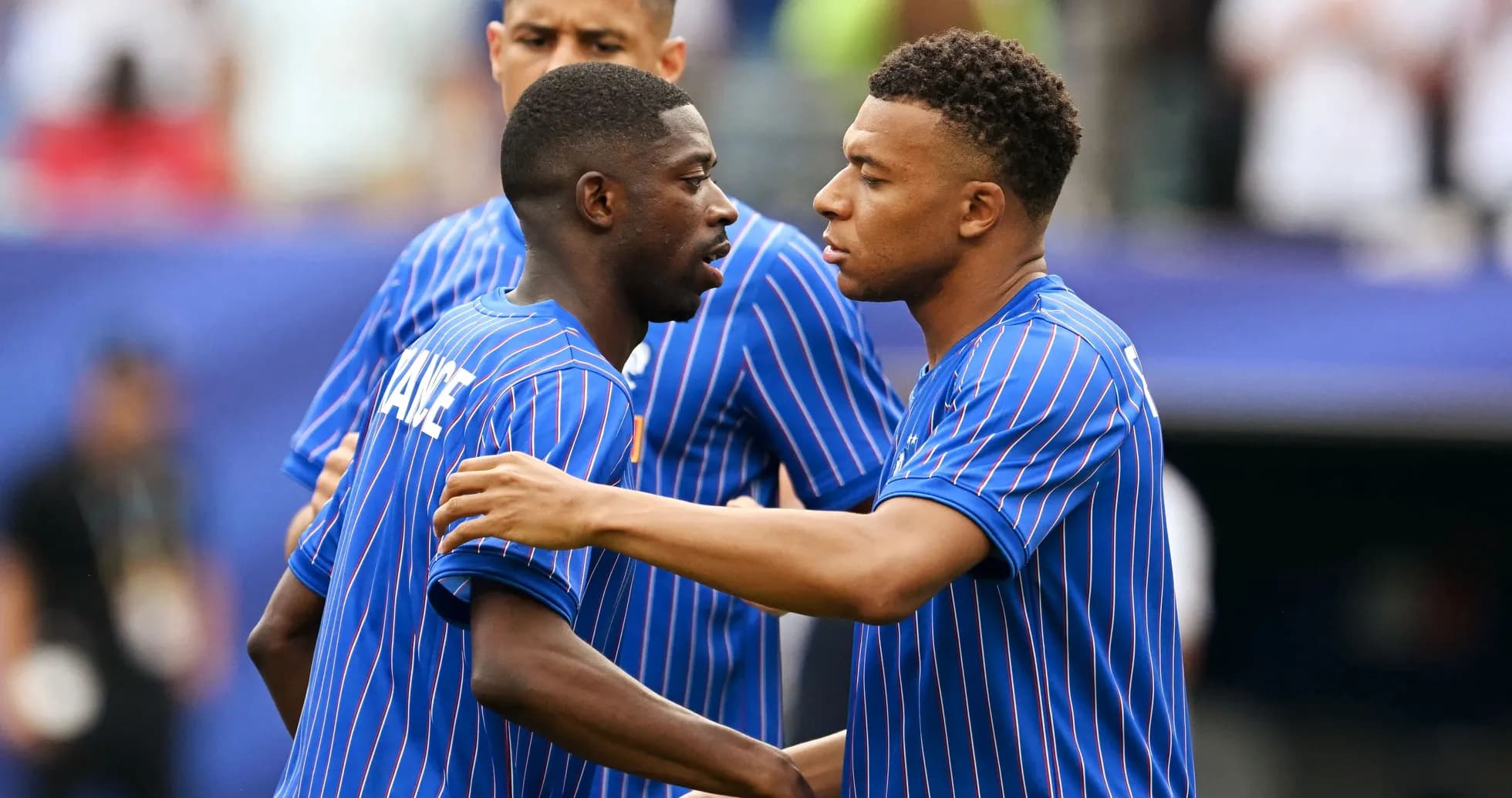
He reminded everyone that Mbappé and Dembélé have known each other since their mid-teens. “You two have known each other since you were 15 years old. Are you going to be upset by an interview in which Kylian spends all his time talking about himself? He didn’t say anything bad about Dembélé.”
For Dugarry, this was less a feud and more a clash of temperaments being blown out of proportion.
Two stars, two worlds
Dugarry doubled down on his defence of the France captain. In his eyes, Mbappé had not insulted Dembélé at all. He had simply laid bare the gulf between two very different ways of living the game.
“What Kylian said is the truth,” Dugarry insisted.
Then came the anecdote that cut to the heart of his argument. He recalled Dembélé’s time at Barcelona, when the winger’s professionalism was repeatedly questioned.
“I remember when Dembélé was at Barcelona, he couldn’t get up in the morning to go to training because he was playing PlayStation. Come on! Dembélé is the anti-star, and he shines because of that. He has the mentality of the anti-star. These are two visions of football. Two different footballing styles clashing. Two different personalities.”
On one side, the self-declared “chosen one”, a player who leans into the spotlight and speaks openly about his place in the hierarchy of the sport. On the other, the reluctant headliner, a man who has always seemed more comfortable in the shadows, letting his left foot do the talking.
Dugarry’s message was simple: difference does not equal crisis. “A difference,” he stressed, does not mean a genuine rift. In his view, two contrasting characters can coexist inside the same dressing room without tearing it apart.
What is Dembélé really upset about?
The former striker struggled to see why Dembélé, of all people, would feel slighted.
“I don’t understand what shocks Ousmane Dembélé,” he said. “He has always presented himself as a reserved, shy person, somewhat introverted, with a high team spirit. He built his career this way, and won this way. He understands this footballing philosophy. Mbappé is the complete opposite of that.”
The conclusion was brutal, but clear. “Excuse me, but if their friendship cannot get past this matter, then it means it was never strong in the first place.”
In other words: if one quote in an interview can crack a bond forged over a decade, perhaps that bond was not as deep as many assumed.
Admiration with a warning
Dugarry did not give Mbappé a free pass. Even as he defended the forward from accusations of betrayal, he admitted there are aspects of the 25-year-old’s rhetoric that jar.
“There are things that bother me, such as Kylian’s excessive confidence in his comments,” he explained. He finds it strange, he said, that Mbappé speaks at length in the first person, centring himself in a sport that is still, fundamentally, a collective effort.
The France captain, for all his trophies and goals, has not yet carried his country to a major title as the undisputed leader. That gap between self-image and collective achievement is where some of the unease lies.
Yet Dugarry recognises the reality of modern football. Mbappé’s status is such that he can shape his own narrative, almost without resistance.
“Right now, Mbappé is his own source of strength today!” he concluded.
The storm around his “chosen one” remark may pass. The question is whether the personalities at the heart of it – the superstar who embraces the crown and the anti-star who shrinks from it – can keep pulling in the same direction when the next France camp begins.