Lando Norris Takes Stunning Pole Position in Madrid
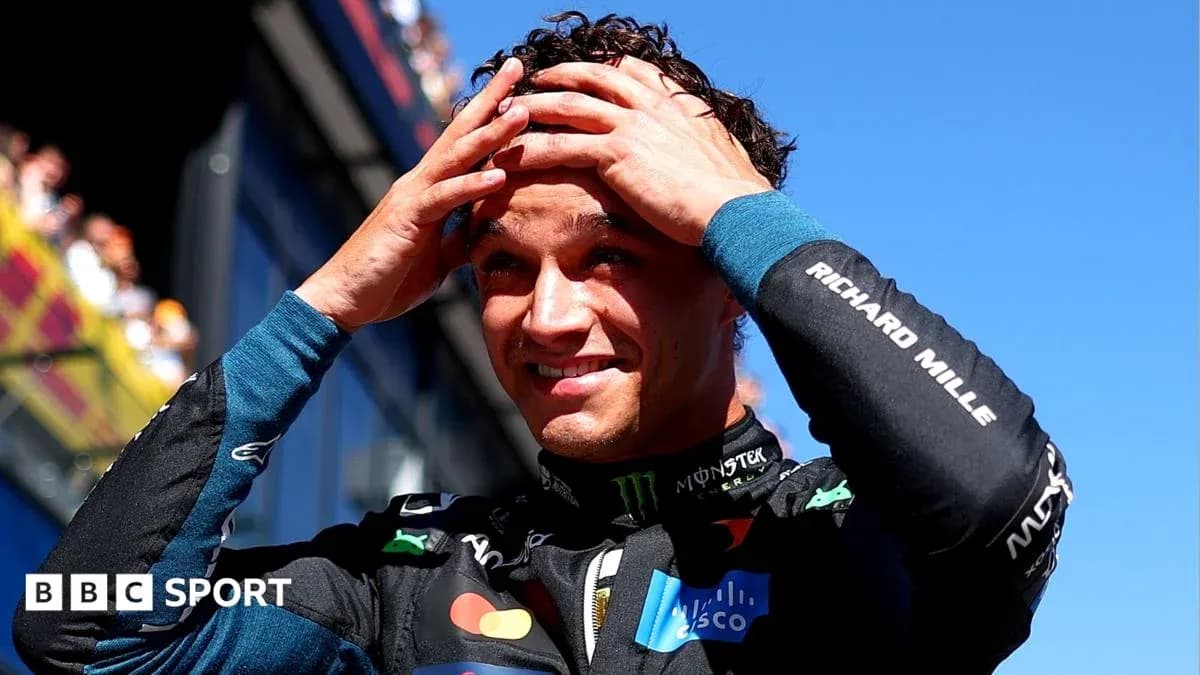
Lando Norris didn’t just take pole in Madrid. He carved his name into the new circuit’s concrete walls.
On a day when McLaren had no real right to be at the front, Norris produced a qualifying lap that left even hardened paddock veterans shaking their heads. The numbers alone are outrageous. A 0.701-second improvement between his two laps in Q3. A final margin of 0.011 seconds over runaway championship leader Kimi Antonelli. And, buried inside that, a mistake at the last corner that cost him more than three tenths.
Pole position with a chunk of time left on the table. On a brand-new, high-risk street track. In a car that, on paper, shouldn’t have been there.
No wonder Andrea Stella called it “a masterpiece”.
A lap from nowhere
McLaren had not been operating at pole-winning level. Stella said it plainly: they were not performing to the standard that usually delivers the front of the grid. He has watched telemetry for 450 grands prix, worked alongside Michael Schumacher and Fernando Alonso, and still put Norris’ lap among “the most impressive” he has seen.
The data told him why. The precision.
- Braking points nailed to the metre.
- Entry speeds held on a knife edge.
- Kerbs struck with millimetric accuracy.
- Power applied at exactly the right moment.
Every phase of every corner stitched together with a control that made engineers stare at the traces and double-check the scales.
Norris felt it from the cockpit.
“Most tracks, you know what is perfect, what you really want to achieve in a perfect lap,” he said. “Until the last corner, I think I matched that perfection level in pretty much every corner.
“So, yeah, it's a dream to achieve a lap like that. So it was easily one of the best laps I've ever done.”
The remarkable part is that he did it blind to the numbers. While most drivers lean heavily on the delta display on their steering wheel, watching green and red flashes tell them where they stand, Norris prefers to fly without it.
“I don't need my delta,” he said. “I can feel when I do what I need to do and when I get a good exit, when I'm on the limit of things. When I'm kind of a bit uncomfortable in corners is normally when it's going pretty well.”
His feet, he said, “were doing what I wanted”. On Saturday in Madrid, that was enough to beat a Mercedes and a Red Bull to the front.
The corner that nearly ended it
The lap was not flawless. That’s what makes it so compelling.
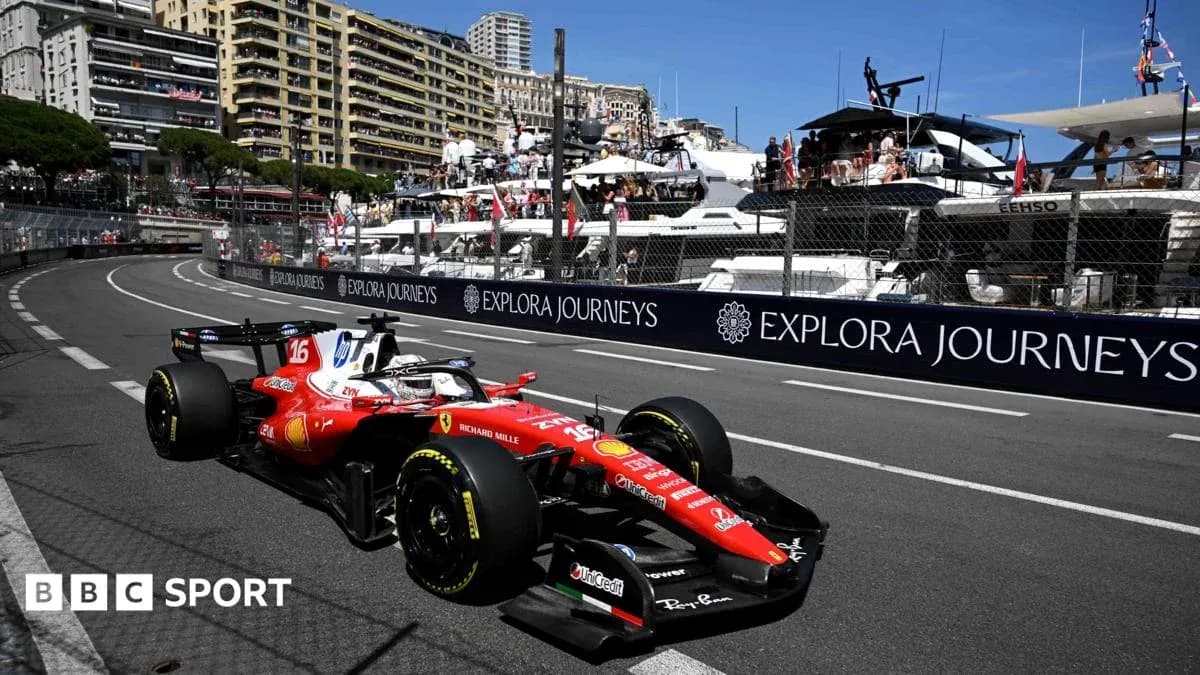
The new Madring street circuit is unforgiving. It winds around an exhibition centre near Madrid’s international airport, a functional backdrop that gives nothing away about how vicious the layout is. The walls sit close. The barriers angle back towards the track on exit. There is very little room to breathe.
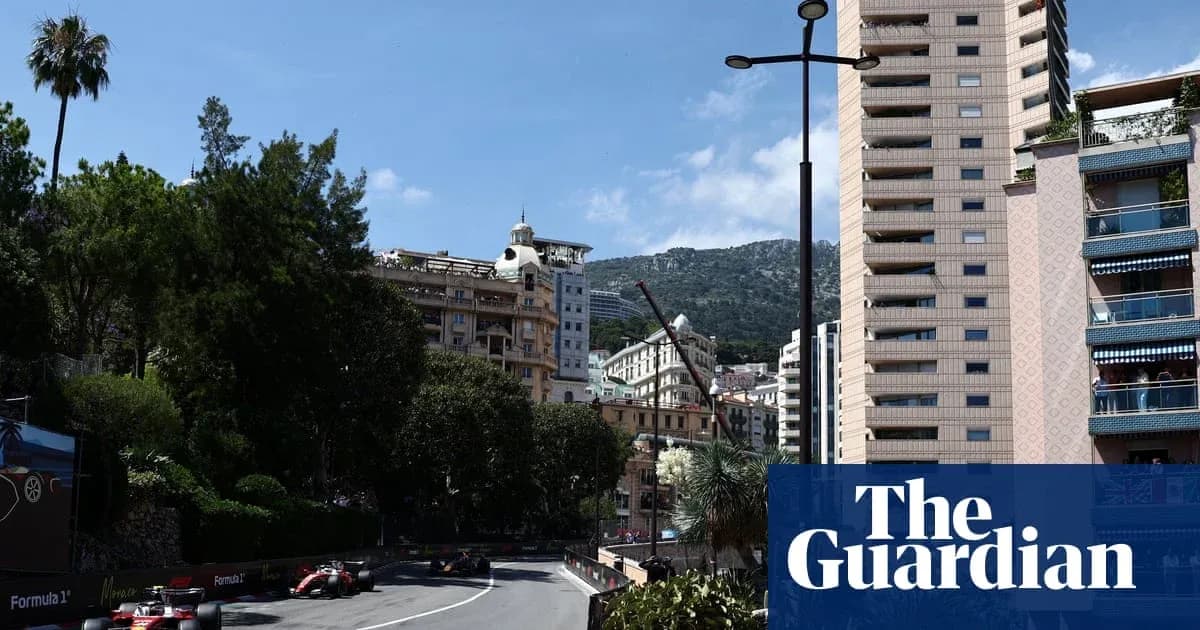
George Russell called it “very high risk” and said there was “less margin than Monaco”. Drivers spent the build-up predicting chaos. Final practice produced two red flags, one triggered by Lewis Hamilton, the other by Oliver Bearman. Qualifying, somehow, stayed clean.
Norris came within a heartbeat of changing that at the final corner.
“I thought I was in the wall and that was just from over-pushing,” he admitted. “I got a bit excited in the car and I just over-pushed the entry.”
Stella later estimated that moment cost 0.35 seconds. Even with that, Norris still edged Antonelli by 0.011. Remove the error and it would have been a crushing pole, not a knife-edge one.
“The most impressive thing is the fact that it's a pole position despite having lost 0.35secs in the last corner,” Stella said. “Everything is executed with a pretty unique level of precision.”
It was the kind of lap that looks wild from the outside and feels controlled from within. That’s the sweet spot the great ones talk about.
A masterpiece built on thin preparation
All of this came after Norris had lost almost the whole of second practice to a gearbox problem. While others pounded around on heavy fuel, learning how the tyres would behave over a race stint, the McLaren sat in the garage.
That matters at Madring. The new surface offers huge grip but punishes the tyres. The pit lane, sliced in half by a building, is the longest of the year. Norris joked it was “6km long”. Teams expect that to push them towards a one-stop strategy, but the tyre degradation is so steep that a second stop may become unavoidable.
Norris goes into Sunday with far less race-run data than he would like.
“Tomorrow is going to be a very tough day,” he said. “It's not going to be as straightforward as in Zandvoort and Budapest. There we were the quickest car. Yes, I'm on pole now, but we're not in the quickest car. It took a perfect lap to get me on pole by 0.011secs today.”
This is his third pole of the season. The previous two, in Hungary and the Netherlands, turned into dominant wins. The circumstances now are very different. The field is tighter. The car is not clearly superior. The circuit is new and unforgiving. And Norris knows he still has homework to do.
“There's a lot of stuff that I've got to spend my time doing tonight,” he said. “It's probably going to be a late one to try and get ahead of the game in some sorts.”
A street fight with nowhere to pass
If there is a trump card in Norris’ hand, it lies in the track layout. Overtaking, by common consent, is a nightmare.
The straights are short. The braking zones are awkward, many of them combining turning and slowing at the same time. That might be a thrill for a qualifying lap, but it kills racing lines and with them most overtaking chances.
Max Verstappen, who will start third, didn’t bother dressing it up.
“You can't overtake,” he said. “In some places, the braking zones, like, they need to learn that it should never be that you have to steer, that you have to combine under braking, because it doesn't allow any kind of overtaking.”
Antonelli had already felt the pain.
“It's going to be tight,” he said. “I spent two laps behind the Williams, trying to painfully get past. But it's just really difficult.
“And when you're behind, it's tough. Yeah, the only thing you can do is try to put pressure on the car in front, trying to make them do mistakes or make them deg a bit more.”
The Italian expects the early laps to be cautious, too. With tyre life so fragile, nobody wants to burn their rubber in a frantic opening stint.
“Probably is going to be grandmother driving in the first 10 laps,” he said. The teams saw in practice how badly the tyres suffer if the pace is too hot too soon.
All of which plays into the hands of the man on pole. Track position will be gold dust. If Norris can survive the launch and manage his tyres, the layout will do some of the defending for him.
A rare chance – and a rising standard
Norris called the Madring “a little bit of everything” and embraced its demands. He knows that on a circuit where overtaking is “especially difficult”, this is a clear chance to bank a third win of the year even without the fastest car.
“It's a long race, it's a new track,” he said. “You've got to know what corners to push, what corners not to push, all of these different things, what the battery's then going to do.”
The main part of the job, as he put it, was done on Saturday. The lap that stunned his rivals, impressed his team boss and lit up a drab industrial backdrop has given him control of the race’s first move.
Now comes the harder part: turning a masterpiece over one lap into something more valuable over 70-odd.
If this is what Norris can do on a day when McLaren “were not honestly performing to the level of scoring pole position”, the real question for the rest of the season is simple: what happens when he gets a car that actually is?