Manchester United's Defeat Against City Raises Key Questions
For the third time in less than 10 months, Manchester United have contrived to lose a game they should have been better equipped to control: beaten again by opponents reduced to 10 men before half-time.
This time it was Manchester City, a 1-0 defeat at Old Trafford, a derby framed by an official apology from Pro Ref to United for what was described as “an error of judgement” around Erling Haaland’s winner. The controversy will rage in studios and on social media. At Carrington, the conversation will be far more uncomfortable.
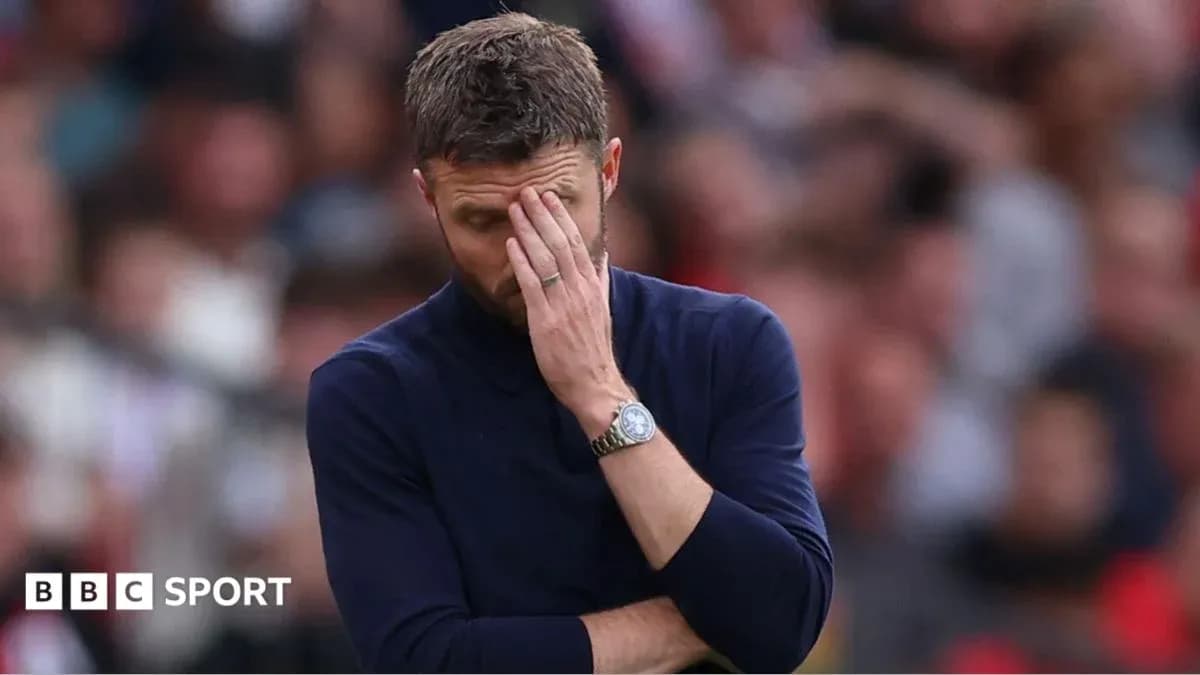
Michael Carrick walked out of Goodison Park last weekend insisting four points from three games was “not a bad start”. Seven days and another defeat later, he no longer tries to dress it up. Four points from four is not what this club expects, and he knows it.
One win, at home to newly-promoted Ipswich, is all United have to show. The rest is a growing pile of awkward questions: about the summer recruitment, about the balance of the side, about in-game decisions, about whether this squad is built to play the way their head coach wants. And, inevitably, about Carrick himself.
“We don’t need a break or a restart,” he said. “We’ve just got to move on and get winning again.”
The schedule offers no breathing space. Brighton come to Old Trafford in the Carabao Cup on 16 September. Four days later, it is Fulham away. Two games that suddenly feel like a stress test of the entire project.
Carrick does not just need wins. He needs performances that can quieten a fanbase braced for another three-week international break dominated by post-mortems into what is going wrong.
A Red Card That Helped Nobody at Old Trafford
Enzo Maresca, new to the City job and still shaping his own ideas, did not pretend Phil Foden’s red card made life easier.
Playing with 10 men at Old Trafford, in a derby, is supposed to invite siege. It never came.
Maresca explained why. “They are a team that loves transitions and space in behind,” he said. “With 10 players, we just dropped and waited for them, so we didn’t concede any transitions and didn’t concede any space in behind. That is why the game became more difficult for us and for them.”
The logic was brutal. Remove the space, and United lose their edge.
This has been United’s contradiction for more than a decade. Since Jose Mourinho, they have looked most dangerous when they do not have the ball, when they can spring out of a compact shape and punish stretched opponents. Ole Gunnar Solskjaer tried to shift them into a more proactive, front-foot side, but the team never fully escaped its counter-attacking identity. Erik ten Hag and Ruben Amorim arrived with reputations forged at clubs that dominated the ball in their domestic leagues; both found Old Trafford a different landscape.
Now Carrick, a midfielder who built his career on calming games, taking the ball, and rarely wasting it, wants his team to keep possession and control matches. The idea is clear. The execution, especially against a low block, is not.
Keeping the ball is one thing. Using it to unpick 10 men sitting deep, denying space, and refusing to lose shape is something else entirely.
£155m Spent, but Where’s the Control?
United’s summer plan revolved around the midfield. They spent heavily to reshape it, to give Carrick the tools to turn his possession ideals into reality.
On the evidence so far, that investment has yet to bite.
Youri Tielemans has not hit his stride. Carlos Baleba has not even made his debut. Andrey Santos, trusted to start the opener at Hull, has drifted out of the picture, dropped to the bench and unused against City. For a £155m rebuild, the return has been modest.
At the back, the gaps are just as glaring. Luke Shaw’s remarkable run of 41 consecutive Premier League starts finally ended, and when it did, the expected reinforcement at left-back never materialised. It left United exposed in an area everyone could see needed cover.
The bench against City told its own story. With the game slipping away, Carrick turned to Joshua Zirkzee, a Netherlands forward available for transfer all summer, sending him on for Marcus Rashford seven minutes from time. It was one of only two substitutions United made.
On a day when City played half the match with 10 men, United’s lack of options – or lack of trust in the options they do have – felt stark. This did not look like the bench of a side built to compete across a long, demanding season.
Bruno Fernandes: The Burden of Being Irreplaceable
Bruno Fernandes carried United last season. The numbers were outrageous: nine goals and a Premier League-record 22 assists, a campaign that rightly brought him the PFA and Football Writers’ Player of the Year awards.
This season, the picture is more nuanced. Three goals and one assist is a decent return on paper, but the influence that used to radiate through every attack feels dimmer. Against City, some observers thought he looked tired, which sharpened the focus on what happened – or rather, what did not happen – in midweek.
United’s return to the Champions League, away to Azerbaijan champions Sabah FK, should have been an opportunity to manage minutes. Carrick went strong, understandably, for the club’s first game back in Europe’s elite competition after a two-year absence. The decision made sense at kick-off.
At half-time, it looked different. United were three goals up. The tie was effectively done. There were three days until the derby.
Carrick used all five substitutes. Fernandes was not one of them.
The captain stayed on for the full 90 minutes, then went straight into the intensity of City. In isolation, it is just one selection call. In context, it feeds a growing concern: that United lean so heavily on Fernandes that they cannot imagine functioning without him, even when the situation screams for rest.
He is now into the final year of his contract, with United holding an option to extend it to 2028. The club’s long-term plan clearly assumes he remains the central figure in this team.
The question is whether they can keep asking him to carry this load, in this structure, with this supporting cast – and still expect him to be the player who dragged them through last season.
Brighton in the cup. Fulham away. Then three weeks of silence, apart from the noise outside. United do not just need results in the next eight days. They need answers.