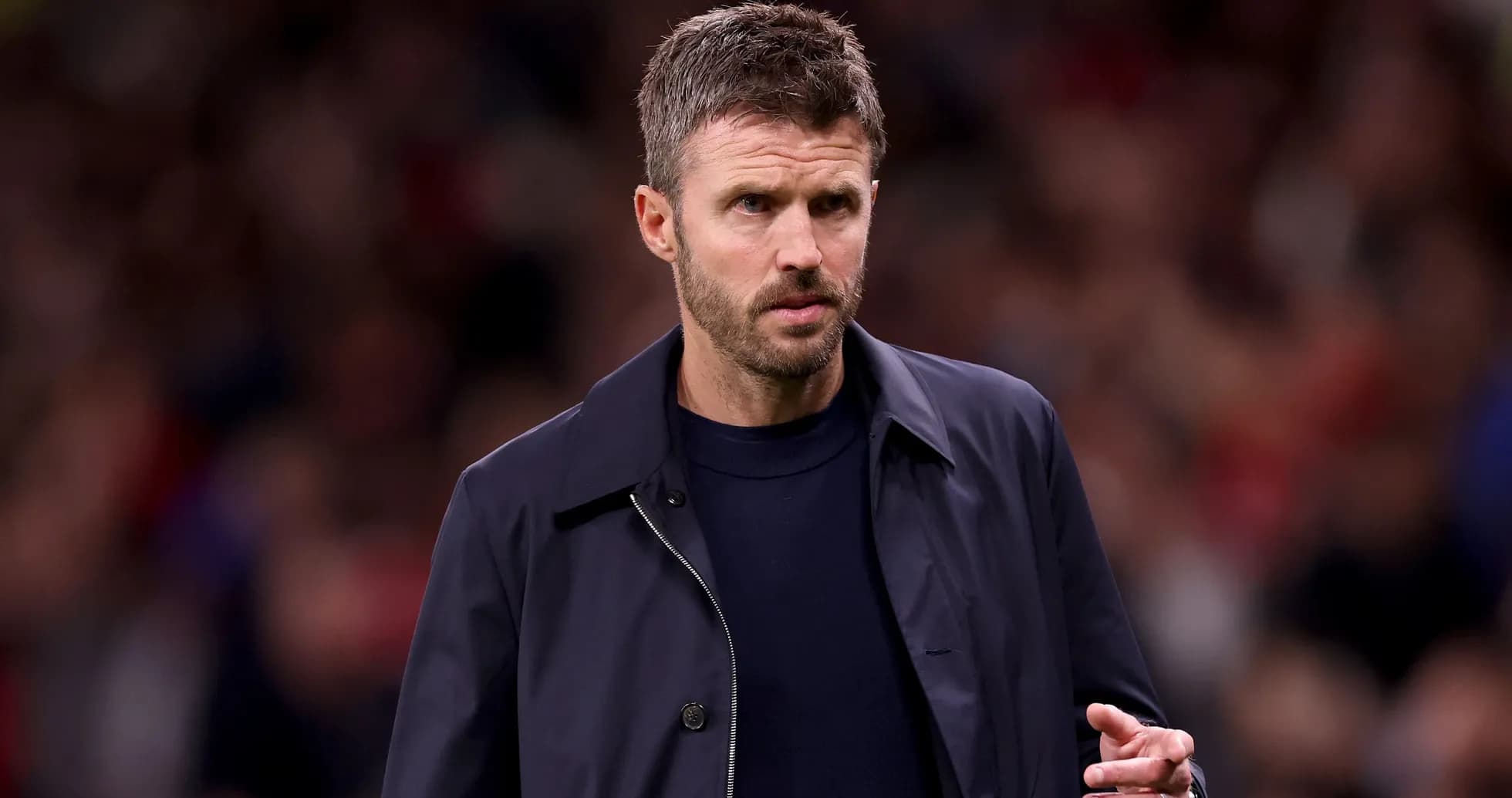
Michael Carrick's Tenure: Interim or Future Star?
Michael Carrick has the job title. He does not yet have the consensus.
Installed as Manchester United’s permanent manager after an impressive interim spell that dragged the club to third place and back into the Champions League, Carrick has earned the trust of the board and, for now, the dressing room. The numbers from his short reign are strong enough. The doubts, though, are growing louder from outside Old Trafford’s walls.
Jamie Carragher is leading that chorus.
“An interim in all but name”
Writing in his Daily Telegraph column, Carragher framed Carrick’s tenure in stark terms. To him, this still feels like a holding pattern, not a new era.
"To most, it feels like Carrick remains an interim solution in all but name, entrusted with the keys to Old Trafford until a super coach can move in during the summer of 2027," he wrote. "Carrick will not see it that way, of course, but there are certain perceptions which will be tough to shake off."
That line cuts to the heart of the debate. Carrick has the office, the authority, the transfer budget. What he does not yet have is the aura of inevitability that clings to the game’s most decorated coaches.
Carragher did not stop at perception. He questioned the ceiling.
Speaking to talkSPORT, he laid out his view with typical bluntness: "I don’t think Manchester United will win a league title or a Champions League with Michael Carrick. I’ve said that openly, but I think it’s right that he’s got the job right now. His results are fantastic."
So Carrick, in Carragher’s eyes, is both justified and limited: the right man for this moment, not the man to restore United to the very top.
The missing “stardust”
The former Liverpool defender then zeroed in on something more intangible than tactics or win percentages.
"I think the managers who win the biggest trophies, they’ve got an X-factor of stardust - Michael Carrick’s still got to prove that he’s got that."
It is a familiar criticism at Old Trafford. Ole Gunnar Solskjaer, another former United midfielder promoted from interim status, walked the same tightrope: popular, trusted, occasionally inspired, yet constantly accused of lacking that ruthless, elite edge.
Carragher explicitly linked the two.
In his column, he argued that neither Solskjaer nor Carrick would have landed a comparable role elsewhere on merit alone.
"That cannot change the fact that based on their coaching CVs alone, they would never have been approached by another elite club in England or Europe, nor would others have had any sentimental attachment to consider when determining the merits of offering a permanent deal."
In other words, United have twice allowed emotion and history to shape their future. Carrick’s challenge is to prove that sentiment can be the start of a story, not the whole of it.
Backed in the market, mixed on the pitch
United have not left him short of resources. The club spent £140 million in the summer to reinforce Carrick’s squad, bringing in Youri Tielemans, Carlos Baleba and Andrey Santos to refresh the midfield and deepen his options.
The early returns have been uneven.
A 2-0 opening-day defeat to newly-promoted Hull City jolted any notion of a smooth transition. One win, one draw and one defeat from their first three Premier League games has left the table looking untidy and the mood around Carrick more cautious than celebratory.
There have been glimpses of what his United can be. The 4-0 dismantling of Sabah in the Champions League on Thursday night offered a reminder of the attacking fluency and control that earned him the permanent post in the first place. The scoreline did not just flatter; it restored a bit of swagger.
But European nights against modest opposition are one thing. The Premier League’s sharp end is another.
The acid test: City at Old Trafford
Now comes the fixture that will strip away the noise and test Carrick’s work with brutal clarity.
Manchester City visit Old Trafford this weekend, bringing with them the standard by which United still measure themselves, however uncomfortable that reality may be. For Carrick, it is his sternest examination yet: a tactical duel, a psychological battle and a referendum on whether his United can live with the elite, not just chase them.
Carragher’s words will hang over the occasion. Can a coach accused of lacking “stardust” outthink and outfight the champions on the biggest domestic stage? Can a manager whose CV, as Carragher points out, would not tempt another superclub, prove that Old Trafford’s faith is rooted in more than nostalgia?
The squad answered once in midweek with four goals and a clean sheet. Answering again against City, under the floodlights and the pressure, is a different level entirely.
Carrick has been handed the keys. Against City, he finds out whether he’s driving a project built for the long road back to the top, or simply keeping the engine warm for the “super coach” so many still expect to follow.