Mike Dean defends refereeing career after ‘mini games’ controversy
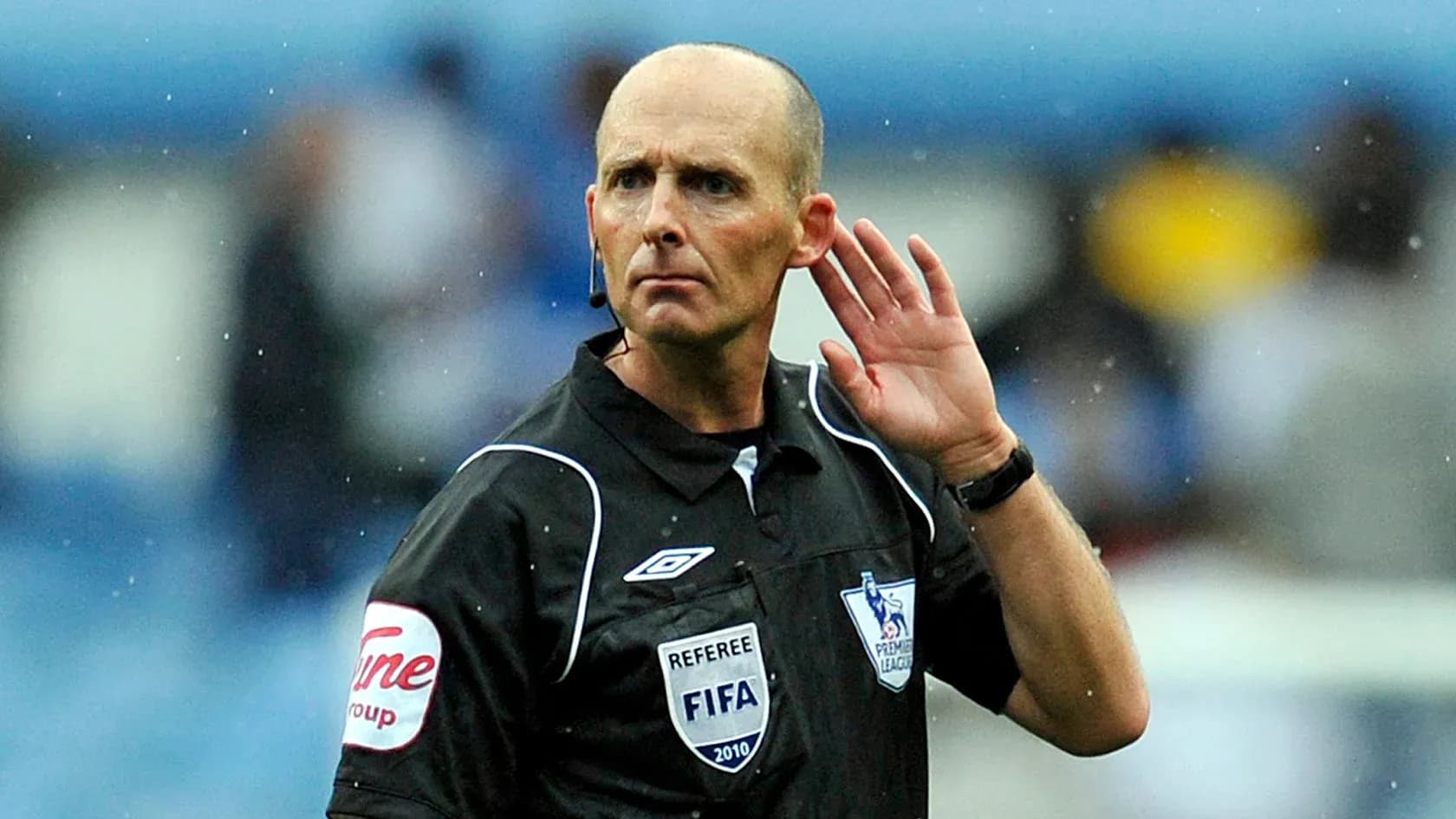
Mike Dean has moved to defend his 25-year refereeing career after a storm of criticism over revelations that he used to set himself “mini games” during Premier League matches.
The former top-flight official came under heavy fire this week after an appearance on the Jamie Vardy's Having a Party podcast, where he openly described how he and his assistants would sometimes try to “have a laugh” in the middle of high-pressure fixtures.
On the show, Dean admitted he would occasionally see how long he could go without blowing his whistle once a match had kicked off.
“There used to be games that we used to have, as a laugh,” he said on the podcast. “We used to say, ‘Right, we’ll kick off now, right? See how long we can go without blowing a whistle.’ Done that a few times in the Premier, before VAR obviously. Went 20–25 minutes without blowing a whistle a few times. Let it go, let it go, let it go.”
He then went further, revealing another personal challenge centred on his positioning.
“I used to do another thing in the Premier League,” he added. “I used to stand in the centre circle and see how long I could stay in the centre circle before I had to leave. That was just me joking about. The lads used to be on the line saying ‘you can’t’. I said ‘I’ll try it’. I just used to run around but don’t come out of it. Got about 15 minutes once in one game, without leaving the centre circle.”
Those remarks detonated across the game. For many supporters and pundits, they struck at the heart of refereeing integrity, raising questions over whether the spectacle had, at times, become a personal playground.
Dean has now tried to put that fire out.
In a statement on his Instagram account, the 56-year-old insisted the comments were light-hearted anecdotes rather than evidence of unprofessional behaviour.
“Throughout my 25 years as a professional referee, I have always applied the Laws of the Game to the best of my ability,” he wrote. “My approach as a referee was always to allow the game to flow and whenever possible I preferred to apply a high threshold for contact which the players liked. However, if I saw a foul challenge that needed me to take the appropriate action I would give it from the correct position.”
The message was clear: yes, there was humour, but not at the expense of the job.
Dean framed his “mini games” as part of a broader philosophy of letting matches breathe, of resisting the urge to whistle for every minor tangle. His insistence that he still took “appropriate action” when required was aimed squarely at those accusing him of neglecting his duty.
The backlash, though, underlines how little room there is for levity in modern officiating. Every decision is replayed, every angle dissected. Admitting to private challenges — even ones he insists did not affect the outcome — was always going to land hard in an era shaped by VAR, scrutiny and distrust.
Dean, one of the most recognisable referees of the Premier League era, has now staked his defence on the strength of his body of work. The numbers, the big games, the years at the top: that is the record he wants remembered, not the podcast soundbites that lit up the headlines.