The Unseen Pressure of Modern Tennis
On paper, talent should be enough. Athleticism, work ethic, the hours on the practice court, the travel, the grind. Stack it all high enough and a Grand Slam trophy ought to appear at the top.
It doesn’t. Not in this era. Not in this pressure cooker.
At the sharp end of the sport, the real currency is something far less tangible: the unshakable conviction that, under the hottest lights and with nowhere to hide, you are the one who walks away with the title. Unwavering belief. Or, as Taylor Fritz has more bluntly framed it, delusion.
A generation searching for its moment
Fritz, the world number 10, stands as a symbol of a gifted group still waiting for their breakthrough. He is also one of those who let a golden chance slip in New York.
With Jannik Sinner absent through injury and Carlos Alcaraz feeling his way back after a long lay-off, the US Open looked wide open for the rest of the field. The draw seemed to invite ambition. The leading seeds had room to move, room to dream.
Instead, the tournament chewed them up.
By the fourth round, six of the top 10 men were out. Fritz was among the early casualties, losing from two sets up to Argentina’s Francisco Cerundolo in the third round, a defeat that cut deep given the opportunity in front of him.
On Sunday, former champion Daniil Medvedev joined the exodus in the last 16. His departure left only three top-10 players standing: top seed Alexander Zverev, defending champion Alcaraz and eighth seed Ben Shelton.
“It shows you how even the circuit is, how tight every match is, how difficult it is to win matches,” said 24th seed Cerundolo, who has been thriving in the chaos. “Anything can happen right now.”
He’s right. But that volatility is framed by a brutal reality: Sinner and Alcaraz have taken 10 of the past 11 Grand Slam men’s singles titles. Their dominance hangs over every locker room conversation, every tactical meeting, every sleepless night.
Fritz, speaking to the Guardian earlier this year, admitted that if he finishes his career without a major, he expects to feel an “emptiness”. That is the scale of the burden for this generation. It isn’t just about losing matches. It’s about staring down the possibility of a career that, in the harshest light, feels incomplete.
Zverev’s release, Alcaraz’s rise
For Alexander Zverev, that weight has already left scars. The German finally broke through at Roland Garros this year, winning his first major after a decade of expectation, scrutiny and near-misses. Only then did he reveal the personal cost: during previous Slam fortnights, he “could not sleep” and was “not eating” because of nerves.
Once he prised that first trophy out of the sport’s grip, something in him changed. He rode that freedom all the way to the Wimbledon final, where he swung more loosely, played with more expression, and still ran into Sinner at full tilt.
Now he is back in the deep waters of the US Open, still short of his best level but surviving, scrapping, finding ways to win. Waiting for him, looming larger with every round, is Alcaraz.
The Spaniard arrived in New York as a question mark after four months out. With each victory, the question has become a statement. His movement has sharpened, his timing has returned, his swagger is back.
“The two-horse race between Sinner and Alcaraz is not healthy for the tour,” said former Wimbledon champion Pat Cash on BBC Radio 5 Live. “With every win, Alcaraz is becoming more of a favourite. Four months off, no matches and he could win the US Open.”
That is the level of intimidation the rest are dealing with. Even when circumstances appear to open a door, the same names block the way.
Fragile bodies, frayed minds
Pressure alone doesn’t explain the carnage at the top of the draw. There is also a more prosaic truth: outside Sinner and Alcaraz, this top 10 does not have the same granite feel as previous eras.
Injuries, illness and sheer exhaustion have ripped through the field at the tail end of a punishing season.
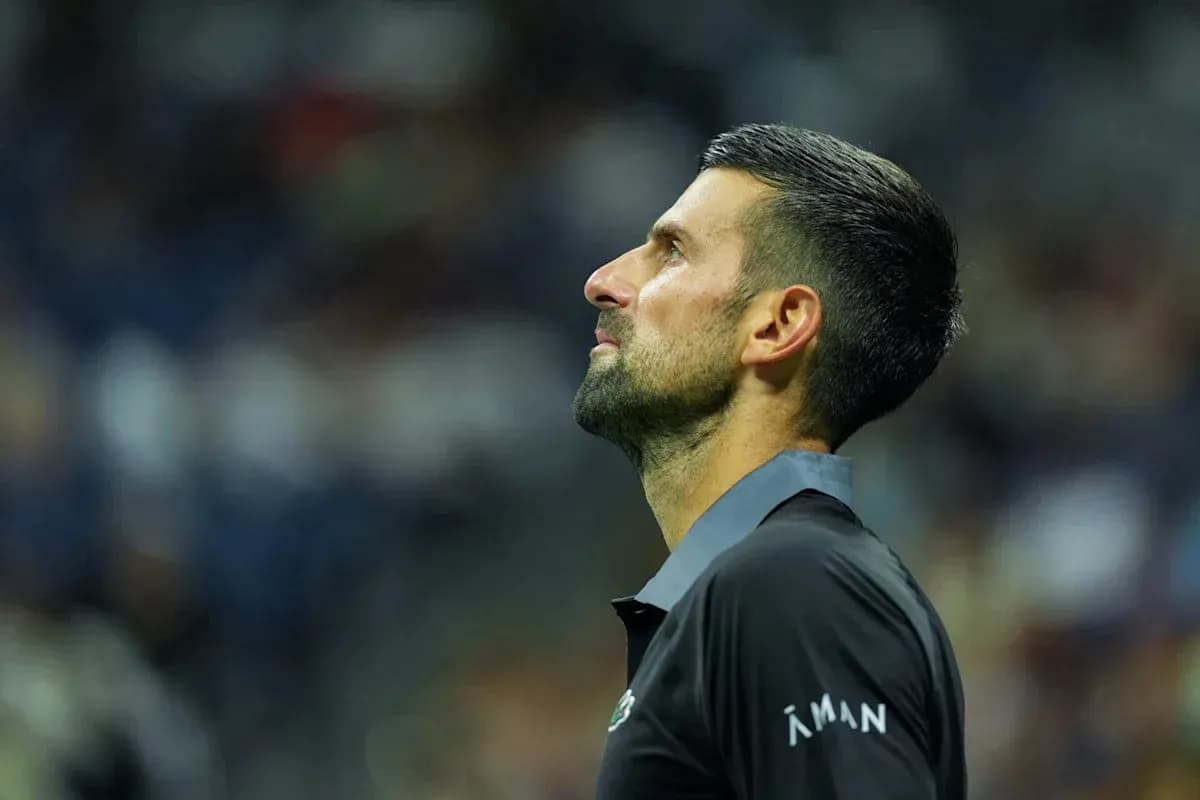
Fourth seed Novak Djokovic, still a giant of the game but now at the mercy of an ageing body, exited in the first round in a result that shook the tournament. Third seed Felix Auger-Aliassime blamed dizziness for his second-round defeat, a reminder that sometimes the body simply refuses to cooperate.
Fifth seed Flavio Cobolli spoke of lacking energy in his third-round loss, pointing to a heavy schedule and New York’s draining heat. Cincinnati champion Arthur Fils, one of the form players coming in, drew former world number three Stefanos Tsitsipas in the first round and fell in a bruising opener.
Teenager Rafael Jodar, already past 50 matches in his first full season on tour, looked spent in his first-round exit. His legs told the story of a year that had caught up with him.
“The season is long. I think all the guys who performed well in the preparation tournaments have it more difficult here,” said Belgium’s Alexander Blockx, who knocked out French Open finalist Cobolli. “We’re all human. We’re not robots. Every week is difficult. Especially at a Grand Slam where it gets even more physical. Mentally you have to really stay in it.”
That last line cuts to the heart of it. Staying “in it” mentally for seven matches over two weeks, under suffocating expectation, is what separates champions from contenders. Right now, only a handful truly know how to live there.
A different kind of squeeze at the top
The tension is not limited to the men. In the women’s game, the fight at Flushing Meadows has an extra layer: the battle for the number one ranking.
Aryna Sabalenka has sat at the top of the rankings for the past two years, a symbol of consistency and power. Recently, though, her form has dipped, and the points table has tightened around her.
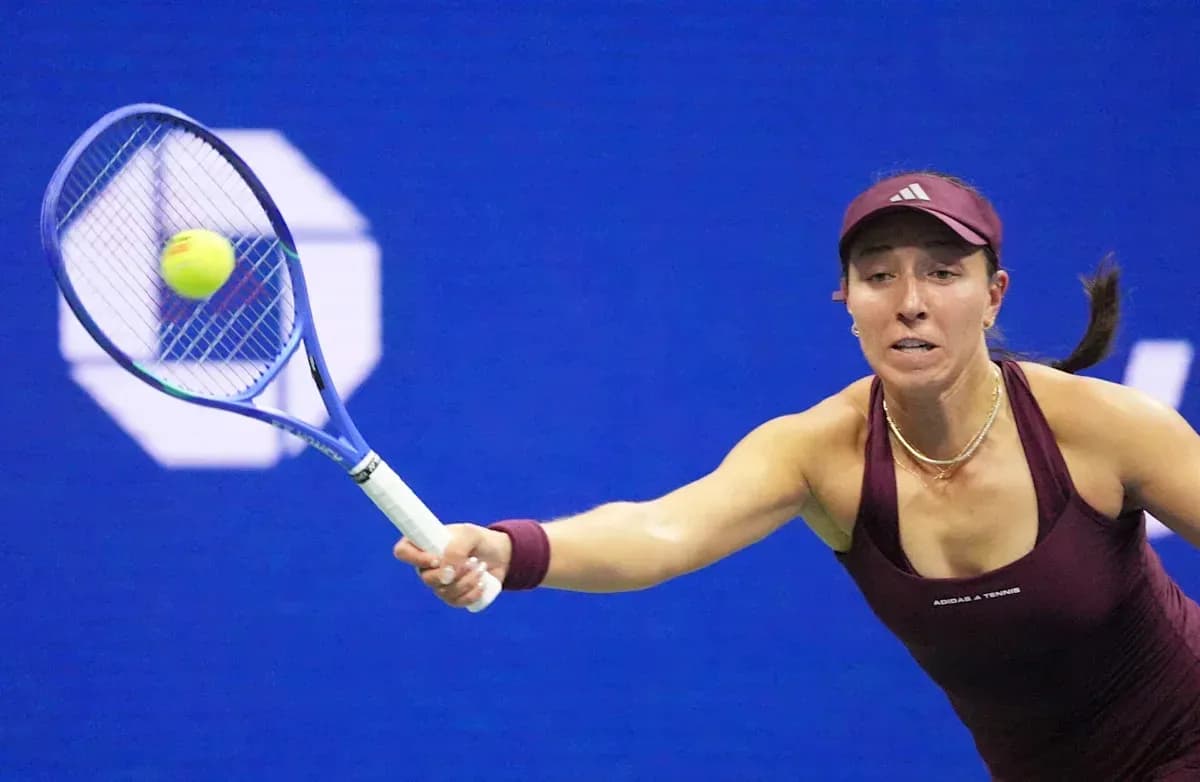
Elena Rybakina knows exactly what is at stake. A run to the semi-finals would be enough to knock Sabalenka off the summit. Jessica Pegula and Coco Gauff lurk just behind; either could climb to number one by winning the title.
“Looking at the difference between the points in the top 10 compared to the men, you can see how the depth is pretty crazy,” said Pegula. “Everyone has been very consistent and makes it hard to a certain extent [to win a Slam]. But then you know there’s not one or two super dominant players where you feel like they have to lose in order for you to have a chance.”
On the women’s side, the field feels broader, the threat more evenly spread. On the men’s, the mountain has two faces: Sinner and Alcaraz.
Somewhere between those realities lies the modern Grand Slam truth. Talent is the entry fee. Belief is the difference. And for a generation staring up at two young giants, the question is no longer whether they can play with them.
It’s whether they can convince themselves they belong above them when it matters most.