Morocco's World Cup Bid Faces Political Challenges
The race to stage the 2030 World Cup final has burst out of the boardroom and into the heart of Moroccan politics.
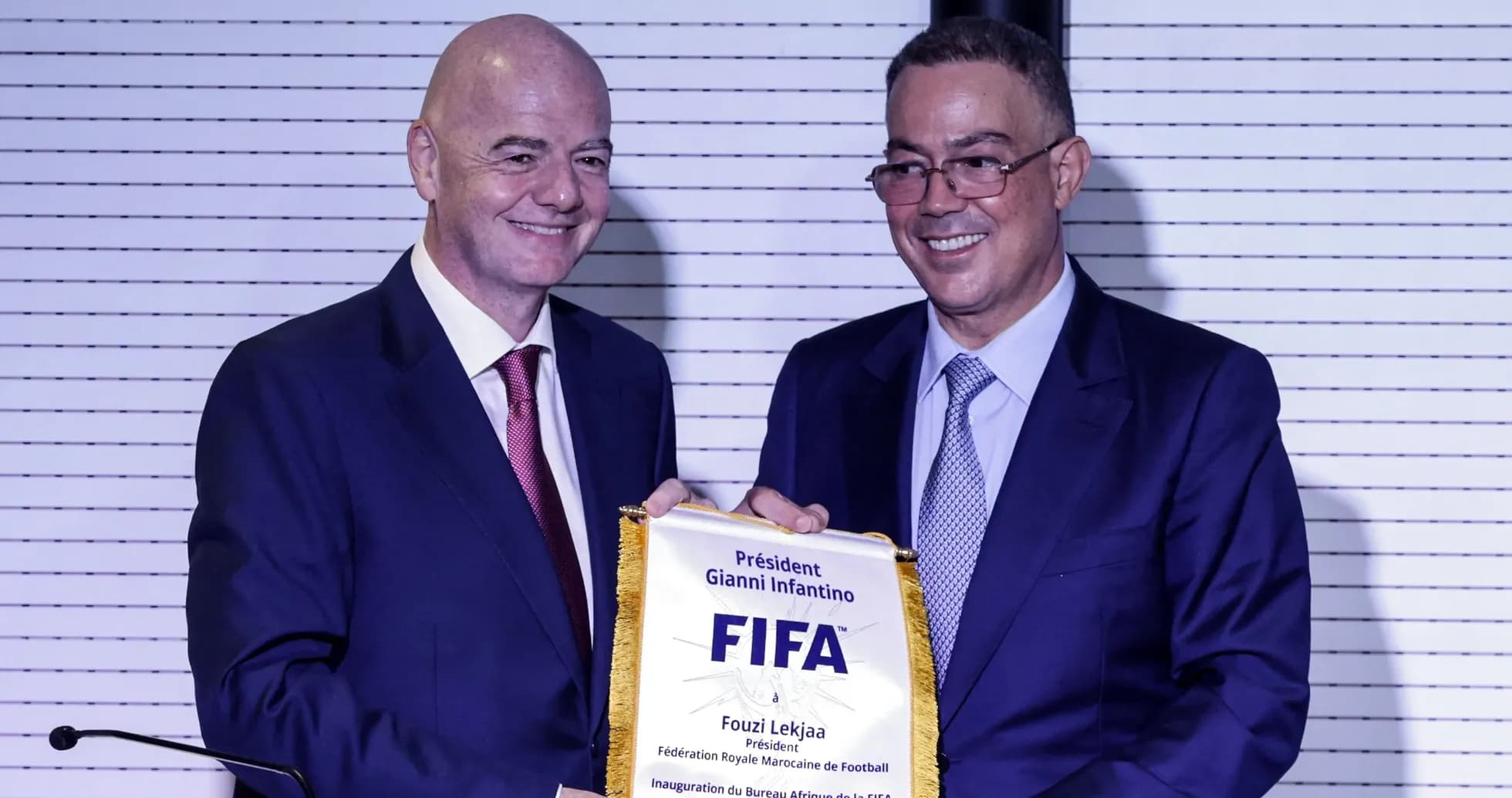
Prime Minister Aziz Akhannouch has publicly rebuked Fouzi Lekjaa, the powerful president of the Royal Moroccan Football Federation (RMFF), ordering him to stop making public promises that Casablanca will host the showpiece match.
The message was blunt. The timing, deliberate.
Political Warning, Football Battlefield
Lekjaa, a central figure in Morocco’s successful joint bid with Spain and Portugal, had told a political party gathering that the planned new stadium in Casablanca would have the “honour” of hosting the final. It was the kind of line that plays well on a campaign stage: grand, emotive, nationalistic.
It also went far beyond what FIFA has confirmed.
Akhannouch stepped in at a rally of his own, turning what looked like a triumphant football soundbite into a cautionary tale about diplomacy and overreach. He told Lekjaa not to “offer to host the big final game in Morocco” while no agreement had been reached with co-hosts Spain and Portugal, stressing the need for “respect” and warning against using “electoral promises” on an issue of such magnitude.
The subtext was clear: Morocco wants the final, but not at the cost of a rift with its European partners.
FIFA Keeps Its Distance
On the governing side, FIFA has kept its cards close to its chest. The only official line so far is that “a decision will be made in due course.”
No venue. No city. No continent confirmed for the final.
That vacuum has created space for political statements, national lobbying, and strategic leaks. It has also sharpened the rivalry between Morocco and Spain, each convinced it has the strongest case to host the first World Cup final of the tournament’s second century.
Spain Smells Home Advantage
Spain’s football authorities have not been shy.
Rafael Louzan, president of the Spanish federation (RFEF), has repeatedly argued that Spain is the “natural” home for the 2030 final. Speaking to Cadena SER radio, he insisted that, even with no formal decision taken, “it cannot be any other way,” pointing to Spain’s status as world champions and its proven record in staging major events.
From Spain’s perspective, the infrastructure argument is overwhelming. The revamped Santiago Bernabeu in Madrid stands ready as a modern, multi-purpose arena built for global occasions. Barcelona’s Spotify Camp Nou is in the midst of a huge redevelopment aimed at turning it into one of the most advanced stadiums in the game.
With those two giants alone, Spain can present FIFA with a ready-made stage: proven cities, established transport networks, and a long history of hosting top-tier football.
Morocco’s Giant Gambit
Morocco is answering with scale and ambition.
The country is pushing ahead with plans for a colossal 115,000-seat stadium, which would become the largest football-specific venue on the planet. It is designed not just as a venue, but as a statement – a declaration that Africa can host the biggest game of all on its own terms.
For Morocco, the symbolism is powerful. The continent has staged a World Cup final only once, in Johannesburg in 2010. Bringing the 2030 final to North Africa would mark a historic return, this time in a region that has spent the last decade investing heavily in facilities, transport, and tourism.
Lekjaa’s enthusiasm to claim the final for Casablanca taps directly into that national aspiration. Akhannouch’s intervention shows how delicate the balance is between ambition and alliance.
Co‑Hosts, Competing Visions
This is not a traditional single-country bid. Morocco, Spain, and Portugal are locked together as co-hosts for a centenary tournament that will also see opening fixtures staged in South America to honour the World Cup’s origins.
That shared hosting model demands coordination as much as competition.
Publicly staking a claim to the final before any internal agreement risks unsettling that unity. Akhannouch’s warning appears aimed at keeping the political temperature down while negotiations continue behind closed doors.
Spain, for its part, continues to project confidence. Louzan talks about “reality” dictating that the final “cannot and must not be held anywhere other than in Spain.” Morocco counters with record-breaking construction plans and the promise of a landmark African final.
Each side knows the other needs it for the bid to work. Each also knows the final is the crown jewel.
Decision on FIFA’s Clock
The timeline offers both hope and frustration.
For the 2026 World Cup, the final venue in the United States was only confirmed in early 2024, with New Jersey’s MetLife Stadium eventually getting the nod. That precedent gives FIFA room to delay, assess, and extract maximum leverage from three ambitious hosts eager to showcase their best.
For now, Morocco’s government is trying to manage expectations at home while keeping its partnership with Spain and Portugal intact. The federation is pushing hard, the political leadership is pulling back, and FIFA is watching.
The stadiums will rise, the lobbying will intensify, and the rhetoric will sharpen.
At the end of it all, one question will define this three-way alliance: whose flag flies over the stadium on the night the 2030 World Cup is decided?