Naomi Osaka Survives Tension to Reach Third Round at US Open
Naomi Osaka had the match in a headlock. Again.
For the second straight outing at this US Open, the two-time champion looked as if she would glide through without so much as a raised heartbeat. A set up, a break up on Katerina Siniakova, the night drifting towards a routine return to the third round.
Then the tension walked in.
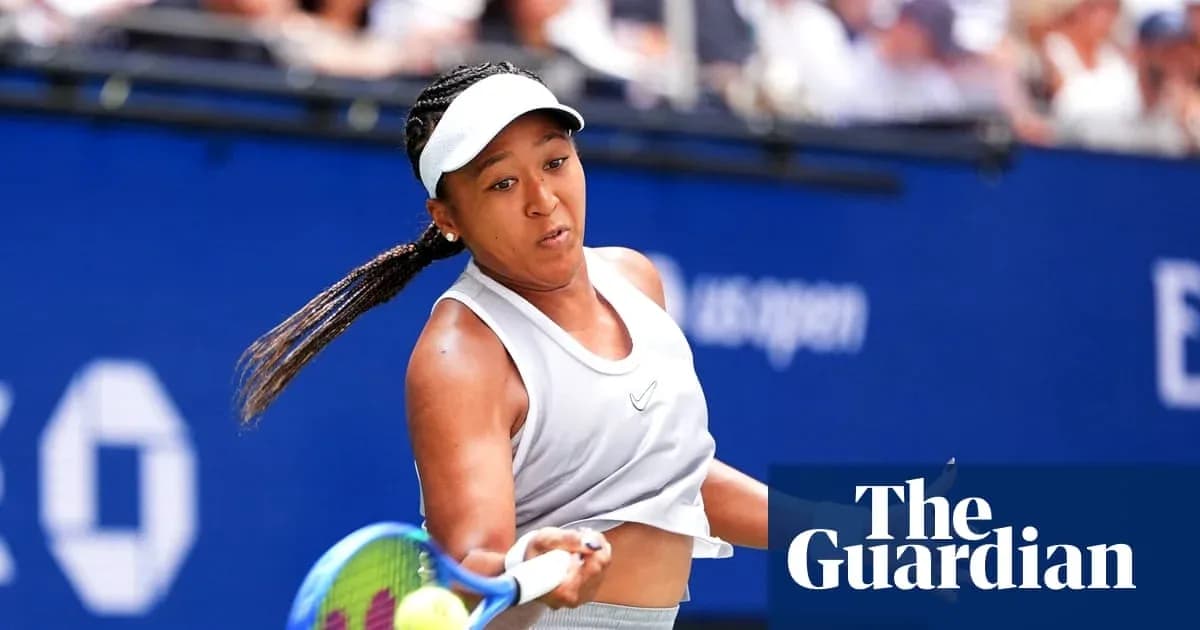
Osaka tightened, the forehand that had been bullying the Czech began to misfire, and the clean, clinical patterns of the first set frayed. Siniakova, stubborn and seasoned, didn’t need a second invitation. She dragged the second set into the trenches and stole it 7-5, forcing a decider that had never seemed on the cards.
That was the test. Not the tennis, but the response.
Osaka’s answer was emphatic. She reset, stripped the emotion out of her game, and tore through the final set 6-1 to complete a 6-2, 5-7, 6-1 win and secure her place in the third round. The scoreline in the end looked comfortable. The journey to it was anything but.
A contender again
This North American hard-court swing has always been Osaka’s territory. US Open titles in 2018 and 2020, the hard courts of New York and Melbourne forming the foundation of a four-time major champion. For a while, though, her grand slam story had narrowed to those familiar blue surfaces. Clay and grass felt like holding patterns, months to be endured until she could come “home”.
Not this year.
Osaka arrived in New York with something she has not carried in a long time: a full-season body of work. She reached the fourth round at Roland Garros, the quarter-finals at Wimbledon. On surfaces that once exposed her discomfort, she produced the best tennis of her career.
Wimbledon, especially, marked a shift. Grass has long been her most unforgiving stage, yet she carved through the draw and dismantled world No 1 Aryna Sabalenka in the fourth round. The run ended in the quarter-finals, fatigue finally catching up after a deep week in Bad Homburg, but the level was unmistakable. It was the most complete version of Osaka since her 2021 Australian Open title.
She came into New York not just hopeful, but armed with evidence.
Winning ugly, surviving nerves
With that evidence comes expectation. And expectation, in Osaka’s case, comes with weight.
Her opening match against Anastasia Zakharova was a warning shot. Osaka won 7-6 (6), 7-6 (3), but only after twice letting breaks slip and stumbling into tiebreaks she had no business needing. The nerves were obvious. She escaped, just.
Against Siniakova, the price of those jitters rose. This time, they cost her a set.
Yet this is where experience separates champions from contenders. Osaka did not panic in the third. She leaned on her history, on the catalogue of matches that have shaped her. She spoke afterwards about replaying the 2019 Australian Open final against Petra Kvitova in her head, about dipping into a “memory bank” of pressure moments and using them as a map out of trouble.
That is what maturity looks like in elite sport: not the absence of fear, but the ability to function inside it.
She played a clean, aggressive final set, reasserted control from the baseline and shut the door on Siniakova’s resistance. The scoreline from there felt inevitable. It had not been for most of the night.
For a top seed or a proven champion, the first week of a major is rarely about perfection. It is about survival, about buying time to find the top gear that wins trophies. Osaka has done that twice now. She is still standing, still dangerous, still in the draw.
The noise around the tennis
Talking about Osaka in 2024 means talking about more than forehands and second serves.
Every major she has played this year has doubled as a runway. Walk-on outfits, match kits, carefully curated looks that generate almost as many headlines as her results. At this US Open, she has turned to Allen Iverson for inspiration, her attire a deliberate homage to the former NBA star.
The reaction has been loud, and often ugly.
For someone naturally reserved, Osaka somehow provokes a fury that goes far beyond sport. She is labelled an attention seeker by critics who insist she should “just focus on tennis”, as if the two are mutually exclusive. Her public struggles with mental health in 2021 are thrown back at her whenever she expresses herself, as though she is not allowed to evolve, as though the young woman who stepped away from the spotlight then must remain frozen in that moment.
Much of the backlash comes from the same corners that bristled at her anti-racist activism in the early 2020s and have never forgiven her for it. The arguments are dressed up differently now, but the tone is familiar.
Osaka, though, has grown. She is still introverted, still soft-spoken, but she has found a language in fashion that feels natural to her. Clothes, for her, are not a sideshow. They are a way to communicate without a microphone, to express something beyond the score.
And at its core, this is entertainment. She runs, she hits, she competes for a crowd. Choosing to do so in elaborate dresses does not cheapen the sport. It simply broadens the canvas.
A brutal road ahead
The draw has done Osaka no favours. For all the talk of her resurgence, the path to a third US Open crown is laced with danger. Second seed Elena Rybakina looms as a potential fourth-round opponent, a matchup that would test both Osaka’s rhythm and resolve.
Getting there is the first task. Only then can the conversation shift from promise to genuine title charge.
Elsewhere in the women’s draw, another former champion moved with far less drama. Iga Swiatek, the 2022 winner and eighth seed this year, brushed aside Nadia Podoroska 6-3, 6-2, a measured performance that suggested a player quietly building towards something sharper in the second week.
Harriet Dart’s stay in the main draw ended abruptly. The British qualifier ran into the 25th seed Marie Bouzkova and was outgunned 6-2, 6-2, unable to find any sustained foothold in the contest.
On the men’s side, Félix Auger-Aliassime’s campaign unravelled in worrying fashion. The third seed and last year’s semi-finalist struggled with dizziness and illness during his match with Karen Khachanov and faded badly after taking the opening set. Khachanov turned the screw, rolling through the next three sets 6-3, 6-2, 6-2 to send one of the supposed contenders out early.
Osaka, by contrast, remains very much in the tournament, her game still a work in progress, her presence impossible to ignore. The tennis is coming back. The edge is back. The question now is whether she can carry both, and everything that swirls around her, all the way through a second week in New York.