NBA Bounce-Back Candidates for 2026-27 Season
Every NBA season leaves a few good players in the wreckage. Not because they forgot how to hoop, but because the year forgot them. A bad knee, a mistimed trade, a shooting slump that outlives the numbers and seeps into the narrative. By the time summer hits, the perception has drifted miles from the reality.
This time, though, the league has handed several of those guys something tangible: clean medicals, bigger contracts, clearer roles. Heading into 2026-27, this group isn’t just “bounce-back candidates.” They’re positioned to matter again — on the floor and on fantasy rosters.
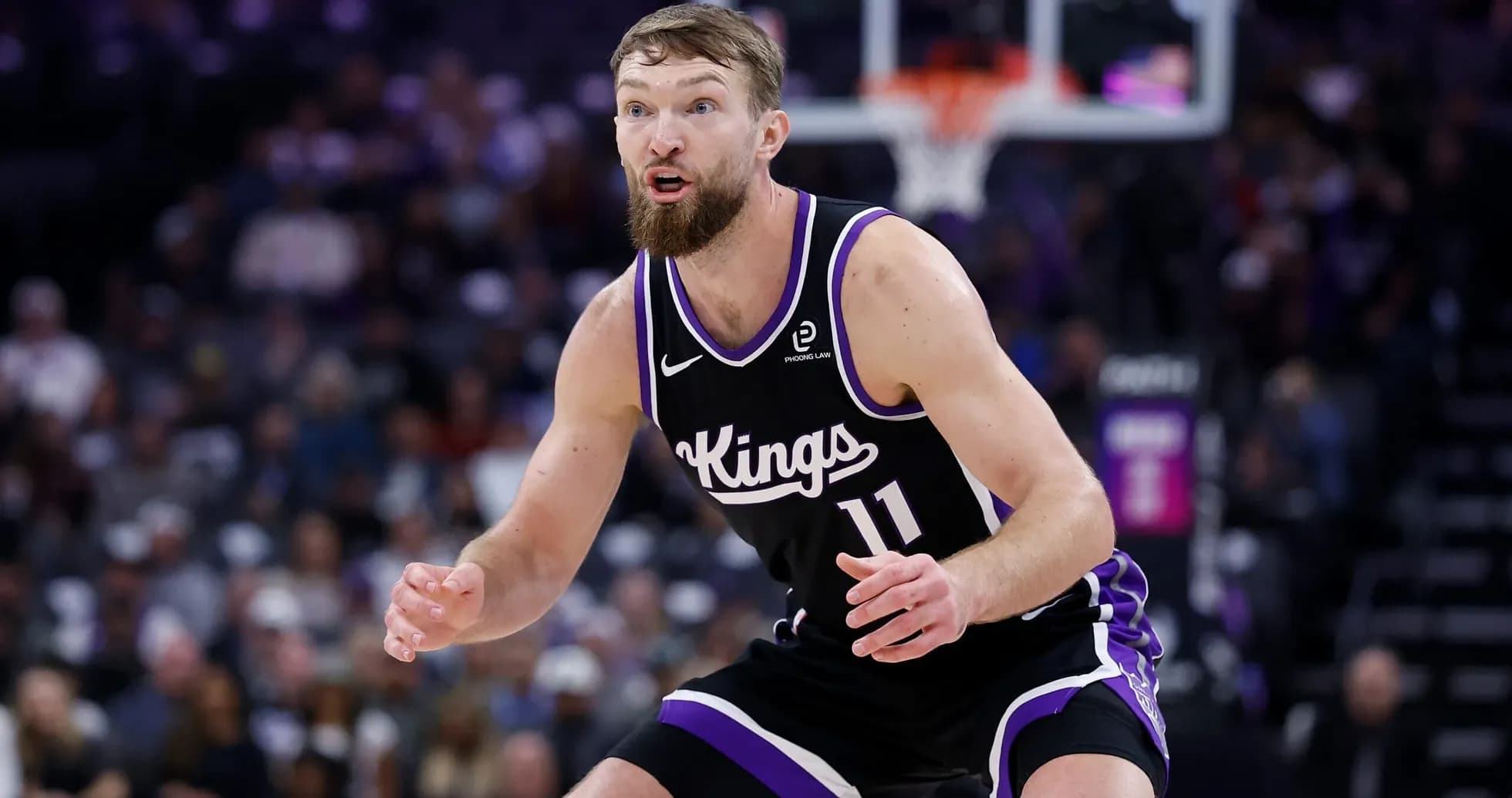
Domantas Sabonis, Kings: The Engine Returns
Between 2023-24 and 2024-25, only one man stacked more triple-doubles than Domantas Sabonis. Nikola Jokić. That’s the entire list.
Sabonis logged 36 triple-doubles over those two seasons, a staggering level of nightly production that doesn’t just disappear because a knee gives out. A torn meniscus in his left knee wiped out most of his 2025-26, forced season-ending surgery and pushed him out of the spotlight. The timing was brutal. The profile remains elite.
He’s tracking toward full clearance for training camp at 30, the age where bigs with his skill set usually live in their prime. Passing, touch, feel, strength — none of that is age-dependent the way vertical pop is. On a retooling Kings squad that has quietly shifted pieces around him, Sabonis walks back into the building as the unquestioned No. 1 playmaker.
For fantasy managers, the equation is simple in points leagues: when he’s upright, he’s a top-15 asset. Rebounds and assists are the currency of most formats, and he prints both. Category leagues are trickier. He’ll dominate rebounds, pile up assists and buoy your field-goal percentage, but he’s a near-zero in blocks and a drain in turnovers. You don’t draft him to be balanced; you draft him as the centerpiece of a build that’s willing to punt defensive stats.
High Score is where he turns into a cheat code. A standard Sabonis night — 20 points, 12 boards, eight assists — hovers around 50 fantasy points with assists doubled and no penalty for turnovers. That’s a weekly ceiling almost no frontcourt player can touch. If his knee cooperates, he doesn’t just come back. He comes back to the top tier.
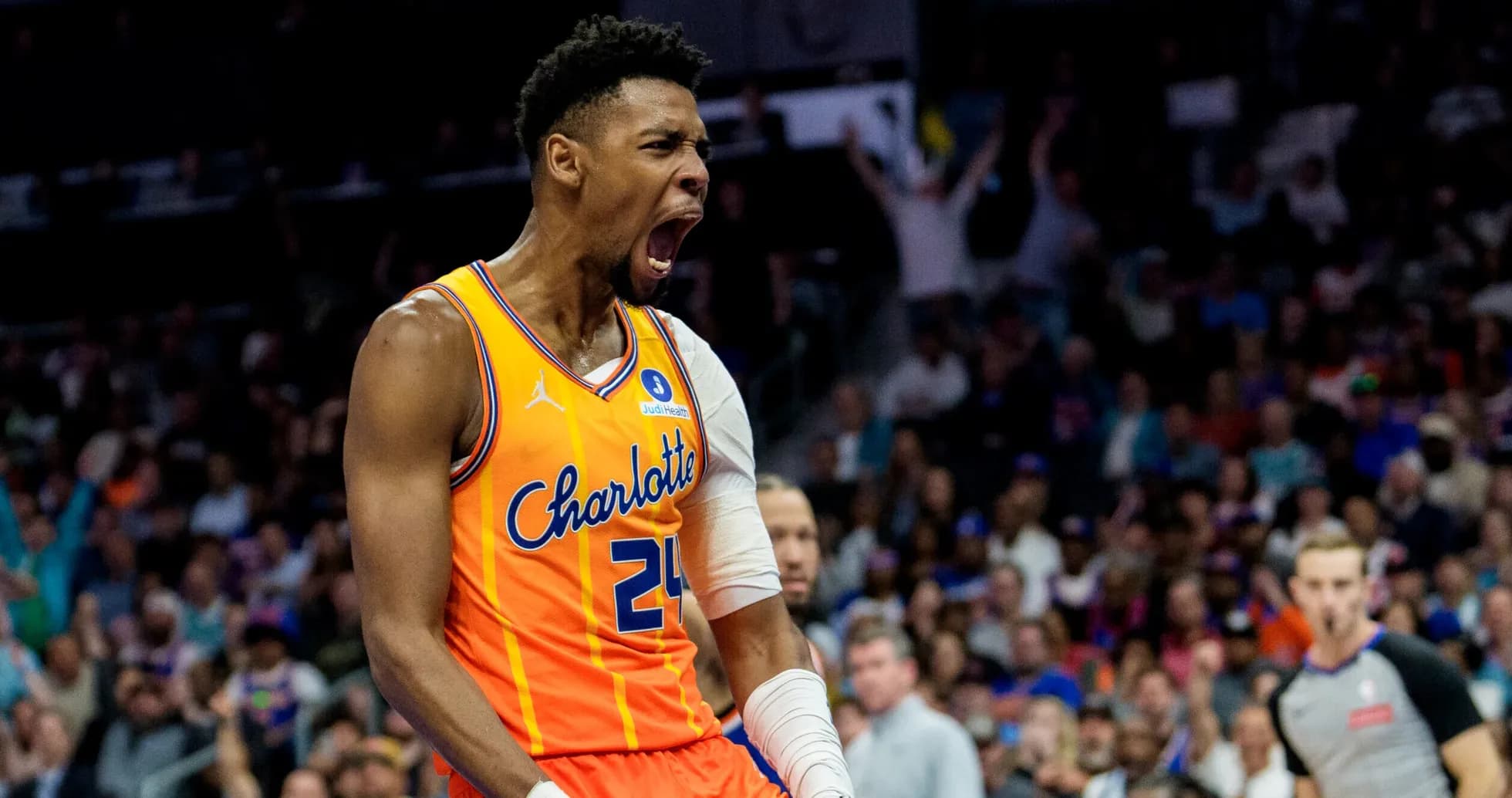
Coby White, Hornets: A Backcourt Handed the Keys
Teams don’t hand out three-year, $74 million contracts to sixth men they plan to hide. Charlotte certainly didn’t.
With LaMelo Ball shipped to Minnesota, the Hornets have cleared the runway. This backcourt is Coby White’s now, and the franchise hasn’t been shy about saying they want to build around him. That kind of organizational clarity matters. So does the fact that we’ve already seen what he looks like with volume.
In Chicago in 2024-25, White averaged 20.4 points and 4.5 assists in 33.1 minutes across 74 games. Those aren’t empty numbers. That’s starting-guard production on a heavy workload. His 21-game cameo in Charlotte after the deadline barely counts — bench minutes in a messy rotation, no rhythm, no defined role.
That changes this season. He gets a clear starting gig, long-term security and a team desperate to end a playoff drought that stretches back to 2015-16. The mandate is obvious: let him play through the mistakes and see how far his scoring and playmaking can carry them.
In fantasy points leagues, that usage is gold. The game there is volume, and he’s about to get as much of it as he’s ever seen. Category managers need to be more surgical. He’ll help in points, threes and assists, but his field-goal percentage has always dragged and he doesn’t stockpile steals. He fits best on rosters already strong in percentages and defense.
High Score is kinder to him than traditional category formats. Doubled assists and scoring volume mean a 28-point, six-assist outing lands in the mid-40s, and none of his efficiency issues follow him into that scoring system. As Charlotte leans into him and lets him hunt, he becomes a high-upside guard slot rather than just another scorer with warts.
Derrick White, Celtics: The Two-Way Metronome
Strip away one ugly number and Derrick White’s last season looks like one of the best of his career.
He put up a career-high 16.5 points per game. He set new personal bests in steals (1.1), blocks (1.3) and assists (5.4). With Jayson Tatum missing most of the year, Boston leaned on him heavily, and he responded by filling every crack on both ends.
The blemish: 32.7% from three. That’s a steep fall from the 38.4% he posted the year before, and the kind of drop that usually screams variance, not decline. His playoff scoring dip rode the same cold streak and, predictably, dragged his stock down with it.
But look at the context. The Celtics flipped Jaylen Brown for Paul George, and while George is still a star, he’s entering his age-37 season and has topped 70 games just once since 2019-20. White, by contrast, has played at least 73 games every year since 2021-22. Availability is part of his value, not a footnote.
In category leagues, a guard who gives you more than a steal and a block per night is a rare commodity. That combination alone props up two of the scarcest categories on the board. Layer in solid assists and respectable scoring, and you have a profile that quietly wins weeks.
In High Score, his defensive work becomes even louder. Steals and blocks are worth three points apiece, so his baseline in those stats makes him a strong draft target even before you factor in his offense. When everything clicks — say 20 points, five assists, two steals, two blocks — he sails past 45 fantasy points. Durability gives him an edge in points and roto formats, but it’s the across-the-board impact that makes him a priority everywhere.
Walker Kessler, Lakers: The Shot-Blocker With a New Stage
For five games last season, Walker Kessler looked like he’d found another level. Then it was over.
Before shoulder surgery shut him down, Kessler averaged 14.4 points, 10.8 rebounds, 1.8 blocks and 1.4 steals per game in that brief stretch. The Lakers saw enough. They traded for him, then doubled down with a four-year, $130 million contract in July, betting that the version they glimpsed is closer to his future than his past.
The caveat is obvious: availability. Injuries have been an on-and-off issue since his rookie year, and big men with shoulder problems make any front office nervous. The skill set, though, travels. Rim protection, elite finishing, heavy rebounding — those traits play in any system, and he’s stepping into the best spacing and playmaking environment he’s ever had.
In category leagues, Kessler is not a plug-and-play big. He’s a specialist you build around. He can single-handedly carry blocks, rebounds and field-goal percentage, but he comes with real free-throw risk. That makes him a classic punt-FT% cornerstone rather than a safe, all-purpose center.
High Score is where he shines brightest. With blocks and steals worth triple, a routine 16-point, 13-rebound, three-block line pushes him to around 40 fantasy points even if he never records an assist. In a format that asks you to fill three frontcourt slots, that kind of defensive spike is exactly what separates contenders from the middle of the pack.
If his body holds up, the Lakers have found their anchor — and fantasy managers have found a specialist who can tilt entire matchups.
Christian Braun, Nuggets: The Quiet Glue Piece
Denver didn’t hand Christian Braun five years and $125 million in October 2025 on a whim. At 24, he’d just averaged 15.4 points, 5.2 rebounds and 1.1 steals as a starter on a contender. That’s not promise; that’s production.
Last season, everything stalled. He played only 44 games. His three-point percentage cratered to 30.1%, miles below his established range. Put those numbers in context and they look less like a new normal and more like a season knocked off its axis.
Trade rumors have swirled around him, but the most likely outcome is the least dramatic one: he stays in Denver, in a role he’s already shown he can handle. DeMar DeRozan will soak up possessions, but Braun’s value has never depended on heavy usage. He scores, rebounds, defends, cuts, hits open shots when he’s right. He does the connective work contenders pay for.
Fantasy-wise, he’s the most format-neutral name on this list. Category leagues squeeze the most juice from his profile: points, threes, steals and a solid field-goal percentage give you four clean columns, with the three-point rate sitting there as the obvious bounce-back candidate. In points leagues, he’s a steady late-round starter — not spectacular, but rarely harmful.
High Score is less forgiving. Braun’s game doesn’t spike often. He doesn’t rack up assists or blocks, so his best nights tend to land in the low 30s. In that format, players who do several things adequately without a signature stat tend to slide to the bench. Everywhere else, he’s exactly what you want: a stable, versatile piece who can quietly stabilize a roster while the stars draw the headlines.
Some seasons bury players. This one might unearth a few. Sabonis reclaiming the Kings’ offense, White steering Boston’s perimeter, Kessler patrolling the Lakers’ paint, Coby White finally unleashed in Charlotte, Braun re-centering in Denver — the talent never left. The opportunity just did.
Now it’s back. What they do with it will shape more than a few standings, both real and fantasy.