NBA Rotations Impacting Fantasy: Key Backcourt Changes
The NBA has a new map. Giannis Antetokounmpo in Miami. LeBron James in Philadelphia. LaMelo Ball in Minnesota.
The stars have moved. The dust hasn’t. All over the league, coaches are staring at whiteboards full of question marks, and fantasy managers are trying to read the tea leaves. Five rotations, in particular, will shape plenty of High Score lineups when the 2026-27 season tips off.
Bucks Backcourt: A New Identity, A Lot of Volume
Milwaukee didn’t just turn the page. It tore the book up.
Trading Antetokounmpo to the Heat forced the franchise into a new era, and the return made that clear: youth, upside, and a guard who’s going to have the ball a lot. Tyler Herro arrives as the de facto offensive engine, a veteran scorer dropped into a roster that suddenly needs a lead option. He should walk straight into the starting shooting guard role and lead the team in usage.
Next to him, Ryan Rollins is the quiet anchor of the rebuild. Last season he went from curiosity to cornerstone, averaging 17.3 points, 4.6 rebounds, 5.6 assists, 1.5 steals and 2.5 threes. At 24, he fits the timeline and the direction. That combination usually buys a player both minutes and freedom.
Behind them, the depth chart is less a pecking order and more a battleground. Kevin Porter Jr. brings a 24.3% usage rate and the kind of on-ball aggression that can swing a High Score matchup in a single night. He’s volatile, but volatility is currency in a format that only cares about your best game of the week.
Then come the kids. Brayden Burries, the 10th pick, is clearly viewed as a future pillar. That sort of draft capital, on a rebuilding team, typically comes with a long leash and tolerance for mistakes. Kasparas Jakučionis, the 20th pick a year ago and part of the Heat haul, adds another layer of upside and playmaking.
For fantasy managers staring at the back end of their drafts, the choice is philosophical. Burries is the developmental bet: minutes, patience, and the chance to grow into a big role as the season unfolds. Porter is the ceiling chase: fewer guarantees, but the real possibility of a 30-point eruption on any given night. In High Score, that kind of spike can be the difference between winning and losing your week.
Celtics Center Rotation: Two Big Men, One Sweet Spot
Boston spent last season patching around a recovering Jayson Tatum, and center never really got top billing. That opened the door for Neemias Queta, who grabbed the job and held it with a mix of size, energy and reliability. The Celtics then tried to level up at the deadline with Nikola Vučević. The experiment never quite clicked, and he’s gone.
The frontcourt reset came this summer. Mitchell Robinson, pried away from the Knicks, brings elite rebounding and shot-blocking to a team that already defends at a high level. His track record in New York is clear: keep his minutes in check and you get the best version of him. Under 20 minutes a night the last two seasons, he still managed to tilt games at the rim.
Boston has every reason to copy that blueprint, but with a twist. A measured workload, potentially off the bench, keeps him fresh, yet this situation screams for a slight bump. Something closer to 25 minutes feels realistic. At that volume, Robinson doesn’t need plays called for him to matter. A 14-rebound, three-block line is 23 High Score points before he even scores.
Queta doesn’t disappear in this equation. He’s earned trust and a role, and Boston’s ambitions mean they’ll lean on both bigs across the calendar. In fantasy terms, that creates a useful pairing: you can roster one comfortably in a ten-man setup and slide the other through a Utility spot when the schedule and matchups line up.
The Celtics don’t need a traditional 30-minute workhorse in the middle. They need impact in segments. Robinson and Queta can both deliver that, and High Score managers can profit from the split.
Hornets at Center: Energy, Shooting, and a Rookie Wild Card
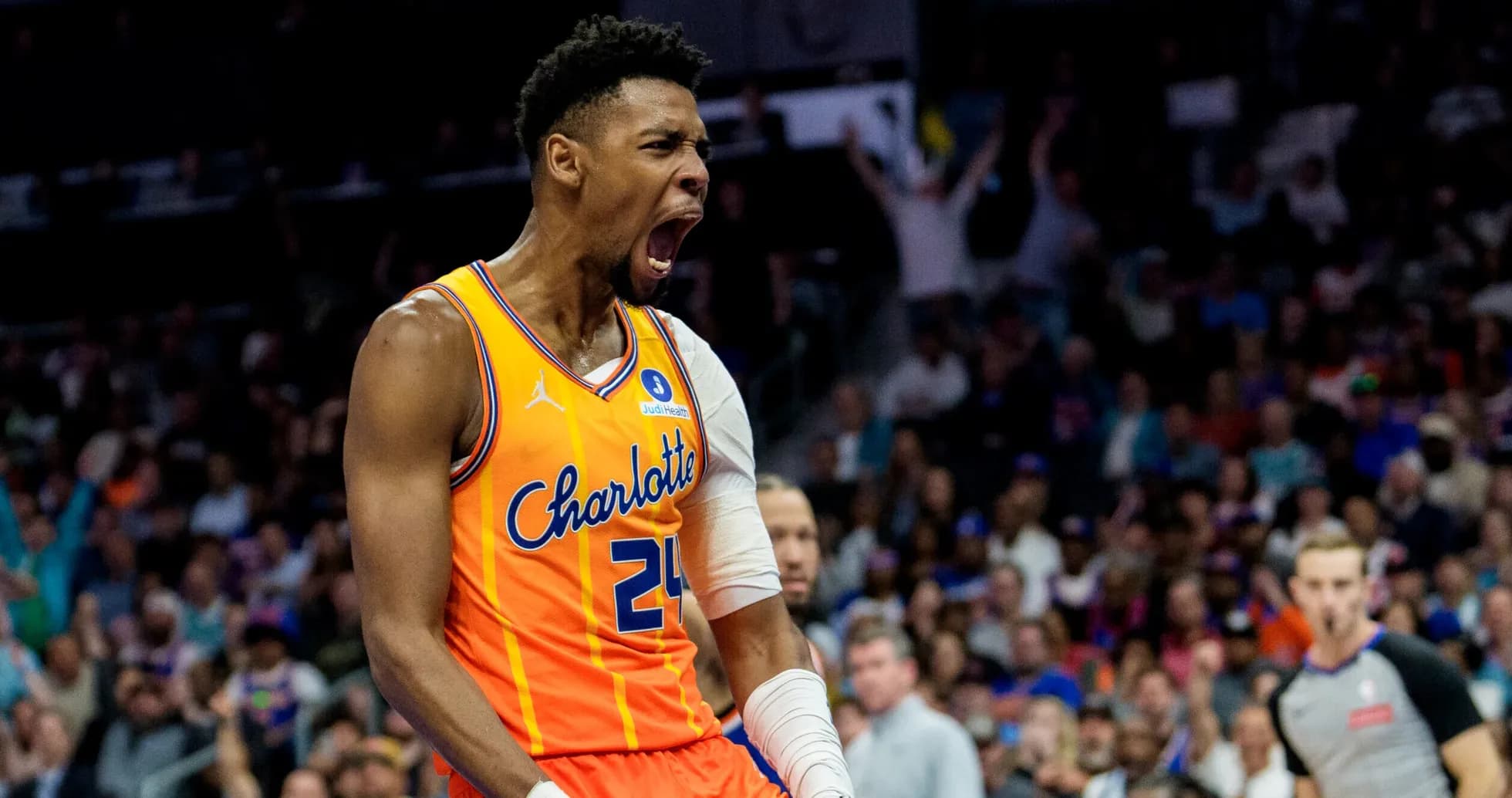
Charlotte turned last season’s pleasant surprise into a full-scale shakeup. A Play-In berth built around LaMelo Ball, Brandon Miller and Kon Knueppel didn’t convince the front office to stay patient. Ball is now in Minnesota. Miles Bridges is in Phoenix. The Hornets chose volatility.
At center, they already had one of the league’s better under-the-radar stories. Moussa Diabaté brought relentless activity and high-level rebounding, giving Charlotte a defensive heartbeat in the paint. That wasn’t enough. The front office wanted scoring and spacing from the frontcourt, and they found it in Naz Reid.
Reid arrives from the Timberwolves as a proven stretch big who can toggle between power forward and center. He’ll likely open at the four, then slide to the five in smaller lineups, and his shooting will unlock different looks around Miller and Knueppel. For fantasy purposes, the message is simple: he’s going to play, and he’s going to shoot. That’s a frontline starter in most formats.
Diabaté now lives in the gray area. His energy guarantees a role, but his minutes could swing wildly as Charlotte experiments with combinations. Into that mix steps Hannes Steinbach, the 14th pick, fresh off a college season at Washington where he averaged 18.5 points, 11.8 rebounds and 1.2 blocks. Add Ryan Kalkbrenner, a 2025 second-rounder, and you have a crowded room.
The hierarchy, though, feels clear. Reid is the fixture. Diabaté fights to hold steady. Steinbach is the long-term swing. If the rookie climbs past 20 minutes a night, his production profile says he can return value in 12-team and deeper leagues, and his top-end nights could mirror those of established starters.
Charlotte has chosen to live with growing pains. Fantasy managers should lean into that, too. In High Score, you’re not punished for inconsistency. You’re rewarded for upside. Reid is safe. Steinbach is the circle-late name that could turn into a weekly hammer.
Grizzlies Backcourt: Life After Ja
Memphis finally cut the cord. Ja Morant is in Portland, and the Grizzlies move into a future built around size and potential rather than a single explosive guard. The headline of that future is Cameron Boozer, taken third in the 2026 Draft, and the towering presence of Zach Edey beside him.
Up front, the plan looks straightforward. In the backcourt, nothing does.
Scotty Pippen Jr. and Ty Jerome are set to battle for point guard minutes. Pippen’s injuries limited him to just 10 games last season, which opened the door for Cam Spencer to showcase his feel as a lead guard, averaging 11.1 points and 5.6 assists in 24 minutes. Jerome, meanwhile, offers steady shooting and versatility, able to slide between both guard spots.
At shooting guard, Cedric Coward and Walter Clayton Jr. crowd the picture. Coward, the 11th pick in the 2025 Draft, has the organizational backing that usually comes with that status. Expect Memphis to give him every chance to claim the starting job. Spencer remains in the mix as well, capable of toggling between roles depending on who needs the ball.
Strip it down, and the outline emerges: Pippen should reclaim the starting point guard role, Jerome becomes the primary backup across both spots, and Coward gets the first crack at starting two-guard. Spencer, after his strong showing last season, forces his way into meaningful minutes.
For traditional fantasy leagues, that’s a headache. A five-man rotation that likely keeps everyone under 30 minutes flattens the ceiling for all of them. High Score changes the math. When you only need one big performance a week, a crowded, talented backcourt becomes an asset. Someone in that group will spike most weeks. Spencer alone turned his 5.6 assists into more than 11 High Score points per night.
All five guards profile as late-round picks, but in this format they’re not just filler. They’re calculated gambles on a team that has to let its perimeter players figure things out on the fly.
Pelicans at Center: Three Big Men, One Big Question
New Orleans took a different path this summer. After a bruising 2025-26 season, the Pelicans mostly stayed the course. Bennedict Mathurin reportedly joins the perimeter mix, Dejounte Murray is penciled in for a full, healthy campaign, and DeAndre Jordan returns on a two-year, $7.9 million deal to steady the locker room while the young frontcourt grows up.
The center position, though, is anything but settled.
Derik Queen flashed real promise when given extended minutes last season, showing the kind of offensive feel that could mesh with Zion Williamson. Yves Missi remains in the frame, a young big with physical tools and room to develop. Then there’s Herbert Jones, who ended last year as the starting center, anchoring the defense with his instincts and versatility.
Jones will never be confused with a volume scorer, but his defensive stat line tells its own story. Nearly two steals and a block per game translate to nine High Score points from defense alone, before you even account for anything he does on offense. That kind of floor keeps him relevant regardless of role.
The long view points toward Queen. Starting him alongside Williamson is the cleanest way to find out whether that duo can grow together and drag New Orleans back toward the postseason. Yet Jones opening at center again is a very real possibility, especially if the coaching staff leans on trust and familiarity. Missi, with his tools, should see enough minutes to matter on certain nights.
For fantasy managers, Queen is the swing. He carries the most upside, the clearest path to a breakout if the Pelicans commit to him. All three, though, fit the same draft bucket: late-round stabs in a format where one strong night is all you need.
New Orleans has options. Now it has to decide which big man it wants to grow with, and how quickly it’s willing to live with the mistakes that come with that choice.