Nikola Jokic: Redefining the Big Man Role in the NBA
Nikola Jokic has spent a dozen years dismantling every stereotype ever attached to a big man, and by now the evidence is overwhelming. We’re watching one of the greatest players to touch an NBA floor, a superstar who makes a 48-minute game feel too short.
The trophies say plenty. The experience of watching him says more. Those looping, wrong-footed passes. The angles nobody else even sees. The soft feet in the post, the old-school back-to-the-basket craft. Jokic doesn’t just control a game; he rearranges it.
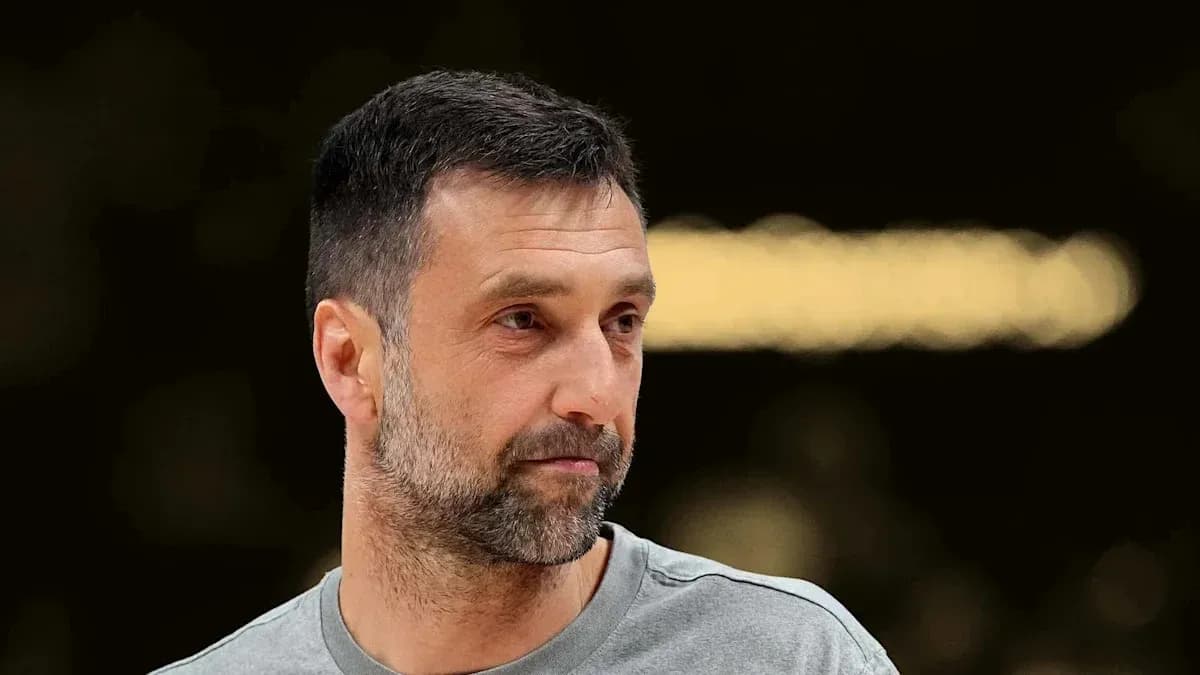
In the background of that transformation, almost always out of the spotlight, stands Ognjen “Ogi” Stojakovic, the Denver Nuggets assistant who has been attached to Jokic’s rise from the very beginning. Stojakovic didn’t just help polish the rough edges. He recognized, before almost anyone else in the league, exactly what kind of player Denver had stumbled upon.
“When I saw him, in my mind, he was a mix of talent, and I always said it. I said Pau Gasol, Steve Nash, and Dirk Nowitzki when I saw him,” Stojakovic told Basketball Network.
He wasn’t throwing out names for effect. He was mapping a blueprint.
Nash, he pointed out, wasn’t fast in a traditional sense, but he never stopped running. He wasn’t explosive, yet he scored from every pocket of the floor, with an arsenal of quirky, improvised finishes and an elite feel as a passer. Gasol was the prototypical modern big before the term existed: long, skilled, comfortable anywhere on the court. Nowitzki, again, not a leaper, but a scoring machine who bent defenses with footwork, touch, and impossible angles.
“And then I’m proud that I recognize that. I’m proud that actually I had the right approach,” Stojakovic said.
Back then, it took conviction to see it.
Jokic arrived as the chubby, slow, unathletic European center who looked like he’d wandered into the wrong era. The league was racing toward pace-and-space, length, and explosive wings. Jokic looked like a throwback. Stojakovic looked at him and saw something else entirely.
A guard trapped in a big man’s body.
From today’s vantage point, you can trace the parallels with those three legends in almost every Jokic performance. The Nash-like court vision and the audacity to throw passes that live on the edge of turnovers but land exactly where they need to. The Nowitzki-style scoring from absurd angles, shots that seem to come a beat late or a step off, yet splash through anyway. The Gasol footwork, the balance, the ability to pivot out of trouble and into a bucket as if the game is moving at his personal tempo.
But Jokic doesn’t just echo them. He fuses them.
He shoots, rebounds, passes, dribbles, posts, and orchestrates the offense at a level that only a handful of players in the NBA’s 80-year history can touch. There are point guards who can’t run an offense like he does. There are centers who can’t dream of his touch or his feel. There are wings who don’t see the floor half as clearly.
Stojakovic saw that mix early and understood the assignment. Talent alone wouldn’t be enough. Not in a league that worships speed and vertical pop.
So the real work happened in the shadows.
The film sessions. The footwork refinements. The constant nudging to turn perceived weaknesses into weapons. If Jokic wasn’t going to outrun or outjump anyone, he had to outthink them, out-skill them, and out-read them on every possession. Stojakovic leaned on the lessons of those greats he saw in Jokic’s game and helped him build counters on top of counters until there were almost no soft spots left.
Denver didn’t just luck into a superstar. It had a coach who recognized Hall of Fame potential when it was still wrapped in baby fat and skepticism.
Now the league is left dealing with the finished product: a three-time MVP who bends games to his will, playing on his own terms in an era that was supposed to belong to high-flyers and blur-speed guards.
Stojakovic’s pride in that early vision is understandable. He trusted what he saw. He trusted his approach. And together, coach and player have turned a once-overlooked second-rounder into a future Hall of Famer who keeps forcing the sport to rethink what a big man can be.