Noah Atubolu's Bold Move to Eintracht Frankfurt
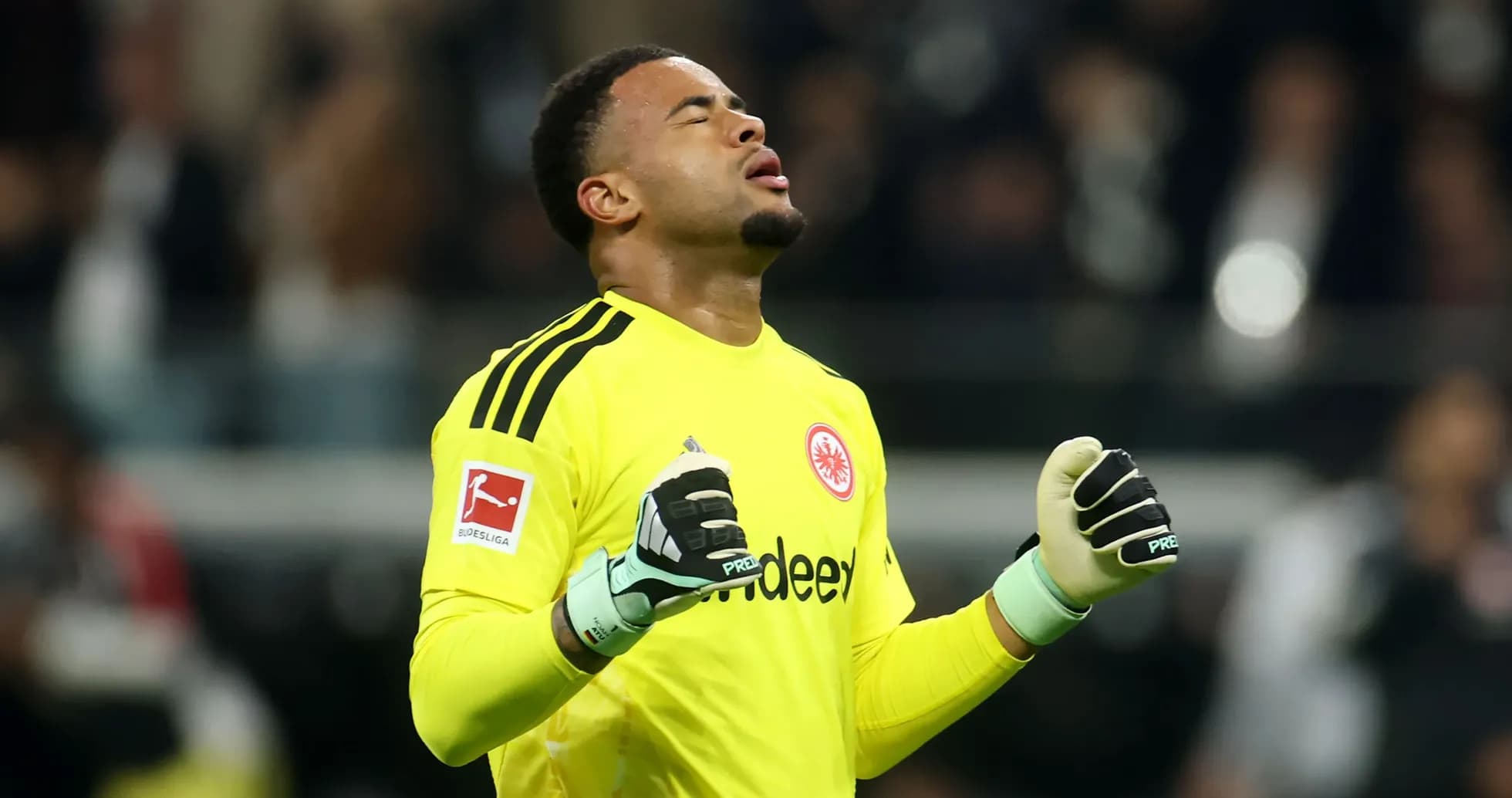
Noah Atubolu’s bet on himself looked reckless at one stage. Now it might define Eintracht Frankfurt’s future.
The 24-year-old goalkeeper walked away from the comfort of SC Freiburg, turned down a long-term contract that ran to 2028, and waited for the big move he believed he’d earned. The offers did not pour in. They barely trickled.
By early June, Sport Bild was already writing that he had “completely overplayed his hand.” Freiburg had moved on, too. Mio Backhaus arrived from Werder Bremen for twelve million euros, the new number one in waiting. For Atubolu, an academy graduate who had grown up in the Black Forest club, the door closed with a thud. Everyone knew he would not play for SCF again.
He had aimed high. The Premier League was the dream, and several potential moves in England were explored. One after another, they fell through. For a while, Atubolu was a goalkeeper without a club he could actually play for, caught between ambition and reality.
Eintracht Frankfurt changed that.
A late move, a big commitment
Frankfurt stepped in late in the window. At the end of August, they paid Freiburg a one million euro loan fee and brought Atubolu to Hesse. The timing told its own story. In the weeks leading up to the deal, it had become increasingly clear inside the club that starting the season with Kaua Santos as undisputed number one was not the plan anymore.
Eintracht did not just bring in cover. They committed.
According to Bild, the loan includes an obligation to buy that activates if Eintracht avoid relegation this season. Right now they sit 14th, closer to the danger zone than they would like, but with a squad that should have more than enough to stay clear. If they do, the obligation triggers: another twelve million euros to Freiburg next summer and a long-term contract for Atubolu in Frankfurt, running until 2031.
It is a deal with a clear fingerprint. Former sporting director Markus Krösche, who has since left the club, negotiated it before his departure. The structure is bold: a sizeable fee, a lengthy contract, and a clear bet that Atubolu will grow with Eintracht rather than simply pass through.
Thrown straight into the fire
There was no gentle introduction.
One day after signing, Atubolu was in goal for Eintracht’s Bundesliga opener away to Union Berlin. A 3–3 draw, six goals, chaos, pressure – and a first taste of what this new chapter would look like. Since then, he has made eight appearances in all competitions, enough to move beyond the “new signing” label and into something more substantial.
The early signs inside the dressing room are striking. Bild reports that Atubolu has settled quickly in Frankfurt, both at the club and in the city on the Main. He is said to be already part of the players’ council, a rare status for a newcomer, let alone a 24-year-old goalkeeper who arrived under scrutiny after a turbulent summer.
That detail matters. Goalkeepers do not just stop shots; they set the tone. If teammates are already trusting his voice in internal matters, Eintracht’s gamble begins to look less like a risk and more like a calculated move.
From miscalculation to platform
Rewind a few months and the story felt very different.
By refusing to extend with Freiburg and watching alternative options evaporate, Atubolu looked like a cautionary tale in modern career planning. A former Germany U21 international with clear potential, but one who had misjudged his market and was left stranded as the music stopped.
Now the picture has changed. He has a club that wants to build around him, a contract on the table that would tie him to Frankfurt until 2031, and a pathway that does not require an immediate leap to England.
The Premier League still burns in the background. That remains his stated dream. Yet the structure of the Eintracht deal hints at a longer relationship. Reports that there is no release clause in his contract point in the same direction: if he is to leave, it will be on Frankfurt’s terms, not via a pre-set exit route.
For Eintracht, that is exactly the point. If Atubolu develops into the goalkeeper many inside German football believe he can become, they will either have their long-term number one or a valuable asset in a market that pays a premium for proven keepers.
For Atubolu, the equation is simpler. Stay up, make the move permanent, own the shirt, and rebuild the narrative. The misstep of early summer has already given way to something more promising.
Now it is down to performances – and whether this high-stakes bet turns Frankfurt into a launchpad rather than a consolation prize.