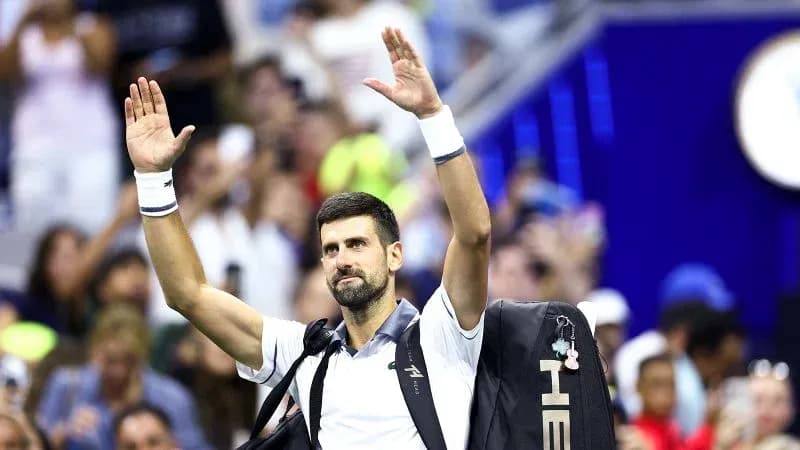
Novak Djokovic Faces Upset in First Round of US Open
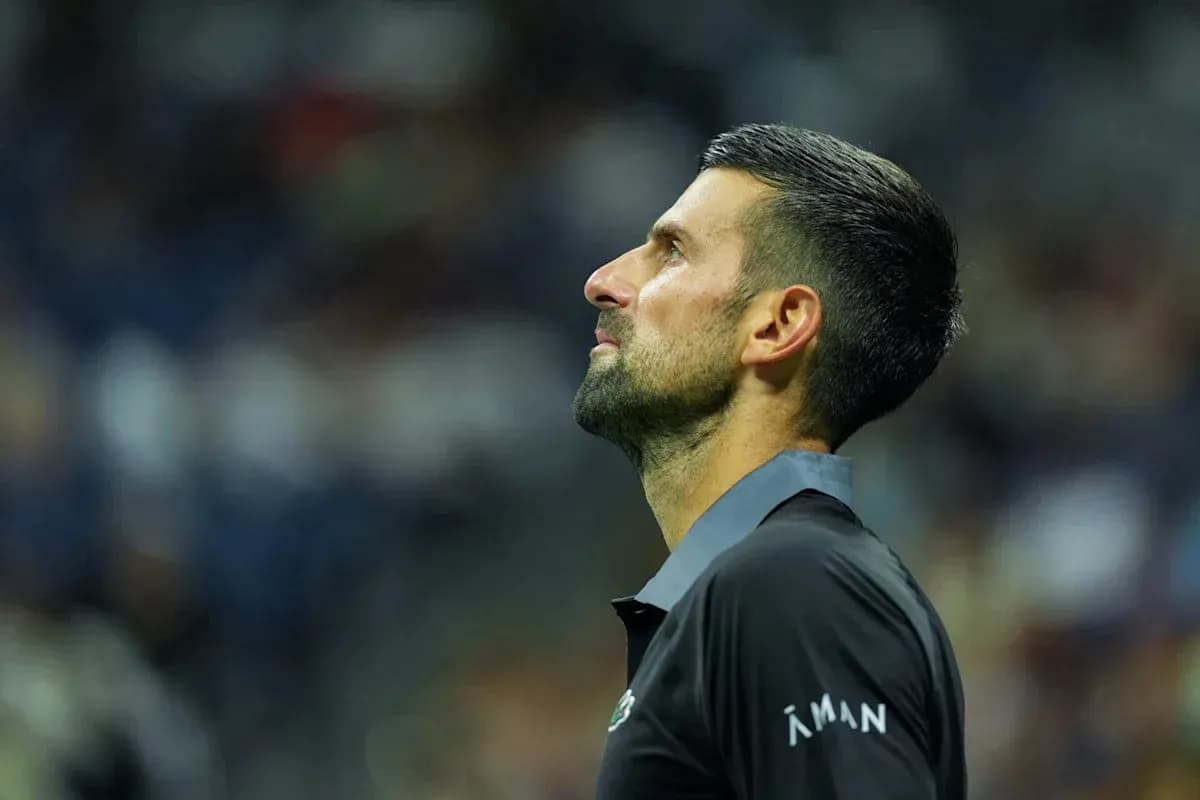
Novak Djokovic walked into Arthur Ashe Stadium on Sunday night as tennis’ immovable object. He left it looking painfully human.
Under the lights where he has so often bent matches, opponents and history to his will, the 39-year-old was dragged into a four-hour, 36-minute struggle by Mariano Navone, a 25-year-old Argentine who refused to blink. Djokovic led early, labored late and finally fell, 7-6 (5), 5-7, 4-6, 6-2, 6-1, in a first-round US Open exit that cuts against everything his career has taught the sport to expect.
It was the longest opening match of a Grand Slam in Djokovic’s career. It was also his earliest departure from one in 20 years, dating back to the 2006 Australian Open. He had never lost in the first round in New York. Until now.
A giant looks fragile
From the start, something felt off.
Djokovic, the No. 4 seed and owner of 24 major titles, jumped out to 3-0 and 4-1 leads in the first set, the script seemingly familiar: an early stranglehold, the crowd settling in for a routine masterclass. Instead, the set slipped away. He squandered both cushions and lost the tiebreak, the first time since 2006 he had dropped an opening-set lead in the first round at this tournament.
The numbers told their own harsh story. Djokovic finished with 70 unforced errors, a staggering tally for a player whose greatness has been built on precision and control. The body language matched the statistics. He threw up at least once. He grabbed at his left foot and looked to cramp. He called for pills from the doctor. His lower back needed treatment during a medical timeout between the fourth and fifth sets. Grimaces followed shots that once came effortlessly.
The greatest problem, though, was across the net.
Navone’s night
Navone arrived as the underdog, facing the man he grew up idolizing on the biggest stage he has ever known. He did not play like a fan.
He absorbed Djokovic’s early surge, weathered the roars and the aura, and then began to punch back. The first ATP singles title of his career came earlier this year; this win dwarfs that achievement in scale and shock.
“(It) was very tough for me because you are playing with the ‘GOAT’ on this court,” Navone said on court, still processing the upset. “For sure it’s the best thing I’ve had on court. This is an amazing court and the biggest stage. It’s amazing, the way we play. I mean, five sets. … I’m very happy. I don’t know. What can I say?”
He could say enough with his tennis. When Djokovic clawed back to take the second set and then the third, the match looked to be following a familiar arc: the champion in trouble, the champion adjusting, the champion suffocating hope. Djokovic even cued the crowd, hand to ear, after snatching the third set, as if to remind everyone who usually owns this arena.
Navone stayed there. He chased every ball, kept forcing rallies, and made Djokovic hit one more shot, then another, then another. As the Serbian’s legs tightened and his timing drifted, the Argentine’s belief hardened.
By the time the fourth set tilted heavily Navone’s way, Djokovic’s frustration and fatigue were written all over the court. After sending a ball wide, he landed awkwardly and dropped his racket, a picture of a body and mind that no longer matched his ambition for the night. He all but let that set go, saving what he could for a final stand in the fifth.
It never came.
Navone, hunting his first five-set victory, played the decider like a man who had been here a hundred times. Djokovic, chasing what would have been his 43rd win in a five-setter, could not summon the familiar escape act. The last games raced by, the scoreline turning brutal: 6-1 in the fifth, the kind of set Djokovic usually dishes out, not receives.
“It’s unbelievable,” Navone said. “This means a lot. It’s a dream come true.”
The toll of time
This loss did not land in isolation. It followed a first-round defeat at the hardcourt event in Cincinnati earlier this month, his first outing since losing to world No. 1 Jannik Sinner in the Wimbledon semifinals.
Djokovic had tried to spin that early Cincinnati exit as an opportunity, suggesting the extra days might sharpen his preparation for New York. At the same time, he admitted a growing concern: the first match at any tournament had become a problem in recent years, a hurdle that required more from him than it once did.
On Sunday, that hurdle turned into a wall.
With his wife, Jelena, watching anxiously from the stands, Djokovic still produced flashes of the player who has defined an era. The fist pump after the second set. The defiant gestures to the crowd in the third. The stubborn insistence on competing, even as his body rebelled.
Yet the night kept circling back to the same image: a champion fighting not only an opponent, but his own limits.
Twenty-one years to the day since his US Open debut, Djokovic walked off Ashe with a question hanging over him that no statistic can answer: was this just a brutal night in a long career, or the last time he will walk into a Grand Slam as a genuine force?
For the first time in two decades at a major, the answer did not feel entirely in his hands.