Novak Djokovic Faces Shocking Defeat at U.S. Open
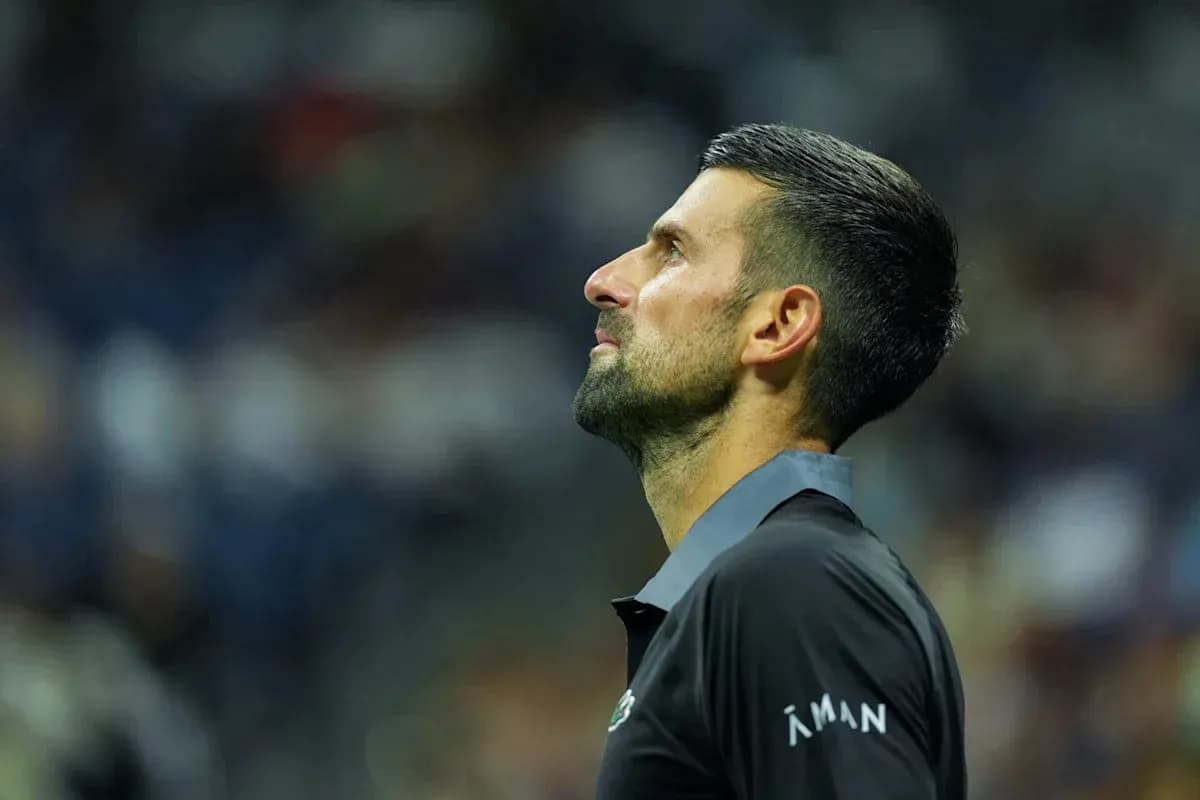
Novak Djokovic has spent two decades turning Arthur Ashe Stadium into his personal proving ground. On Sunday night, under a closed roof and a heavy sky, it became something else entirely — the scene of one of the most jarring defeats of his career.
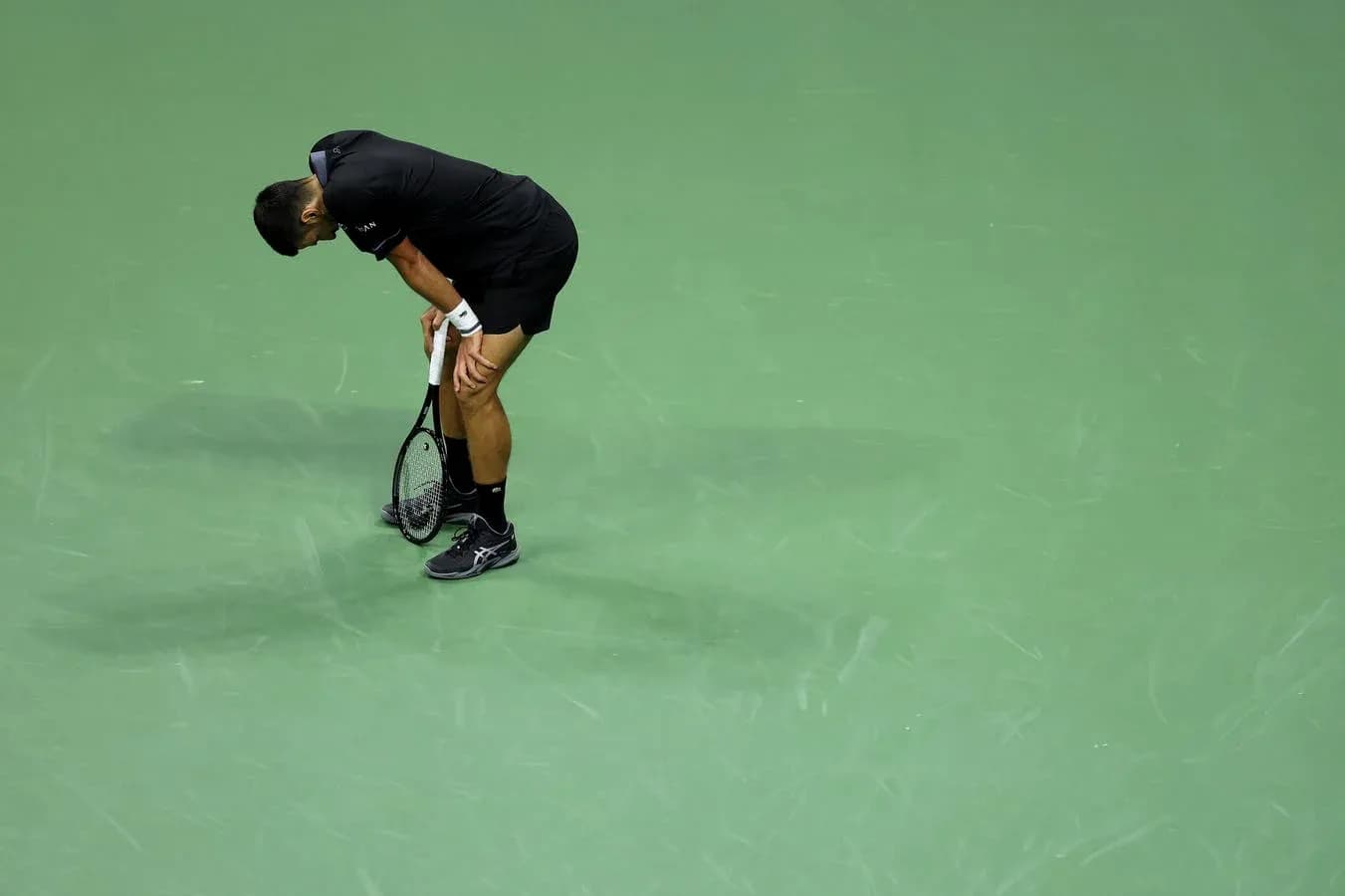
From the opening games against Mariano Navone, something was wrong. The familiar edge, the theatrical roars to the crowd, the coiled energy that usually fills the biggest court in tennis — all of it felt muted. Djokovic looked drained, distracted, almost hollow. He reached for an inhaler. He swallowed tablets. He bent over, hands on knees, and more than once he threw up into the towel bin, battling clear stomach distress.
He kept going. He always does. This time, it wasn’t enough.
After 4 hours and 36 minutes, the 24-time major champion and No. 4 seed walked to the net beaten, losing 7-6(5), 5-7, 4-6, 6-2, 6-1 to Navone, a 49th-ranked Argentine without a single ATP Tour title to his name. The scoreline told a story of a five-set epic. The body language told a story of survival.
Djokovic, 39 now, hadn’t lost in the first round of a major since 2006, back when his legend was still a rumor rather than a record book. On this night, his wife Jelena and their children Stefan and Tara watched from the stands as that streak was ripped up on the very court where he has played some of his greatest tennis.
The date carried its own symmetry. Exactly 21 years earlier, on August 30, 2005, Djokovic had made his U.S. Open debut against Gael Monfils. Since then, he has become a 10-time finalist in New York, lifting the trophy most recently in 2023. He is still chasing a record 25th major. Three years on, that quest suddenly looks more complicated.
When it ended, he waved, formed a heart with his hands, signed autographs, and walked off. No theatrics, no long stare into the night. Just a quiet exit from a court he has defined.
“I think it actually turns out better for him because it shows he’s human,” John McEnroe said on ESPN. “It gives you an even greater sense of how amazing his accomplishments were.” Coming from a man who once ruled these same hard courts, it felt less like analysis and more like a verdict.
The scale of the moment stretched beyond one match. According to ESPN, the last time none of the sport’s “Big 3” — Djokovic, Roger Federer, Rafael Nadal — reached the second week of a major was Roland Garros 2003. That was a different era, before the dominance, before the records, before the sport bent around three men and stayed that way for nearly 20 years.
On the other side of the net stood a player who grew up idolizing Djokovic. For Navone, this wasn’t just an upset. It was the night his tennis life changed.
“This is [an] amazing court on the biggest stage,” he said on court, still processing what he had done. “It’s amazing the way we played, I mean five sets against the GOAT is nothing to every day. I’m very happy, what can I say.”
He tried to put the moment into words, and almost ran out of them.
“Novak means a lot for me… It was very tough for me because you’re playing with the GOAT on this court here and he is here every day in this court when he plays the U.S. Open. This means a lot, it’s a dream come true. It’s certainly 100%. Now I have to recover, I think it’s almost 12 o’clock, we have to go to sleep.”
The match itself swung like a pendulum, but with one constant: Djokovic’s struggle with his own body.
He led 4-2 in the opening set, seemingly settling into the familiar routine of a slow start followed by ruthless control. Navone refused to wilt. The Argentine chased everything, dug into rallies, and dragged the set into a tiebreak. There, Djokovic blinked first. Navone snatched it 7-6(5), and the favorite trudged to his chair, already searching for answers.
In the second set, the underdog again held firm, firing a 100-mph ace to hold for 5-4. The pressure should have shifted to Djokovic. Instead, the old champion bit down. He broke Navone at love, then held at love for 7-5, and suddenly the match felt familiar again.
“And now all of a sudden, he’s starting to look like Novak Djokovic,” McEnroe said on air, sensing the familiar tightening of the screws.
Yet something remained off. McEnroe noted that Djokovic barely acknowledged the crowd, a stark departure from the man who often feeds off their energy, whether they cheer him or jeer him.
“Almost no recognition of the crowd so far, except when he walked out,” McEnroe observed.
The third set brought the most surreal contrast. Djokovic was shown vomiting into the towel bin, prompting “Boot and rally” jokes from James Blake and the ESPN crew, a darkly comic aside on a grim night. And still, he served flawlessly. He did not face a single break point in the set. At 4-4, he pounced, breaking when Navone netted a forehand. For the first time, Djokovic cupped his hand to his ear, asking Arthur Ashe to rise with him.
They did. He closed it out 6-4. Two sets to one. The script, once again, looked familiar.
Then his body shut the door.
Early in the fourth set, cameras caught him throwing up again. His movement stiffened. He kept stretching his legs and back, grimacing, trying to coax life out of a frame that has carried him through more than 1,300 professional matches. Chris Fowler, on ESPN, put it bluntly: “This is not much fun for him tonight at all.”
Navone sensed the opening and refused to back away. At 3-2, he broke for 4-2 when Djokovic sailed a forehand wide. The Serb’s shoulders dropped. The Argentine’s belief surged. The fourth set raced away 6-2, and for the first time, the upset felt not just possible, but likely.
The fifth set became a test of will, and Djokovic arrived with an empty tank.
Serving at 0-1, he fell behind 0-40. He saved two break points, but Navone kept coming. On the third, Djokovic approached the net and watched a passing shot whistle beyond his reach. 2-0 Navone. The stadium, stunned, began to understand what was unfolding.
Djokovic held for 1-3, and the roar that greeted him sounded almost desperate, a plea for one more comeback. He looked close to tears, caught between the urge to fight and the reality of his physical state. The legs wouldn’t drive. The lungs wouldn’t clear. The aura, for once, couldn’t save him.
Navone never let him back in. The final set raced by 6-1, a brutal, clinical close from a man playing the match of his life against an all-time great at far from his best.
The questions now turn to Djokovic’s future, even if he won’t answer them tonight. He spoke in Cincinnati about a health issue he has been “dealing with… for many years now.” Earlier this season, he beat world No. 1 Jannik Sinner to reach the Australian Open final and reached the semifinals at all four majors last year. The results say he remains a force. The images from Arthur Ashe say the cost is rising.
Tennis has spent two decades asking how long Djokovic could keep bending time. On a wet New York night, under a closed roof and a stunned crowd, the sport got a glimpse of what it looks like when time finally starts to push back.