Novak Djokovic's Struggle at the US Open: A Shocking First Round Loss
Novak Djokovic has spent two decades redefining what suffering for a tennis match looks like. On the first night of this US Open, it turned into something close to a horror show.
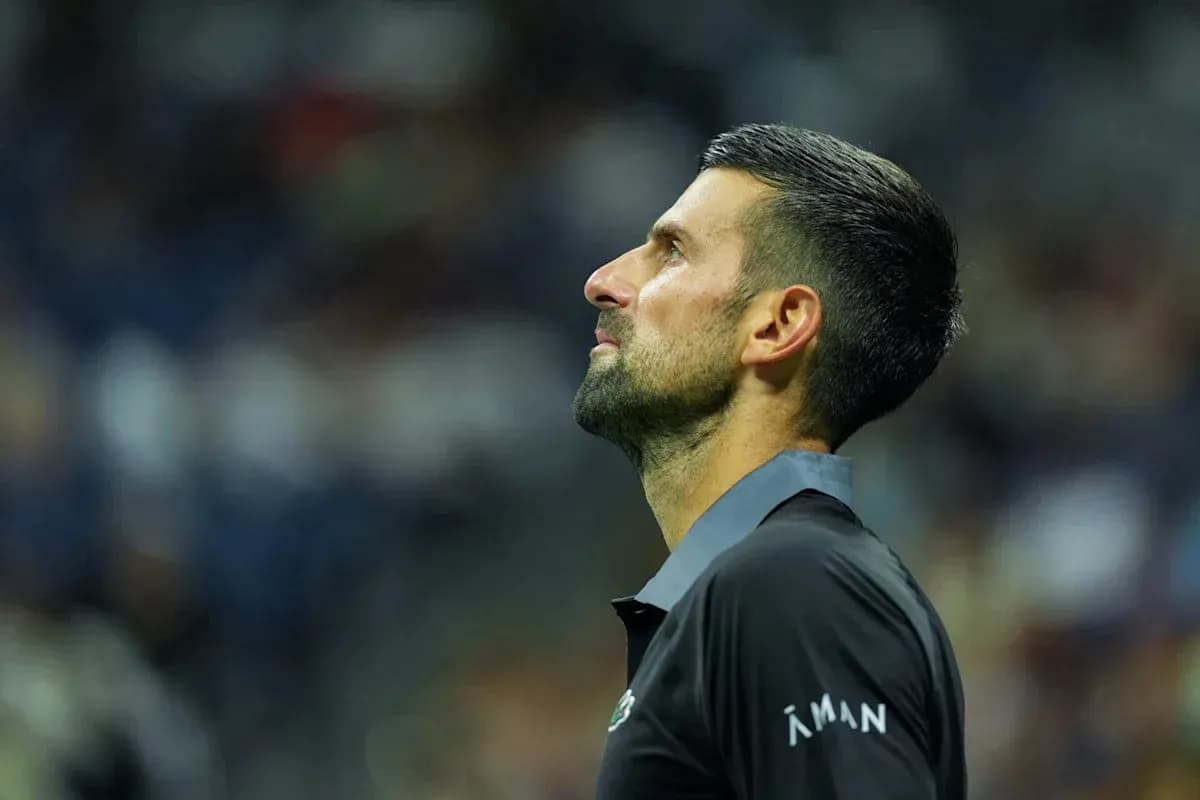
Approaching the three-hour mark under the Arthur Ashe Stadium lights, the 24-time grand slam champion strode to the corner of the court, bent over the towel bin and vomited. Not once. Not briefly. This was the most visible sign of a body in open revolt, and it would not be the last.
Four hours and 36 minutes after they started, just before midnight, Djokovic walked off in tears. Beaten 7-6 (5), 5-7, 4-6, 6-2, 6-1 by Mariano Navone in the first round. Broken physically. Shaken emotionally. And, for once, out of answers.
A giant brought low
This was his record-extending 84th grand slam main draw. It produced one of his bleakest nights.
Djokovic is 39 now. He has built a career on turning crises into comebacks, on outlasting younger legs and younger lungs. Yet this was only the third time he has ever lost in the opening round of a major, and the first since the 2006 Australian Open, when he was an 18‑year‑old outsider, not the sport’s immovable object.
The shock was not just the result. It was how early the unraveling began.
Barely 15 minutes in, having broken for 2-0 in the first set, Djokovic already looked trapped in the New York humidity. He bent over between points, coughed, gulped for air. The conditions were not the brutal, sun-baked extremes of daytime, but his body reacted as if he were playing under a midday furnace.
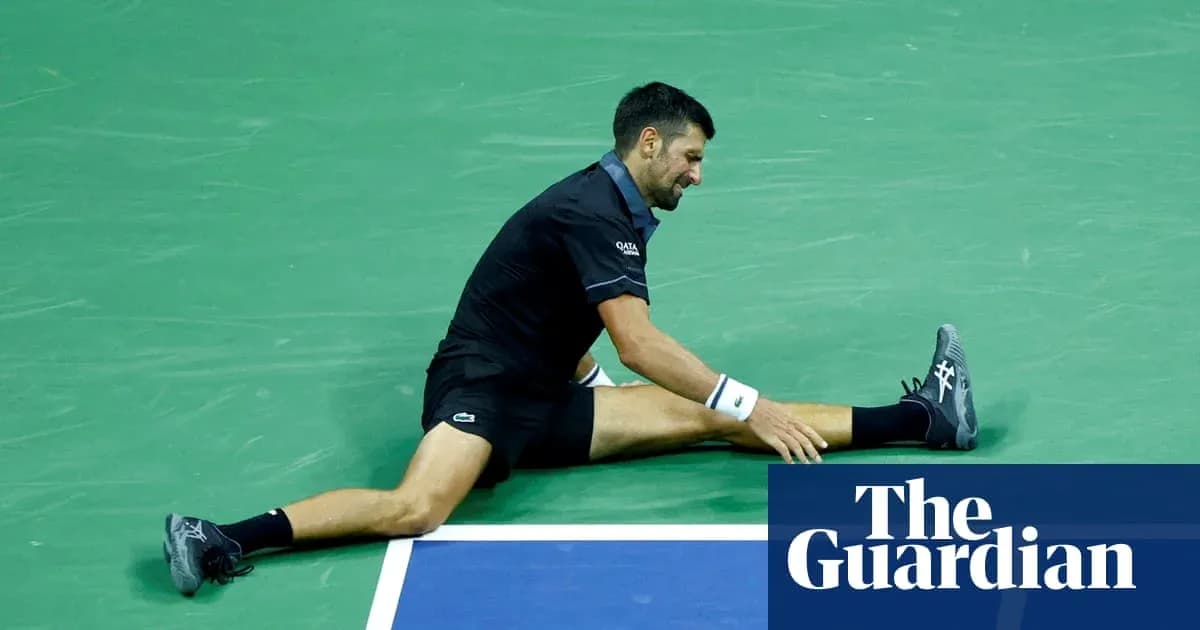
From there, the match turned into a slow-motion collapse. Djokovic panted behind the baseline, lost his balance, vomited repeatedly, then fought cramps that crept through his legs and back. By the end, he could barely move, his shoulders heavy, his serve diminished, his face drained of colour.
He had nothing left.
A recurring nightmare
This was not an isolated bad night. The warning had come just weeks earlier in Cincinnati, where Djokovic struggled in similar evening humidity against another Argentinian, Thiago Agustín Tirante, and lost in three sets while his opponent looked untroubled by the air.
After that defeat, Djokovic spoke of a specific health condition exacerbated by heat and humidity. In New York, he said the same again.
“I think it was obvious that [it was] an awful feeling on the court for me,” he said. “It is something that I’ve been carrying, unfortunately, pretty much every match this year. You know, vomiting, throwing up, serious issue there, and then my whole body starts to collapse, basically cramping and pain, and the back just gave up in the end, and shoulder, and I couldn’t close it out, break up in the fourth, but just struggled all the way since the fourth game of the match. And again, don’t want to take too much out of his win. Congrats to him; he’s a nice guy, fighter, but you know, I didn’t enjoy myself.”
On this evidence, the issue is no longer a footnote. It is a central part of his season.
Navone’s dream, Djokovic’s ordeal
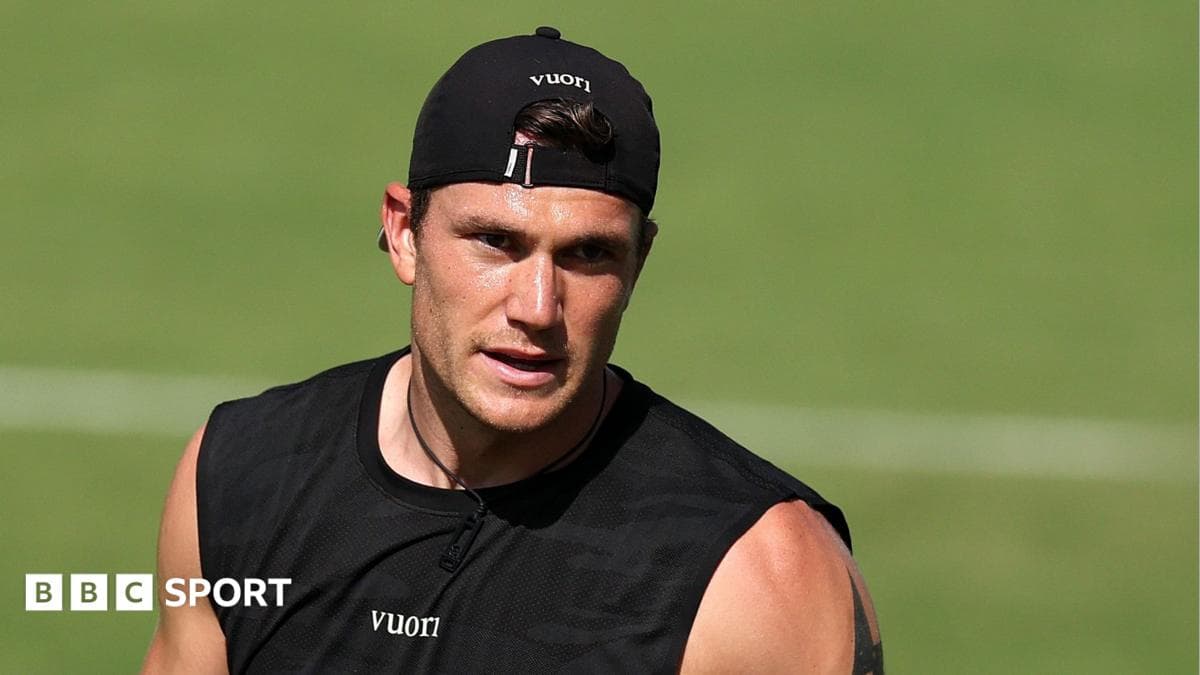
On paper, this looked like a gentle start for Djokovic. Mariano Navone, 25, is a gritty baseliner who has fought his way back into the top 50 after flirting with a slide out of the top 100, but almost all of his best work has come on clay. On hard courts, against Djokovic at the US Open, this should have been a steep climb.
It became the biggest night of his life.
Navone has idolised Djokovic for years. Once the draw came out, fans dug up old tweets from his account from 2014, when a 13‑year‑old Navone filled his timeline with messages of support for the Serb. His parents had not even planned to attend the US Open this year. The moment forced a change of plans, a cancelled Caribbean holiday, a flight to New York.
They arrived to watch their son outlast his hero.
The first twist came early. At 4-3 in the opening set, with Djokovic already coughing and bending over between points, rain prompted organisers to close the Arthur Ashe roof. The air thickened. The night turned heavy.
From that point, the contrast could not have been starker. Navone moved freely, his shirt barely clinging to sweat. Djokovic wrapped himself in ice towels at changeovers, searching for any kind of relief. At 5-4, he called the doctor and took pills, trying to steady a body that refused to cooperate.
His serve, for a long stretch, kept him alive. Even as his legs slowed, the first delivery bailed him out of trouble, allowed him to steal time, to grab the second and third sets and even break early in the fourth. The champion’s instincts did not fade. His body did.
Navone refused to blink. He chased everything, turned defence into a grind, and kept his depth relentlessly tight to the baseline. The rallies grew longer, more bruising. Exactly the kind of exchanges Djokovic has built a career on winning. Exactly the kind his current condition could not handle.
The turning of the tide
Up two sets to one and a break in the fourth, Djokovic stood on the brink of an escape that would have fit neatly into his catalogue of great recoveries. Then the legs went.
His movement dulled. The first serve, so sharp for much of the night, lost its bite. Cramps grabbed hold. The points he once dictated turned into desperate scrambles. Navone sensed it and stepped in, taking time away, driving the ball deeper, heavier.
The scoreline flipped with brutal speed. Navone ran away with the fourth set 6-2, then dominated the decider 6-1 as Djokovic’s resistance finally crumbled. What had been a contest became an ordeal.
When it ended, Djokovic walked off in tears, swallowed by the scale of what his body had just put him through and what it might mean. Navone, who had once tweeted his support from afar, had just handed his idol one of the most jarring defeats of his career.
This was more than a first-round upset. It was a stark, painful reminder that even for the greatest, there comes a night when willpower alone is not enough to bend the body back into line.