NWSL Players Win Battle Over High Impact Player Rule
The “Rodman Rule” is dead. The money isn’t.
In a significant win for players and a defining moment for a fast-growing league, the NWSL and the NWSL Players Association have agreed to strip away the controversial eligibility criteria around the High Impact Player rule, opening the door for any player in the league to earn its top salaries.
What began as a mechanism to keep stars from bolting to Europe had morphed into a flashpoint over control, classification, and who gets to decide a player’s value. That battle is now settled – at least on paper.
From star lists to salary thresholds
When the NWSL rolled out the High Impact Player (HIP) rule late last year, the idea sounded simple: give clubs an extra $1m to spend above the salary cap to retain or attract elite talent. In practice, it became a lightning rod.
To qualify, a player had to hit one of eight specific benchmarks. US national team minutes. Ballon d’Or recognition. NWSL Best XI honors. Inclusion on media lists like the Guardian’s Top 100 or rankings based on “marketability.”
It was a star system built on checklists and external validation.
Roughly 100 players met those criteria at launch. That pool included names like Trinity Rodman and Sophia Wilson. It did not, astonishingly, include two-time NWSL MVP Sam Kerr or US attacker Catarina Macario under the then-current snapshots of those lists and honors.
The NWSLPA moved quickly. The union argued the league had crossed a line, claiming the classification violated federal labor law and the existing collective bargaining agreement. A grievance followed. The relationship between a booming league and its players was suddenly being tested in boardrooms instead of on the pitch.
On Friday, that standoff broke.
Under the settlement, the HIP eligibility criteria are gone. Starting 1 January 2027, any player can be designated a High Impact Player, provided her salary reaches at least 12% of the base salary cap. The league will still be allowed to cap how many HIP players each club can carry, but the gatekeeping based on awards, lists, and marketing metrics is over.
This is no minor tweak. It’s a philosophical pivot: from “Who fits our definition of a star?” to “Who is your club willing to pay like one?”
A union flex – and six grievances closed
The agreement doesn’t just rewrite the HIP rule. It sweeps up six separate grievances, underscoring how strained the relationship had become beneath the surface of record crowds and expanding franchises.
One grievance centered on a blocked deal between the Washington Spirit and Rodman, the player whose contract saga had come to symbolize the league’s growing pains. Another targeted the league’s footwear policy, which had dictated what brands players could wear in games and led to warnings and fines this season.
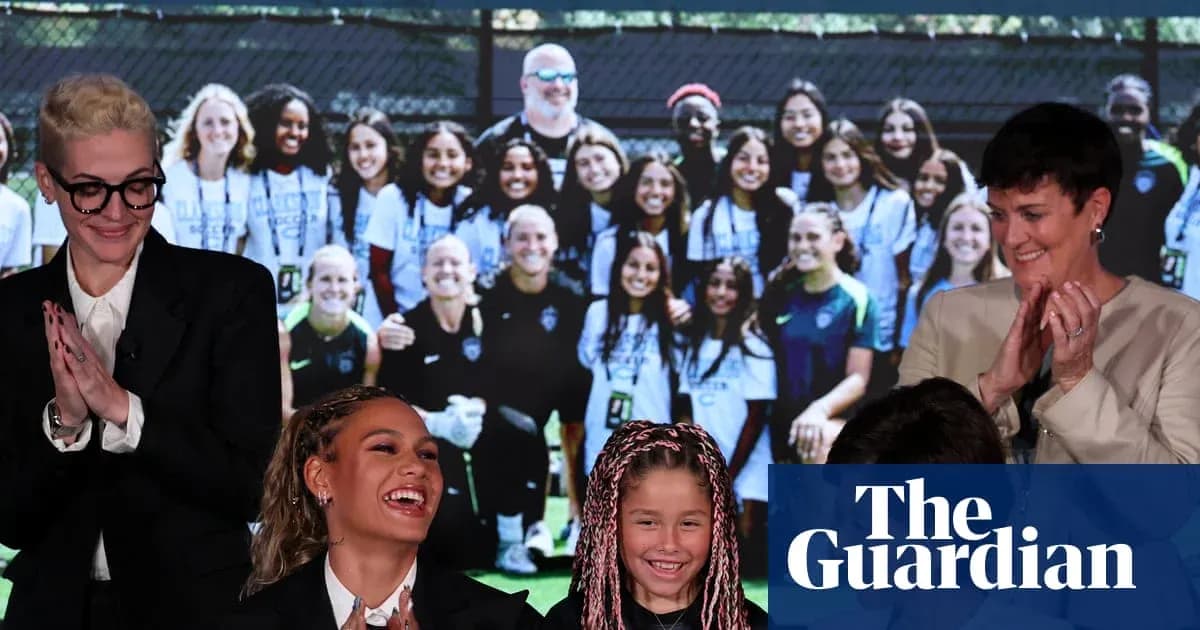
NWSLPA executive director Meghann Burke called the settlement “evidence of the NWSLPA’s strength and commitment to enforcing the terms of the Collective Bargaining Agreement,” speaking to ESPN, which first reported the deal. It was a pointed reminder: the union will not just negotiate CBAs; it will enforce them.
On the league side, NWSL executive vice-president Bill Ordower framed the agreement as part of a maturing labor relationship, stressing that disagreements are inevitable in a league expanding at this pace and that the real test lies in how those disputes get resolved. For the league, the message was about clarity, certainty, and preserving competitive balance.
The subtext was clear enough: both sides know the stakes are rising, and so is the money.
The rule that followed the star
To understand why this matters, you have to go back to last winter.
The NWSL watched a wave of talent head to Europe, where clubs operate without salary caps and can outbid American teams for top players. The league’s answer was the HIP rule, ratified by the board of governors and activated on 1 July.
For the 2026 season, the base salary cap sits at $3.7m. The HIP mechanism allowed clubs to spend an extra $1m above that to keep or lure stars. It quickly picked up an unofficial nickname: the “Rodman Rule.”
That wasn’t an accident.
Rodman, the Washington Spirit forward and one of the league’s brightest young stars, had attracted lucrative offers from Europe that the Spirit simply couldn’t match under existing cap rules. In November, before the HIP rule existed, Washington tried to re-sign her on a deal averaging more than $1m per year. NWSL commissioner Jessica Berman blocked the contract, arguing its backloaded structure violated league rules.
The NWSLPA pounced, filing a grievance and calling the refusal a “flagrant violation” of player free agency rights. Weeks later, the league unveiled the HIP rule. In January, Rodman signed a record-breaking deal with the Spirit worth more than $2m annually.
Her new contract did not make the grievance disappear. The union kept it alive, using it as a lever in a broader fight over the league’s control of contracts and player movement. Friday’s settlement finally closes that chapter.
Power, money and who gets to say no
One of the most significant pieces of the new agreement sits in the fine print of how contracts can be rejected.
The NWSL will still have the power to turn down deals it deems attempts at salary cap circumvention. That authority remains a key tool for maintaining the league’s financial structure. But the process can no longer happen in the dark.
Now, if the league rejects a contract, it must notify the union and explain why within 72 hours. Transparency replaces mystery. The NWSL will also be required to provide regular salary cap and revenue updates to its clubs throughout the year, tightening the information loop in a system that has often felt opaque to those inside it.
The HIP mechanism itself remains a vital weapon for clubs trying to compete with free-spending European sides. Several players who would have qualified under the old criteria have already signed or re-signed using the rule, including Denver’s Lindsey Heaps, Orlando’s Barbra Banda and Gotham’s Rose Lavelle. Under the new framework, future HIP slots won’t depend on awards or media lists – just on whether a club is prepared to commit a big enough slice of its cap.
The league keeps its guardrails. The players gain a clearer path to top-end pay. The battle now shifts from checklists to negotiation tables.
Boots, brands and a modern league
The settlement also untangles a quieter but telling dispute: what players wear on their feet.
This season, some players received warnings and fines for wearing cleats from brands that weren’t official league sponsors. In a global sport where individual endorsement deals are part of a player’s livelihood and identity, the policy landed badly.
Under the new agreement, the NWSL will honor most pre-existing endorsement deals and withdraw previous fines. It’s a small detail in a complex settlement, but it speaks to a broader recalibration: a league trying to project professionalism while recognizing that its stars are not just employees, but global athletes with their own commercial power.
A league growing into its own ambition
Strip away the legal language and the settlement tells a clear story.
The NWSL wants to keep its best players. The players want the freedom – and the money – their talent deserves. The HIP rule began as a tool to bridge that gap, but its restrictive criteria and opaque enforcement turned it into a flashpoint.
Now, the mechanism survives, but the gatekeeping does not. Clubs will still be limited by the cap and by whatever HIP slot restrictions the league sets, yet they can point to their own valuation of a player rather than a checklist drawn up in a boardroom or a media office.
For a league that has outgrown its early, fragile years and is now fighting for global relevance, this is what evolution looks like: more money at the top, more transparency in the middle, and a players’ union increasingly willing to test every line of the rulebook.
The question now is simple and sharp: with the rules rewritten and the path cleared, which clubs will truly spend like contenders in the race to keep the world’s best in the NWSL?