Pablo Torre's Investigation on Clippers and NBA's Historic Ruling
Pablo Torre didn’t wait for the NBA to validate his work. He couldn’t. Not in this story.
But when the league finally dropped a hammer on the Los Angeles Clippers and Kawhi Leonard, handing out the stiffest organizational penalty in NBA history, it was impossible to ignore what had been sitting in plain audio for months on “Pablo Torre Finds Out.”
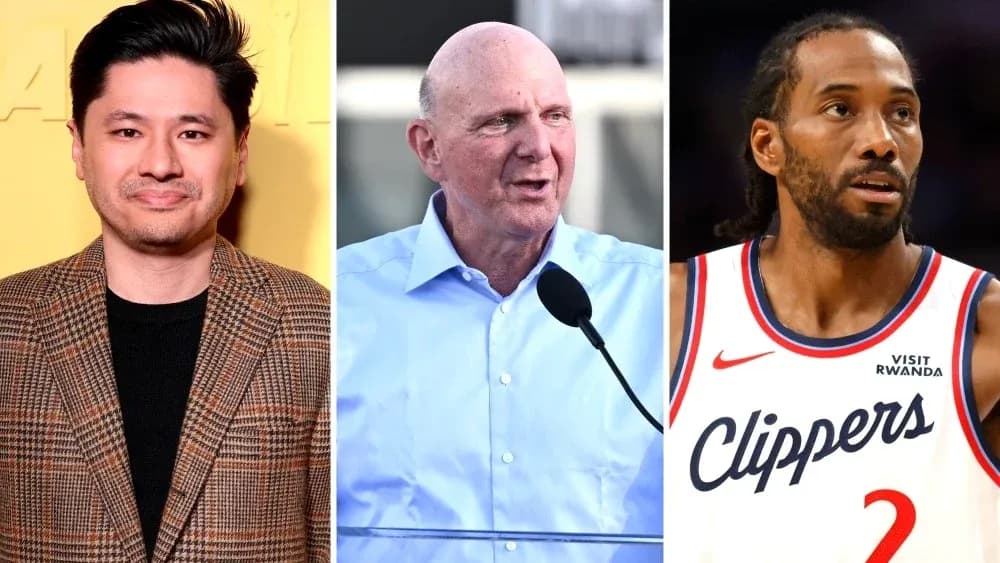
The podcast, which blended chatty storytelling with a slow-burn investigative spine, had laid out how the Clippers were alleged to have skirted the salary cap through off-court money and a $28 million no-show endorsement deal from Aspiration for Leonard — a company whose co-founder is now serving 14 years in prison for defrauding investors, including Clippers owner Steve Ballmer.
Ballmer denied everything. Loudly. Publicly. Repeatedly. So did his allies. Torre got dragged for it.
Then the league finished its own homework.
The NBA’s verdict
The NBA hired powerhouse law firm Wachtell Lipton to run an independent investigation into the Clippers-Leonard saga. Their conclusion was blunt: the Clippers had “committed multiple significant rules violations,” and Leonard, through his uncle Dennis Robertson, had pushed the franchise to help him secure off-court income, benefited from those opportunities, and failed to reimburse personal expenses covered by the team.
The punishment matched the language. A historic organizational penalty for the Clippers. A formal finding that echoed much of what Torre’s series had been arguing for months.
Leonard released a carefully constructed statement: “I accept full responsibility for the lapses in judgment by people within my inner circle,” he said in part, while insisting that “integrity and respect for this game are fundamental to who I am.”
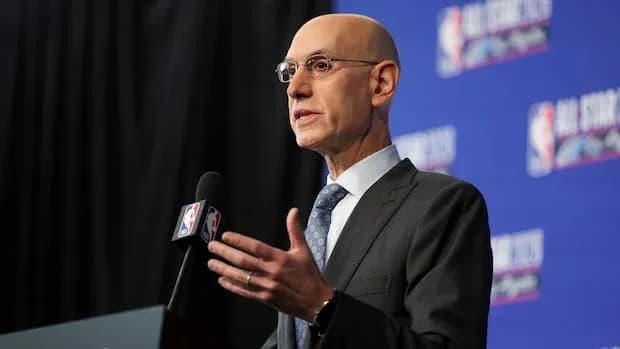
Adam Silver did not bother with euphemism. “I am deeply disappointed by the flagrant violations of our rules and by the Clippers’ institutional and leadership failures that led to this misconduct,” the commissioner said. “The severity of the penalties reflects the seriousness of the violations.”
Ballmer fired back with his own statement, accusing the league of “a heavily biased investigation” and promising to explore “every legal remedy to address this gross injustice.”
In the middle of that crossfire stood Torre, whose work had already won a Pulitzer Prize but, in the court of public opinion, had been pitted against a billionaire owner and a superstar forward.
Vindication, with an asterisk
Does he feel vindicated?
“On some level it’s hard to resist the feeling of vindication,” Torre says now, before pulling himself back from the easy headline. For him, the point was never to have the NBA nod along. Journalism, he argues, can’t rely on the very institutions it scrutinizes to validate it.
The series was long, dense, and meticulously sourced. Yet a sizable chunk of the public lined up behind Ballmer and Leonard anyway. That part still gnaws at him.
“It was, for that reason, both vindicating and the opposite,” he says. Those who actually listened or watched, he insists, “had no ambiguity about what this was.” The work, in his mind, stood on its own long before the league’s ruling arrived.
But the pushback he faced did not just come from fans or ex-players with microphones. It came from powerful media brands that should have known better.
ESPN’s framing and a familiar playbook
On August 17, ESPN — Torre’s former employer — published a story under the headline: “Sources: NBA has no evidence Ballmer funneled money to Leonard via sponsors.”
The timing and framing landed like a body blow.
“My experience with that report was… not great,” Torre says. He watched a mainstream outlet, one that had not spent a year digging as he had, position the story in a way that undercut his reporting and bolstered the Clippers’ narrative.
He had questions. Why frame it that way? Why not call him before publishing if they were going to lean into that angle? Why, after telling him his statement would be included, did it never appear?
His paraphrased response to ESPN had been simple: “We stand by our reporting. We look forward to the NBA’s ruling. And our investigation continues.”
Behind the scenes, Torre’s reporting pointed to something more calculated. He says the Clippers and a crisis PR manager hired by Ballmer had been shopping around a version of events designed to protect the owner. The ESPN story, in retrospect, looked to him like the product of that campaign — a narrative that “deeply resembles the exact press release that the Clippers released almost concurrently with the story.”
The NBA, he notes, immediately refuted the information the Clippers were pushing.
The mystery, to Torre, is not where the story came from. It’s why ESPN, familiar with his work and the documentary evidence he’d assembled, decided that framing felt more credible than the former colleague who had spent months assembling a multi-part investigation backed by human sources and documents, with no plausible alternative explanation.
Puck, clout, and character
If ESPN’s piece stung institutionally, the Puck podcast from Peter Hamby felt personal.
Hamby accused Torre of clout-chasing, painting the project as a cynical attempt to build an audience. Torre listened to people who, in his view, had not really engaged with his work, attacking his standards and credibility as if they had.
“That felt darkly poetic,” Torre says. He heard himself being lectured on journalistic standards by “a publication that sought to resemble none of them.” He calls it either incompetence or malice, and at this point, he’s not sure the distinction matters.
“It felt strangely personal,” he admits. And he’s not particularly interested in chasing down whose angle it was or why.
There were, at least, some public reversals. Mark Cuban and Ty Lawson, who had both criticized Torre, later apologized. Torre says he appreciated not just the apologies themselves, but the way they came.
A historic penalty, a light touch for Kawhi
The NBA’s discipline package landed with weight: a $30 million fine for the Clippers, five first-round draft picks stripped, and a year-long suspension for Ballmer. Leonard’s share of the punishment? A $700,000 fine. No suspension. Freedom to move on, reportedly to the Toronto Raptors.
On the surface, it looked lopsided. Leonard had pocketed tens of millions and walked away with what amounts to a financial parking ticket.
To Torre, that imbalance is precisely why journalists can’t measure their work purely against a league ruling. Legal and political calculations creep in.
By his reporting, Leonard’s relatively mild penalty was part of a broader strategy. The NBA, he says, wanted to remove arbitration as a weapon Ballmer could use to drag the league and its partners through an even messier process.
The solution: give Leonard a slap on the wrist that the players’ union and Leonard would accept, settle the matter on that front, and shut the door on arbitration. When the league then hit Ballmer with its historic punishment, the owner’s path narrowed. No arbitration. Just the courts.
Ballmer’s remaining move, Torre believes, is to sue — the NBA, the commissioner, Wachtell Lipton, and anyone else he chooses, potentially including Torre himself. That, Torre argues, is a legal strategy by the league, not a pure reflection of who did what and how culpable they were.
Kawhi’s words, and the documents behind them
Leonard’s statement leaned on familiar language: integrity, respect for the game, “full responsibility” for lapses in judgment by people around him, regret for the distraction caused to fans and family.
On paper, it sounds contrite. To Torre, it doesn’t square with the evidence he’s seen.
“Kawhi Leonard is an adult,” Torre says. A 35-year-old man, in the rooms with teams, aware of what his uncle was asking for. Torre says he has documents bearing Leonard’s signature in sections that attest to his knowledge and consent to the deals he now frames as if they were happening in a fog around him.
“By my own collection of documents, it doesn’t make sense to me,” Torre says. He does, however, understand the logic behind the statement. Leonard gets to say his piece, express regret, and walk into a fresh start: “I’m out, this wasn’t great, I regret some things, see you in Toronto.”
For Torre, the entire saga crystallizes around Ballmer’s desire. The owner wanted Leonard so badly that he failed to see how far he was exposing himself, and how quickly their interests could diverge once the money, the cap, and the league’s rules came into play.
What’s next — and what’s not
Torre has been clear on one point that keeps surfacing in rumor mills: he is not investigating the New York Knicks or Jalen Brunson. “They are not a target,” he says. “At the moment I’m absolutely not focusing on the Knicks or Jalen Brunson.”
His attention has already shifted to another powerful figure in Los Angeles sports: Mark Walter, owner of the Los Angeles Dodgers, who is under federal investigation over $21 billion in undisclosed loans made by two insurance companies he owns, and who recently sold the Lakers to Bob Iger and Joshua Kushner for $12.5 billion.
On his podcast, Torre is about to roll out part one of a new investigation. He says it again involves federal agencies, the public interest, Hall of Fame basketball players, a team in Los Angeles, and a baseball team in Los Angeles. The aim is familiar: take something that looks impossibly complex and make it clear, and clearly relevant, to the public.
The sale of the Lakers to Iger and Kushner is part of the entry point, not the entire story. Torre and his team have spent months on it, accelerating their reporting in recent weeks. This won’t be a one-off episode. It’s a doorway into another sprawling, high-stakes narrative.
The Clippers case showed what happens when a podcast goes toe-to-toe with a billionaire owner, a global star, and the gravitational pull of mainstream media. The NBA’s ruling didn’t make the journalism true. It just proved how dangerous it can be to ignore it.