Pakistan Cricket Team's Royal Audience with King Charles
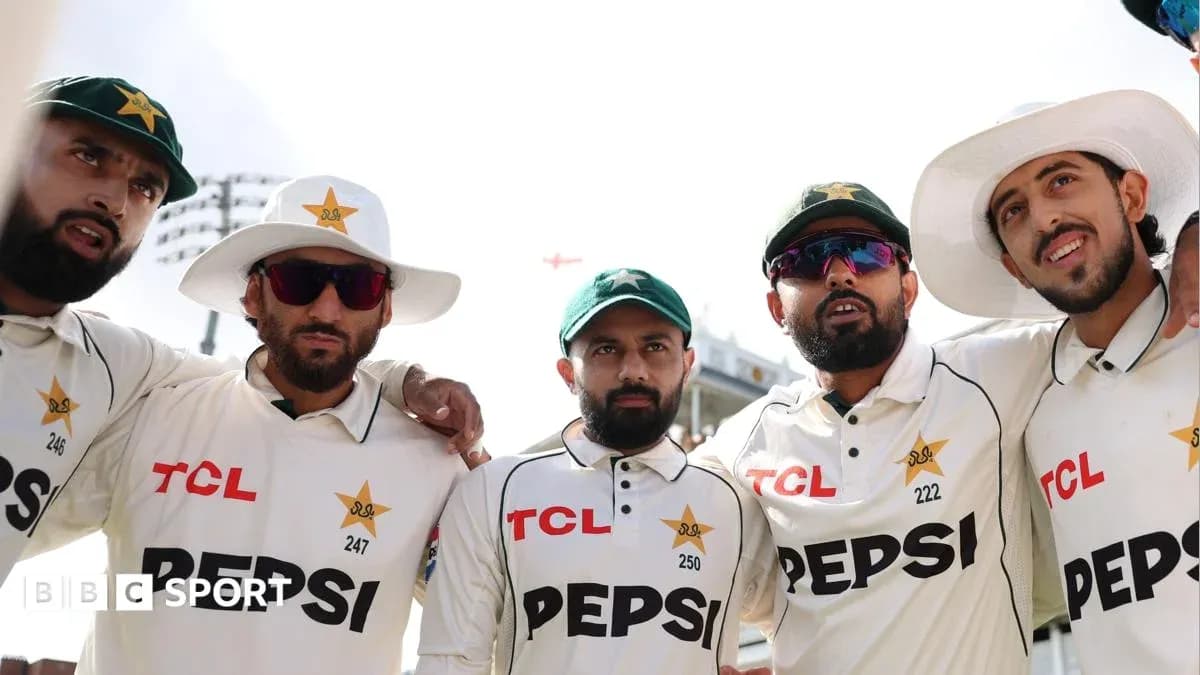
Pakistan’s Test tour of England, already simmering with political tension, will step into the rarefied air of royal protocol this week when the squad is granted an audience with King Charles.
The meeting, confirmed by Buckingham Palace, will take place in the gardens of Clarence House in the short window between the second and third Tests. It is no hastily arranged damage-limitation exercise; palace officials stress the engagement was planned before a ball was bowled in the series. Yet the timing, after a week in which Pakistan briefly threatened to walk away from the tour, could hardly feel more charged.
Royal audience after threat to abandon Lord’s Test
The flashpoint came at Lord’s on day one of the second Test. During the lunch interval, Sky Sports scheduled an interview with Suleiman and Kasim Khan, sons of former Pakistan captain and prime minister Imran Khan, conducted by former England skipper Michael Atherton.
Imran Khan, 73, has been in prison for three years on corruption charges he denies. His imprisonment has become a defining fault line in Pakistan’s politics. When word reached the Pakistan Cricket Board that the interview was due to air, the reaction was immediate and severe: officials raised the possibility of not resuming play after lunch and cancelling the rest of the three-match series.
The stakes were suddenly far greater than a session at Lord’s. The England and Wales Cricket Board, caught between broadcast partners, a visiting team and a live Test match, sought urgent guidance from the Foreign, Commonwealth and Development Office. Sky, having received a complaint before the broadcast, still chose to run a version of the Atherton interview.
In it, Suleiman and Kasim voiced concern over their father’s treatment and security, and criticised the UK government’s response to the situation in Pakistan. The words went out across the lunchtime airwaves. The threat of a walk-off lingered.
Yet when the interval ended, Pakistan emerged on schedule. The match went on. The political storm did not.
King Charles to receive Pakistan team
Now, as the dust settles on that episode, the same Pakistan squad will step into Clarence House for a brief but symbolically loaded encounter with the monarch.
“His Majesty the King, as Head of the Commonwealth, will receive the Pakistan Men’s Test Cricket Team for an audience in the gardens of Clarence House, in the break between the second and third Test matches hosted in England over the summer,” read the palace statement.
The audience is expected to last around 15 minutes. No more than a short formal engagement on paper, yet the backdrop gives it extra weight.
Imran Khan is not just a jailed former leader. He is one of Pakistan’s greatest sporting icons, the all-rounder who carried his country to World Cup glory in 1992 and captained them across a 21-year international career. His name still reverberates in any conversation about Pakistan cricket, let alone one involving the British establishment.
Last December, his sister Aleema Khanum publicly appealed to King Charles, in his role as Head of the Commonwealth, to speak out about the situation in Pakistan. She invoked the Commonwealth charter, pointing to its stated commitments to the rule of law, democracy and human rights, and questioned the silence of member states.
“Pakistan is a member of the Commonwealth of Nations,” she said, quoted by The Times. “Its key principles in the charter are rule of law, democracy, and human rights. A member nation is busy destroying all three fundamental principles.
“Member states, especially where King Charles is the head of the Commonwealth organisation, don't speak out against fascism or military dictatorship? What is the point of just organisations then?”
Those words now hang over this week’s royal garden meeting, even if the audience itself will be tightly choreographed and brief.
PCB politics in the spotlight
The political crosscurrents do not stop there. PCB chairman Mohsin Naqvi currently serves as interior minister in Pakistan’s government, placing him at the heart of the state apparatus that oversees internal security and law and order.
The board has been asked to confirm whether Naqvi will attend the audience with the King. His presence, or absence, would be notable in itself given his dual role at the intersection of cricket and government power.
On the ground, the players and coaches have tried to keep their distance from the storm. At the close of play on day two at Lord’s, Pakistan coach Sarfaraz Ahmed insisted he and his squad had been unaware of the Sky interview with Imran’s sons when they returned to the field after lunch.
“I don't know anything. I'm just focusing on the match,” he said. Asked directly about the broadcast, he repeated: “You're talking about the interview? We don't know about the interview.”
The coach’s words captured the familiar tension of modern international cricket: athletes trying to concentrate on bat and ball while the sport around them is dragged into the orbit of politics, diplomacy and broadcast agendas.
Cricket, politics and a packed calendar
England are due to tour Pakistan again in October for a one-day tri-series involving the hosts and Sri Lanka. It will be England’s fourth separate trip to Pakistan in four years, a remarkable burst of traffic after a 17-year absence driven by security concerns.
That recent thaw has been one of the sport’s quiet success stories, restoring a marquee bilateral relationship to home-and-away status. Yet it now sits alongside questions of political legitimacy, media freedom and diplomatic pressure.
This week’s royal audience will not resolve any of that. It will, though, place Pakistan’s players in front of King Charles at a moment when the legacy of their most famous captain and former prime minister hangs over both cricket and national life.
Fifteen minutes in a London garden, with a Test series in the balance and a nation’s politics never far from the conversation. How long can cricket pretend it is only about the next ball?