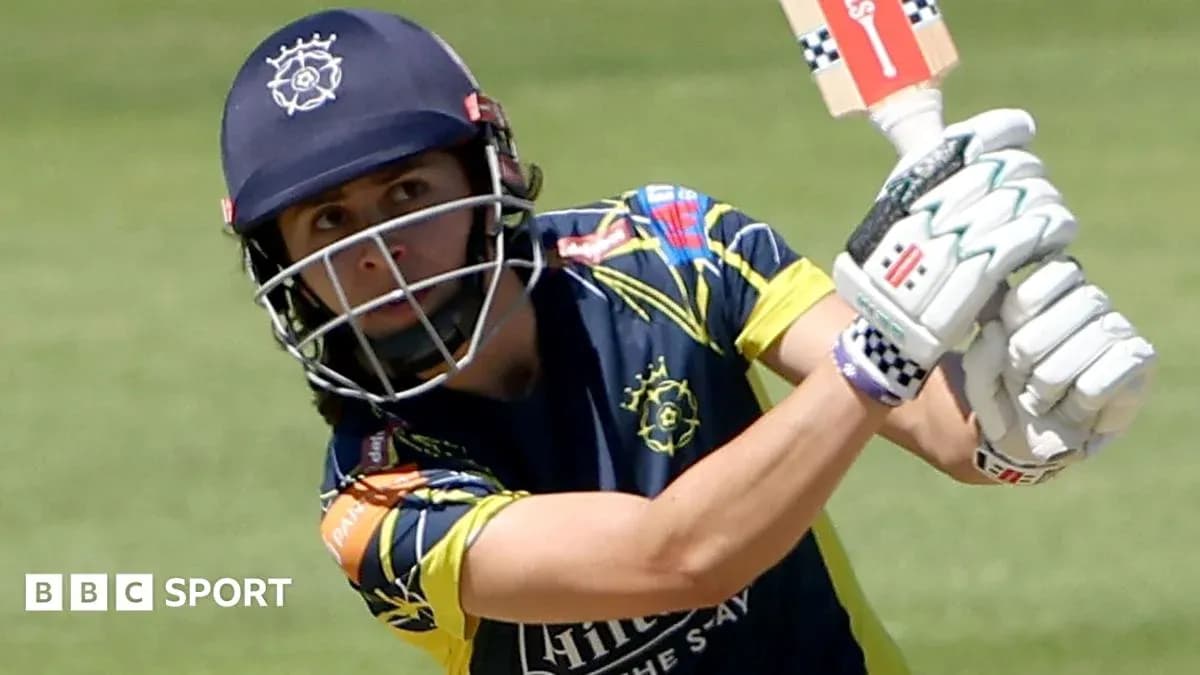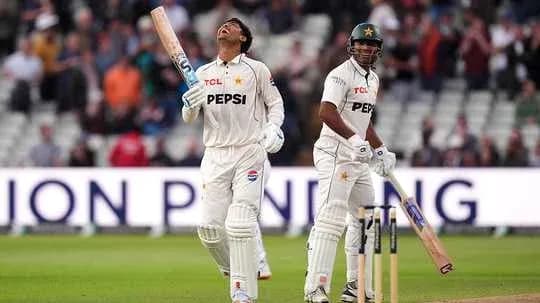
Pakistan's Thrilling Fightback at Edgbaston with Record Stand
Pakistan did not just stay alive at Edgbaston on the third day. They seized the game by the collar and turned a grim situation into the most compelling passage of their tour, piling up 449 and leaving England a fourth-innings target of 130.
It was their highest total of the series. It was also their most defiant.
Steady hands in the morning
The day began with survival on the agenda. Azan Awais and Shan Masood, who had already put together a half-century stand overnight, walked out knowing a collapse would all but hand England the Test.
Jofra Archer went straight to the short ball, hurrying them with pace and hostility. Gus Atkinson backed him up, tight and disciplined. The runs did not come easily, but Josh Tongue loosened the pressure with the odd boundary opportunity. There was movement in the air and off the pitch, just not enough to truly disturb two batters intent on digging in.
Both left-handers brought up their fifties on either side of the first drinks break, reward for calm judgment and soft hands. Pakistan’s innings, which had looked fragile for much of the series, suddenly had a backbone.
Then, one change flipped the mood.
Dan Lawrence came on for the first spin of the Test and struck almost immediately. Awais, glancing down the leg side, brushed the ball through to the wicketkeeper. The appeal was muted, the umpire unmoved, but Joe Root rolled the dice with a sharp review and the decision was overturned. A promising innings ended on a faint edge and a screen graphic.
Masood and Babar reset the tone
If that dismissal threatened to slow Pakistan, Masood refused to let the innings drift. Babar Azam, without a double-figure score in the series until this knock, joined his captain with pressure swirling around him.
What followed was the kind of partnership Pakistan have craved all tour. Masood and Babar showed technique and temperament, putting on 89 for the third wicket and forcing England back into defensive fields. The ball softened, the gaps opened, and for the first time in days the home attack looked short of ideas.
Masood moved relentlessly towards a hundred, only to fall agonisingly short. Lawrence again intervened, this time at gully, diving low to his right to pluck a sharp one-handed catch. Masood walked off five runs shy of a century, having set the tone for the comeback.
Babar, though, still held the key. He looked assured, picking length early and threading the ball through the off side with familiar authority. England, searching for a way past him, went back to the short-ball plan.
The pressure finally told.
Babar rode out a testing burst from Archer, but Tongue targeted him down the leg side and drew the mistake. Another set batter, another near-miss for a century, and another moment when Pakistan threatened to let England back in. Seven overs later, Saud Shakeel also succumbed to the bouncer ploy, gloving to short leg as he tried to fend one away.
From a position of control, Pakistan were suddenly vulnerable again.
Collapse, then chaos
When the final session began, Pakistan trailed by only 23, with five wickets in hand. The script looked simple: bat sensibly, wipe off the deficit, and inch towards a handy lead.
England ripped that script up in a hurry.
Shakeel, Ghazi Ghori and Mohammad Imran Randhawa all fell before Pakistan could move in front. The scoreboard, and the mood, swung sharply. With just two wickets remaining, the tourists still trailed and stared at another familiar story: promise, then a slide.
Razaullah refused to accept it.
On debut, 21 years old and with little to lose, he launched a counterattack that transformed the match. He did not just clear the ropes; he assaulted them. Nine sixes flew from his bat, the most ever struck by a debutant in a Test innings, as he tore into an increasingly rattled England attack.
The carnage started early. Atkinson bore the brunt first, hammered for three sixes in a single over. Fielders shuffled back to the rope, the crowd roared, and suddenly England’s bowlers were the ones searching for escape routes.
There was a brief lull as Razaullah reassessed. Then he went again, lifting Archer high over long-off to bring up a half-century that felt more like a statement than a milestone.
At the other end, Mohammad Abbaas played the perfect foil. He resisted the temptation to join the frenzy, instead offering calm support as Razaullah unfurled his full range. With every over, the ninth-wicket stand grew in significance and in menace.
A record stand and a new hero
What began as damage limitation became dominance. The pair added 121 for the ninth wicket, shredding England’s advantage and flipping the scoreboard. Singles turned into twos, mishits into boundaries, and every short ball risked disappearing into the stands.
By the time Abbaas fell to Tongue for a valuable 42, Pakistan’s lead had ballooned to 119. The deficit had long been a memory; now England were the side counting the cost of missed chances and wayward spells.
Razaullah, still in full flow, added 10 more runs before Lawrence returned to end the mayhem. A stumping cut short his extraordinary 63-ball 81, an innings stitched from clean striking, fearless intent and the kind of freedom that can change a series.
He walked off to the knowledge he had done more than rescue Pakistan. He had handed them control.
England will resume needing 130 to win on a surface wearing and a dressing room still processing the blows from a 21-year-old debutant. Pakistan, buoyed by their most complete batting day of the tour, have turned what once looked like a routine home victory into a tense, nervy chase.
The fourth day now belongs to the bowlers—and to the question Razaullah has forced this series to ask: who blinks next?