Pakistan’s Top Order Struggles in England Series
Pakistan arrived in England hoping their young top order would harden in difficult conditions. Instead, the opening pair walked off six times having contributed just 20 runs between them across the entire three-Test series — a number that will sit uncomfortably in their history books.
That aggregate is their joint-worst performance from the openers in 35 years, and their lowest across a Test series since the 1990-91 home campaign against West Indies. Different faces, same story.
Three Opening Pairs, No Platform
The search for a functioning partnership at the top turned into a revolving door.
Pakistan used three different opening combinations in six innings. Not one of them managed to stitch together a stand worth even 10 runs. The highest opening partnership of the series was eight. Eight, in English conditions where patience and discipline are supposed to be the currency of survival.
Each innings began with a familiar pattern: new ball, fresh hope, early damage.
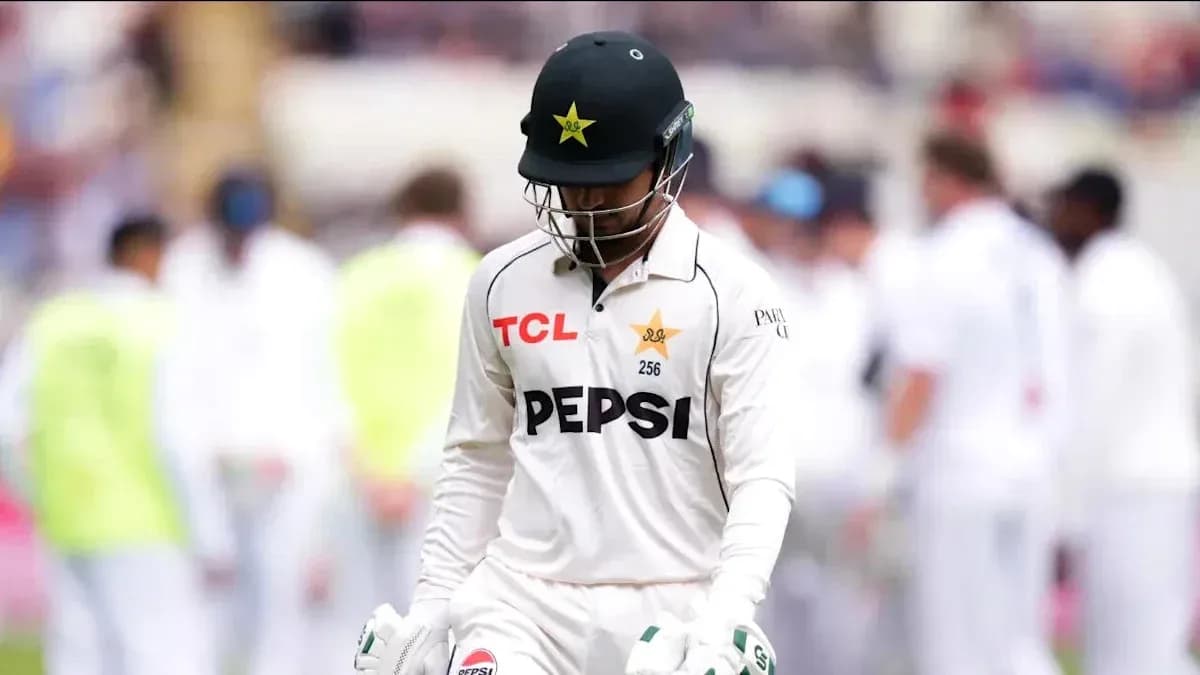
The nadir arrived in the second innings of the third Test at Edgbaston. Under heavy pressure and with the series already slipping away, Pakistan’s openers failed to add a single run before both were back in the pavilion. The scoreboard read 0 for 2, and the middle order was walking into a storm yet again.
Awais Stands Alone
In the wreckage, one name just about stayed upright.
Azan Awais, thrust into a brutal examination, was the only opener to show any semblance of resistance. He scored 129 runs across six innings at an average of 21.50 — hardly headline-grabbing numbers, but in this context, they looked almost heroic.
Around him, the support simply never arrived.
Imam-ul-Haq produced 42 in one innings, then followed it with a duck. Shan Masood scratched his way to 1 and 26 in his two goes at the top. Saim Ayub, handed a chance as an opener, walked away with a pair of zeros from his two innings in the role.
Every early failure dragged the middle order into action before the shine had even left the ball. Plans built around stability and accumulation were shredded inside the first half-hour of most innings. The psychological toll of repeatedly starting at 10 for 2 or worse was written all over Pakistan’s batting card by the end of the series.
Edgbaston Collapse Adds Another Unwanted Mark
The problems at the top were not isolated. They fed into something far more alarming in the third Test at Edgbaston.
In the first innings, Pakistan folded for 133. The new ball carved through their supposed backbone: all of the top five batters fell for single-digit scores. That sequence did more than sink the innings; it carved out a grim piece of history.
No team had ever before lost all of its top five wickets for single-digit scores in the first innings of a Test in England. Pakistan now owns that record.
From there, the match and the series felt less like a contest and more like a lesson — harsh, unforgiving, and recorded in cold numbers that will be replayed in every selection meeting to come.
The question now is not whether this top order needs change, but how deep that change must run before Pakistan can trust their openers to walk out in a Test and set a platform rather than trigger a collapse.