Qinwen Zheng's Epic Comeback at the US Open
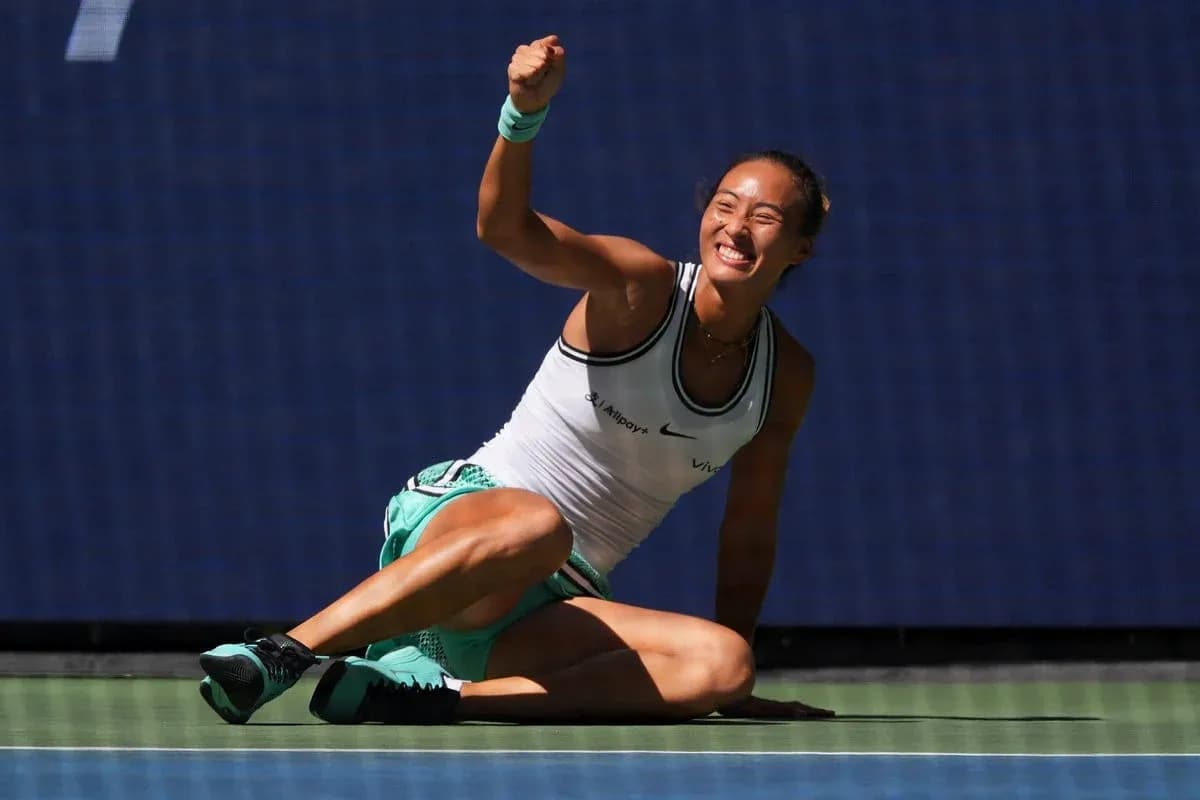
Qinwen Zheng was flat on her back in Arthur Ashe Stadium, staring at the New York sky, as if trying to process what she had just done. Again.
From 0-5 down in a set. Again.
Against Iga Swiatek this time, a six-time grand slam champion and former US Open winner. And just as she had against Madison Keys two days earlier, Zheng ripped up the script, stormed back, and walked off a 7-5 6-3 winner to reach the US Open quarter-finals for the third time.
This is no longer a quirky storyline. It’s a full-blown New York saga.
From qualifying to giant-killer
Two years ago in Paris, Zheng stood on an Olympic podium after beating Swiatek in the gold medal match. Since then, her career has zigzagged through injury and frustration. An elbow problem wrecked long stretches of her 2025 season and dragged her ranking down to No 121. She arrived in New York not as a headliner, but as a qualifier just trying to claw her way back into the main draw.
Seven wins later, she owns the Ashe night.
The warning shot came in the third round. Facing former Australian Open champion Madison Keys, the American 22nd seed, Zheng was being brushed aside. She lost the first set 1-6, then trailed 0-5 in the third and even faced match point. Keys had the crowd, the momentum, and what looked like a routine path to victory.
Zheng took all of that and ran off with it.
She reeled off seven straight games, snatching the decider 7-5 and the match 1-6 7-6 (7-3) 7-5. It felt like a once-in-a-tournament escape, the kind of comeback that becomes a footnote to someone else’s title run.
Then she did it again.
Swiatek stunned as Zheng roars back
Against the eighth seed Swiatek, a former US Open and Wimbledon champion, Zheng again fell into a 0-5 hole in the opening set. Swiatek had the match on her strings early, dictating rallies, pushing Zheng wide, and forcing errors. The Pole looked settled, assured, as if she had absorbed Zheng’s Paris win and filed it away as a one-off.
The pressure finally flipped.
Zheng found her range, then her rhythm, then her belief. She started to hit through Swiatek, dragging the rallies onto her own terms. One game went her way, then another. The scoreboard, which had seemed irrelevant at 0-5, suddenly tightened.
“I just focused point by point,” Zheng said on court. “Little by little I start to play better tennis, I start to find my game and in one moment I even forgot the score in the first set at 4-5. That shows how I'm focused.”
From 0-5, she rattled off seven games in a row to steal the set 7-5. Swiatek’s level sagged under the weight of errors; she finished with 28 in total. Zheng, by contrast, looked liberated, as if the comeback against Keys had hardened something inside her.
The second set turned into a test of nerve. One break of serve would decide it. Zheng grabbed it, guarded it, and never let Swiatek back in. A single, clean strike on the return, a flurry of first serves, and suddenly it was 6-3, match over on her fourth match point.
Zheng dropped to the court, arms spread, soaking in the roar. A qualifier, sidelined for much of last season, had just taken out one of the sport’s dominant forces for the second major showdown in as many years.
“Honestly, I have to say, I started the match not so well,” she admitted. “Little by little I found my rhythm on the center court because it's been a long, long time. I just really appreciate it to be here in the Ashe Stadium.
“I'm just really happy to win this match cause it's not easy and it's been a while really. I didn't beat any top 10 player. I just really, really appreciated this win for me, and I want to say thank you for all the fans who come to support me today.”
Seven straight wins in New York. A place in the last eight. A career reborn under the lights.
Swiatek’s harsh pattern continues
For Swiatek, the story was painfully familiar. Once the standard-bearer for relentlessness at the majors, she has now lost her last five grand slam matches since winning Wimbledon in 2025 in straight sets. The trend is brutal and inescapable.
The errors told the story. As Zheng surged, Swiatek’s forehand began to leak mistakes, her backhand lost its depth, and rallies that used to end on her terms drifted away. She left Ashe in tears, another early exit in a tournament where she once looked untouchable.
The gap between her peak and her current grand slam form is widening, and the tour has noticed.
Rybakina or Osaka await
Zheng’s reward is a quarter-final against heavyweight opposition: either second seed Elena Rybakina or 13th seed Naomi Osaka, a two-time US Open champion. It is exactly the kind of stage she has been fighting to return to, through injury rehab, qualifying rounds, and those wild 0-5 escapes.
Whoever comes through, they will not underestimate her now. Not after Paris. Not after Keys. Not after Swiatek under the Ashe lights.
Andreeva advances, Potapova heartbreak
Earlier in the day, another comeback reshaped the women’s draw, though this one ended in anguish.
French Open champion Mirra Andreeva battled past Anastasia Potapova 5-7 6-4 6-3 to reach her first US Open quarter-final. Potapova, representing Austria, had struck first, taking the opening set and pushing the fifth seed deep into a fight.
At 5-3 down in the third, still clinging to hope, Potapova chased a forehand and crumpled, her knee twisting badly. She needed heavy strapping just to continue. She chose to play on, but the match was gone. She did not win another point.
Potapova left the court in floods of tears. Andreeva, just a teenager, was left to juggle relief with concern.
“Anastasia is a good friend, and seeing what a battle we have and then seeing her fall is not easy,” Andreeva said. “It’s not the way you want to finish the match. I just told her she is playing amazing and I’m sure she’ll come back even stronger, she’s a warrior.”
New York can be unforgiving. It can also be the place where careers turn.
For Mirra Andreeva, this fortnight may be the launchpad. For Anastasia Potapova, it becomes a test of resilience and recovery. For Iga Swiatek, another grand slam post-mortem awaits.
And for Qinwen Zheng, qualifier, Olympic champion, serial escape artist at 0-5 down, the US Open has turned into something else entirely: a chance to take this comeback story all the way to the final weekend.