Reading's Week: Referee Controversies and Team Resilience
It has not been a vintage week for referees. Anywhere. Days after the VAR chaos that engulfed the Manchester derby, the spotlight swung to the Carabao Cup and landed squarely on the officials at the SCL Stadium, where Reading were left staring at one of the most baffling decisions of the season.
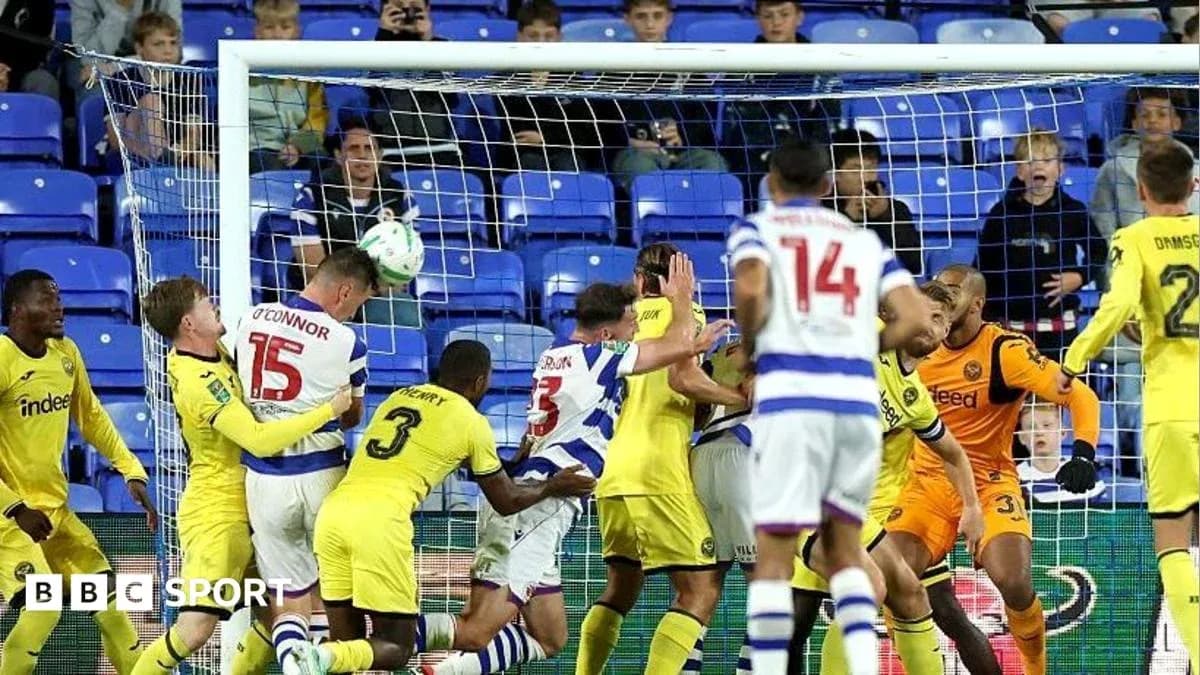
In the third-round tie against Brentford, Paudie O'Connor produced the sort of finish centre-halves dream about and almost never pull off. An acrobatic, Zlatan-style effort, the ball flying into the net, the stadium erupting, the Premier League visitors suddenly rattled.
Then came the whistle.
Referee Tom Nield, backed up by his assistant, ruled the goal out on the grounds that O’Connor’s boot was too high. No foul on an opponent. No contact. Just a spectacular piece of improvisation punished for its ambition.
The home support stood open-mouthed. Players protested in disbelief. The decision stayed.
If the officials needed a defence, it might be that they were briefly stunned by a rugged central defender channelling Zlatan Ibrahimovic. That is about as generous as it gets.
Leam Richardson was not in the mood for generosity. “It was in the top three worst decisions I've seen,” the Reading manager said, still simmering after the 2-1 defeat.
Midfielder Charlie Savage went even stronger. “It was one of the worst decisions I've seen in my whole life,” he said, summing up the mood of an exasperated dressing room.
Everyone else could only nod.
There was more. A clear-looking handball shout later in the game went the same way: waved away. Under normal circumstances, that might have dominated the post-match debate. Not this time. The disallowed equaliser overshadowed everything.
Reading fans filed out of the SCL Stadium on Tuesday night furious with the officials. By Saturday, they might be frustrated long before they even see a referee.
Chaos Off the Pitch Too
As if the football gods had not done enough, the travel planners have joined in.
Officials from Scottish and Southern Electricity Networks (SSEN) have picked this weekend to replace a pylon. The result: junction 11 of the M4, the key route that runs right past the stadium, will be closed.
For Reading and Notts County supporters heading to the game, it is a logistical nightmare. Add in racegoers bound for Newbury and visitors to the Newbury show a couple of junctions further west, and the picture becomes one of tailbacks, diversions and frayed tempers.
The club’s week of irritation is not confined to the penalty area.
Reasons to Believe Amid the Frustration
Strip away the noise, though, and the football itself offers something different: encouragement.
Reading have lost twice in quick succession – at Cambridge in the league last Saturday, then to Brentford in the cup – but the performances tell a more optimistic story.
Against Brentford, they rattled a Premier League side enough that Thomas Frank turned to Igor Thiago of Brazil from the bench to try to close the game down. Reading stretched them, unsettled them, and for long spells went toe-to-toe with top-flight opposition.
That matters. So does something else that has been missing in Berkshire for too long: genuine competition for places.
Across the pitch, players are now looking over their shoulders. Shirts are no longer guaranteed. That edge has not existed at Reading in recent seasons, and it is starting to show in the intensity of their play.
The anger over O’Connor’s chalked-off goal will linger. So will the sense of injustice over the penalty that never came. But underneath the fury, there is a squad that suddenly looks deeper, hungrier and more dangerous.
If the officials can stay out of the way – on the road and on the pitch – this might yet be the week that hardened Reading rather than broke them.