Rio's Journey to Gold: A Tribute to His Coach
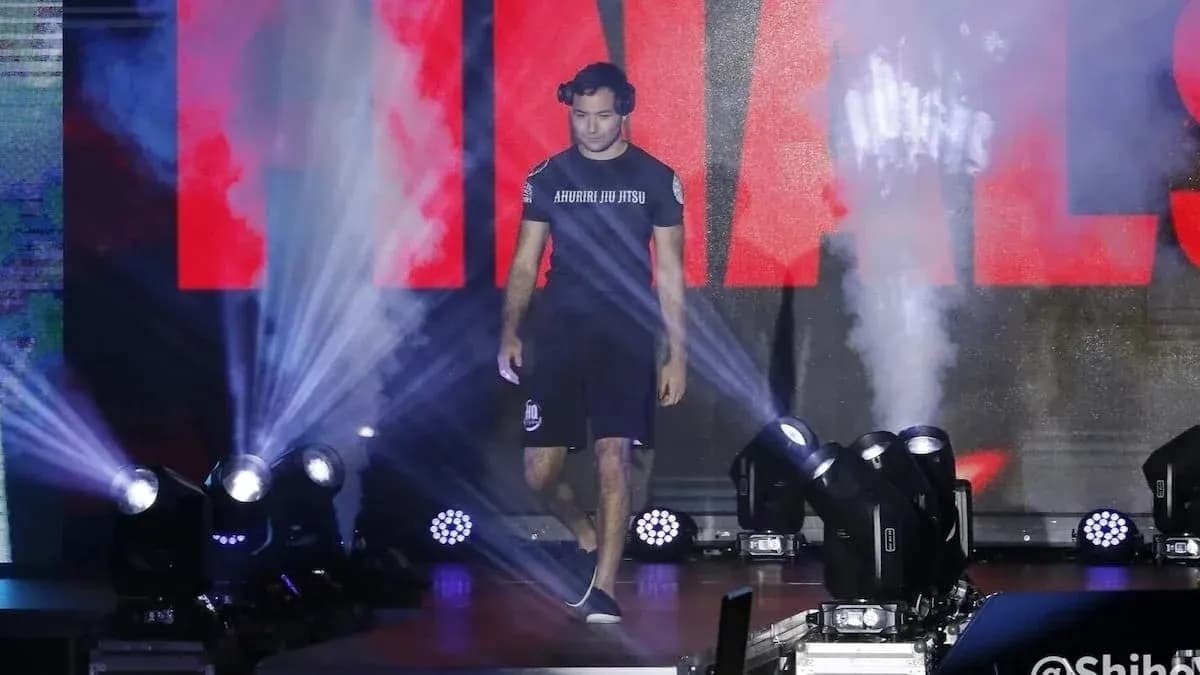
The heavy cotton gi hung off Rio’s shoulders like armour, but he arrived in Japan feeling anything but invincible.
Winter illness had stripped his energy. The sudden loss of his coach just weeks before the tournament hit even harder. For most athletes, that combination is enough to turn a campaign into damage control. Rio turned it into gold.
This was his first international medal at black belt level, earned the hard way in a field divided by sex, belt, age and weight, where every grip and every mistake matters. In the gi bracket, opponents from Mongolia and Mexico stood between him and the top of the podium. Neither lasted long.
The opening bout ended almost as soon as it began. Within the first minute, Rio snatched a limb, threaded his legs and finished with an Aoki lock, a brutal footlock that leaves no room for hesitation. One slip, one exposed ankle, and the contest was over.
The second fight demanded a different kind of precision. This time he climbed his guard, cut the angle and cinched a triangle choke, forcing the tap with the same technique that has defined so much of his journey on the mats.
That finish meant more than the medal.
His coach, Damian Smith, who died in the lead-up to the event, was a triangle specialist. Smith had spent years drilling those exact details into him – the hip shift, the angle, the patience to wait for the opening. When Rio felt the chance for the choke, his mind went straight back to those long hours and the voice in his corner at countless tournaments.
Winning with that submission turned a victory into a tribute.
The build-up had been, in his own words, the worst he’d experienced. Ill, underprepared by his standards, and carrying the weight of grief, he could have frozen under the lights. Instead, once his bare feet hit the mats, the world narrowed to what he knew best: grips, pressure, timing.
It felt, he said, like any other tournament. Just go out there and go hard.
On the surface, this is a story about a black belt returning from Japan with gold. Underneath, it’s about the people who helped carry him there. Rio made a point of spreading the credit, not hoarding it.
He thanked his team at Gracie Allegiance Ahuriri and Gracie Allegiance Team New Zealand, along with friends and training partners across the Brazilian Jiu-Jitsu gyms of Hawke’s Bay. In his view, no one climbs a podium alone.
“You get nowhere in martial arts without good teammates and training partners,” he said, summing up a culture built on shared rounds, shared sweat and shared lessons. In Hawke’s Bay, that culture runs deep. The BJJ community there is tight-knit; train long enough and you end up knowing most of the gyms and the good people inside them.
The journey doesn’t pause just because the medal is in the bag. Rio and his partner, fellow coach Yukako Mori, stayed on in Japan for a few more weeks, splitting their time between catching up with friends and sharpening their skills with more Brazilian Jiu-Jitsu and Judo.
Then it’s back to Ahuriri, back to the mats in Hawke’s Bay, back to what he calls simply “having fun with Jiu-Jitsu”.
For him, the sport is more than competition. It’s self-defence, fitness without the grind of a treadmill, a place where strangers become lifelong friends. The door, he insists, stays open.
Anyone is welcome.